






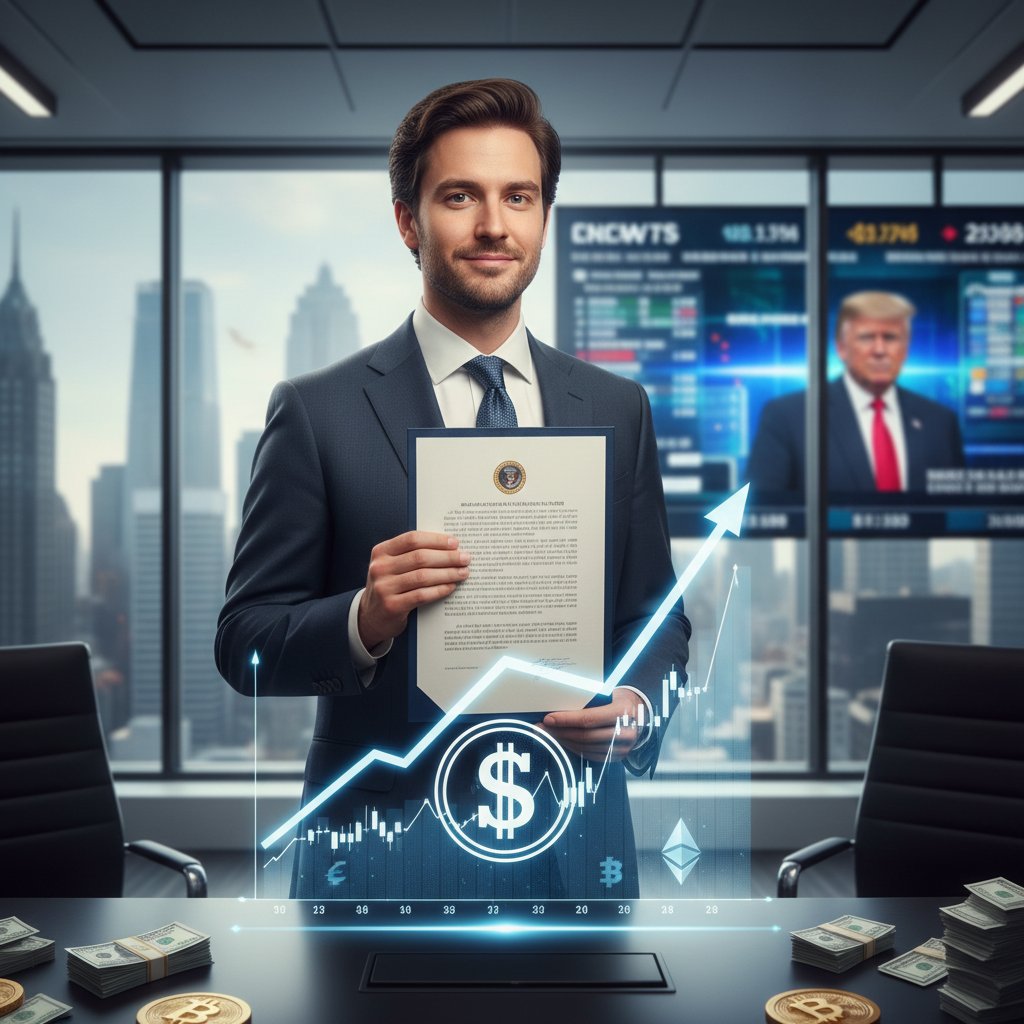
Just 16 months after being sentenced to 25 years in federal prison, Sam Bankman-Fried has placed his hopes for freedom in the hands of Donald Trump. The fallen crypto billionaire, convicted of orchestrating the largest financial fraud in US history, has formally petitioned the President for a pardon. The move is audacious, even for a man who once bet billions on political influence.
According to sources familiar with the filing, the petition was submitted to the White House counsel’s office earlier this month. It argues that Bankman-Fried’s prosecution was politically motivated and that his sentence is disproportionate to the crimes committed. The timing is no accident. Trump, who has long positioned himself as a critic of the “deep state”, has shown a willingness to grant clemency to high-profile figures he views as victims of an overreaching justice system.
The Pardon Petition: What We Know
The petition, which has not been made public, reportedly runs over 100 pages and includes legal briefs, character references, and a personal letter from Bankman-Fried. It leans heavily on the argument that the FTX collapse was a business failure, not a fraud, and that Bankman-Fried was scapegoated for the sins of an unregulated industry.
“This is a standard tactic among white-collar defendants who have exhausted their appeals,” says Professor Rebecca Chen, a criminal law expert at Georgetown University. “But the odds are astronomically low. Presidential pardons are rare for convicts who haven’t even begun to serve the bulk of their sentence.”
Bankman-Fried, who was convicted in November 2023 on seven counts of fraud and conspiracy, is currently incarcerated at the Metropolitan Detention Center in Brooklyn. His appeal, which challenges both the conviction and the 25-year sentence, is pending before the Second Circuit. Legal experts give it little chance of success given the overwhelming evidence, including testimony from three of his closest associates, who pleaded guilty.
Why Trump Might (or Might Not) Grant a Pardon
Trump has a history of granting clemency to political allies and celebrities. During his first term, he pardoned former Arizona Sheriff Joe Arpaio, conservative commentator Dinesh D’Souza, and former Illinois Governor Rod Blagojevich. But Bankman-Fried is no ally. In fact, he was a massive donor to Democratic causes, giving over $40 million to candidates and Super PACs supportive of Joe Biden.
Still, Trump has shown a transactional approach to power. Some insiders speculate that a pardon might serve two purposes: it would send a message that Trump is willing to buck the establishment, and it could win him favor with the crypto community, which has grown increasingly vocal about regulatory overreach.
Mark H. Williams, a former federal prosecutor and now a partner at a white-collar defense firm in Washington, D.C., is skeptical. “Pardoning Sam Bankman-Fried would be a political liability for Trump. This isn’t a case of a first-time nonviolent offender, this is someone who stole $8 billion from over a million victims. There’s no constituency for letting him walk.”
Trump’s own stance on crypto is mixed. He once called Bitcoin a “scam against the dollar”, but during his 2024 campaign he courted crypto donors and promised to end what he called a “war on crypto”. A pardon for Bankman-Fried could be seen as a signal of deregulation, but it also risks tying Trump’s brand to one of the most reviled figures in modern finance.
The Fallout: FTX Victims and Crypto Regulation
For the estimated 1.1 million FTX creditors who lost savings, retirement funds, and business capital when the exchange imploded in November 2022, the idea of a pardon is a bitter pill. Many have organized on social media platforms like X and Reddit to oppose any clemency. The official FTX Creditor Committee has issued a statement calling the petition “an insult to every victim of this unprecedented fraud.”
The crypto industry itself is divided. Some see Bankman-Fried as a convenient villain who distracted from deeper systemic issues. Others fear that any leniency would set a dangerous precedent at a time when regulators are finally cracking down on bad actors. The recent collapse of crypto-friendly banks and a slew of SEC enforcement actions have already rattled the market.
“If Trump pardons SBF, it will send a clear message that wealthy fraudsters can buy their way out of accountability,” said Alexandra Torres, a crypto policy analyst at the Consumer Protection Institute. “It would undermine years of work to build a regulatory framework that protects everyday investors.”
The timing also matters. The Biden administration has aggressively pursued crypto enforcement, with over $10 billion in settlements and penalties levied against exchanges, lenders, and promoters since 2022. A Trump pardon could signal a radical reversal, emboldening other defendants to seek clemency and encouraging a culture of impunity.
Meanwhile, SBF’s legal team is attempting to leverage his age and health. Born in 1992, Bankman-Fried would be 50 at the end of his 25-year sentence. They argue that in the context of nonviolent financial crimes, that is effectively a life sentence. The petition also notes his diagnosis with Asperger’s syndrome, which the defence claims made him vulnerable to manipulation by his inner circle.
What’s Next for SBF?
The pardon petition is not SBF’s only path to freedom. His appeal is expected to be heard in the first half of 2026. If that fails, he could request a sentence commutation from the President, a less dramatic move than a full pardon, but one that still requires political will.
For now, SBF’s fate hangs on a presidential pen stroke, and on whether Trump sees any upside in pardoning one of the most reviled figures in modern finance. If the answer is no, Bankman-Fried will remain behind bars, his legend as a wunderkind turned cautionary tale all but sealed. If the answer is yes, it could reshape how the crypto industry views accountability and risk.
One thing is certain: the petition will spark renewed debate about the power of presidential clemency, the limits of prosecutorial discretion, and the future of crypto regulation in America. For the millions who lost money when FTX collapsed, the chapter is far from closed.