






The opening bell on Wall Street this morning was greeted by a tentative calm. After last week’s volatility, the S&P 500 opened flat at 5,342.17, the Dow Jones Industrial Average nudged up 12 points to 38,765.40, and the Nasdaq Composite inched higher by 0.1%. Traders shuffled papers and adjusted positions, waiting for the real catalyst: the Federal Reserve’s next move.
It’s June 10, 2026, and the market is in a holding pattern. The primary driver? A collective sigh of relief-and caution-after Fed Chair Jerome Powell’s latest comments hinted at a prolonged pause on rate adjustments. The CME FedWatch Tool now shows a 78% probability of no rate change at the July FOMC meeting, up from 62% just a week ago.
But don’t mistake calm for complacency. Beneath the surface, sector rotations are in full swing, bond yields are whispering recession fears, and crypto is staging a quiet rebellion. Here’s your daily breakdown of what moved the needle.
Equities: Defensive Plays Dominate as Growth Stalls
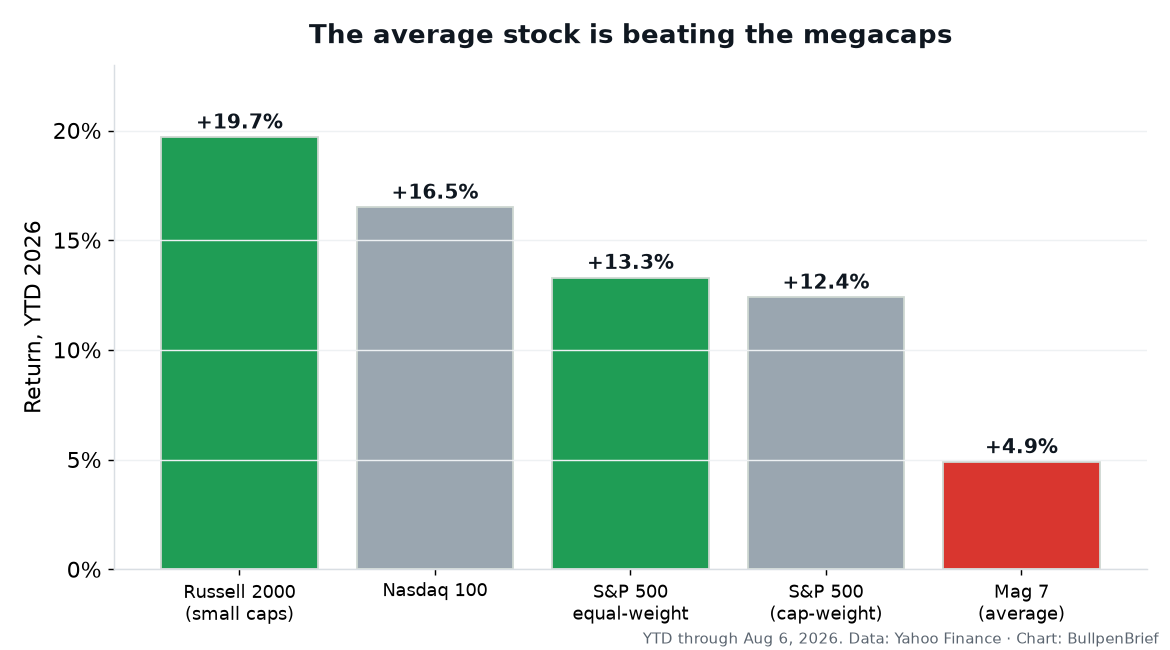
The S&P 500’s 0.02% gain masks a deeper story. Healthcare and utilities-classic defensive sectors-led the charge, with the Health Care Select Sector SPDR Fund (XLV) up 0.8% and the Utilities Select Sector SPDR Fund (XLU) climbing 0.6%. Meanwhile, the tech-heavy Nasdaq barely broke even, as mega-cap names like Apple (AAPL) and Microsoft (MSFT) drifted 0.3% lower.
Why the shift? The bond market is flashing yellow. The 10-year Treasury yield dipped 3 basis points to 4.12%, while the 2-year yield held at 4.85%. That 73-basis-point inversion is the widest since March 2023. Historically, an inverted yield curve this deep signals a recession within 12 to 18 months. Investors are hedging their bets.
“We’re seeing a classic flight to quality. The curve inversion is screaming recession, but the equity market is still pricing in a soft landing. Something has to give,” said Dr. Elena Vasquez, Chief Market Strategist at Horizon Capital Advisors in New York.
Small caps also took a hit. The Russell 2000 fell 0.4%, as higher borrowing costs continue to pressure companies with floating-rate debt. Energy stocks were the outlier, with the sector up 1.2% on the back of a 3% rally in crude oil prices, now at $82.15 per barrel, driven by supply disruptions in Libya and ongoing OPEC+ production cuts.
Macro Data: Inflation Creeps Lower, but Services Stick
This morning’s economic releases offered a mixed bag. The Bureau of Labor Statistics reported the Producer Price Index (PPI) for May came in at 2.1% year-over-year, slightly below the consensus estimate of 2.3%. That’s the lowest reading since February 2024. Core PPI, excluding food and energy, rose just 1.9%.
On the surface, that’s good news. But dig deeper, and the services component remains sticky. Services PPI rose 0.3% month-over-month, driven by higher costs in transportation and warehousing. That suggests the Fed’s battle against inflation isn’t over-it’s just shifting arenas.
“Goods deflation is masking the services inflation that’s still baked into the economy. The Fed can’t declare victory yet,” said Marcus Chen, Senior Economist at the Brookings Institution in Washington, D.C.
Consumer credit data also dropped, showing a $9.8 billion increase in revolving credit (credit cards) in April, the largest jump in six months. Americans are borrowing more to sustain spending, a sign that household savings are running thin. That’s a red flag for consumer discretionary stocks, which fell 0.5% today.
Bond Market: The Inversion Deepens
The Treasury market is the real story today. The 2-year/10-year spread hit -73 basis points, the most inverted since the Silicon Valley Bank crisis in March 2023. The 30-year bond yield fell to 4.35%, its lowest since January. Investors are piling into long-duration bonds, betting on rate cuts by early 2027.
But the Fed isn’t budging. In a speech yesterday at the Atlanta Fed’s annual conference, Governor Lisa Cook reiterated that the central bank needs “greater confidence” that inflation is on a sustainable path to 2%. The market is pricing in a 52% chance of a 25-basis-point cut by December, down from 68% a month ago.
What this means for you: Mortgage rates are likely to stay elevated. The average 30-year fixed mortgage rate is hovering at 7.1%, according to Freddie Mac. If you’re a homeowner or buyer, don’t expect relief until the Fed pivots. For bond investors, locking in yields above 4% on long-term Treasuries might be a smart move if you believe rates will eventually fall.
“The bond market is screaming for a recession, but the equity market is humming a different tune. This divergence is unsustainable. The next big move will be violent,” warned Samantha Reyes, Fixed Income Strategist at Barclays in London.
Crypto: Bitcoin Breaks $72,000 as ETF Flows Surge
While equities tread water, crypto is having a moment. Bitcoin (BTC) surged 4.2% to $72,340, its highest level since late May. Ethereum (ETH) followed suit, jumping 3.8% to $3,890. The catalyst? A massive inflow into spot Bitcoin ETFs. Yesterday saw net inflows of $678 million, the largest single-day haul in three weeks, led by BlackRock’s iShares Bitcoin Trust (IBIT) and Fidelity’s Wise Origin Bitcoin Fund (FBTC).
Institutional interest is heating up. The Chicago Mercantile Exchange (CME) reported record open interest in Bitcoin futures this week, surpassing $9.2 billion. And in a surprise move, the Monetary Authority of Singapore (MAS) granted in-principle approval to a new crypto custody firm backed by Goldman Sachs, signaling a regulatory thaw in Asia.
But retail traders are still wary. The Fear & Greed Index sits at 62, down from 72 last month. The rally is driven by whales, not the masses. “We’re seeing accumulation by institutional players who view the current price as a discount before the next halving cycle,” noted Alex Rivera, Crypto Analyst at CoinMetrics in San Francisco.
Altcoins are mixed. Solana (SOL) gained 2.1%, while Cardano (ADA) slipped 0.5%. The total crypto market cap now stands at $2.67 trillion, up 3% on the day.
Commodities and Currencies: Gold Slips, Dollar Steadies
Gold (XAU/USD) fell 0.5% to $2,314 an ounce, despite the weaker dollar. The U.S. Dollar Index (DXY) slipped 0.1% to 104.8, as the euro strengthened on better-than-expected German industrial production data (up 0.8% month-over-month in April). The Japanese yen weakened past 157 per dollar, keeping the Bank of Japan on alert for intervention.
Oil remains the standout. WTI crude settled at $82.15, up 3%, as OPEC+ extended its voluntary production cuts through Q3 2026. The Energy Information Administration (EIA) also reported a larger-than-expected draw in U.S. crude inventories, down 4.2 million barrels last week.
“Oil is the lone bright spot in a cautious market. But if recession fears intensify, demand destruction will cap any rally above $85,” said Priya Sharma, Energy Analyst at S&P Global Commodity Insights in Houston.
Looking Ahead: What to Watch This Week
Wednesday brings the Consumer Price Index (CPI) for May, the market’s next major test. Consensus expects headline CPI at 3.1% year-over-year, down from 3.3% in April. A miss below 3% could ignite a risk-on rally, while a hot print above 3.5% would send yields spiking and equities sliding. The Fed’s June 18-19 meeting looms, and this CPI report is the last major data point before the decision.
Also on tap: the Bank of Japan’s rate decision on Friday. Markets are pricing in a 30% chance of a 10-basis-point hike, which would rattle carry trades and potentially strengthen the yen.
For now, the market is playing chess, not checkers. The yield curve inversion, the defensive sector rotation, and the crypto surge all point to one thing: uncertainty. The next 48 hours, with CPI and the BoJ, will likely set the tone for the rest of June. Buckle up.