








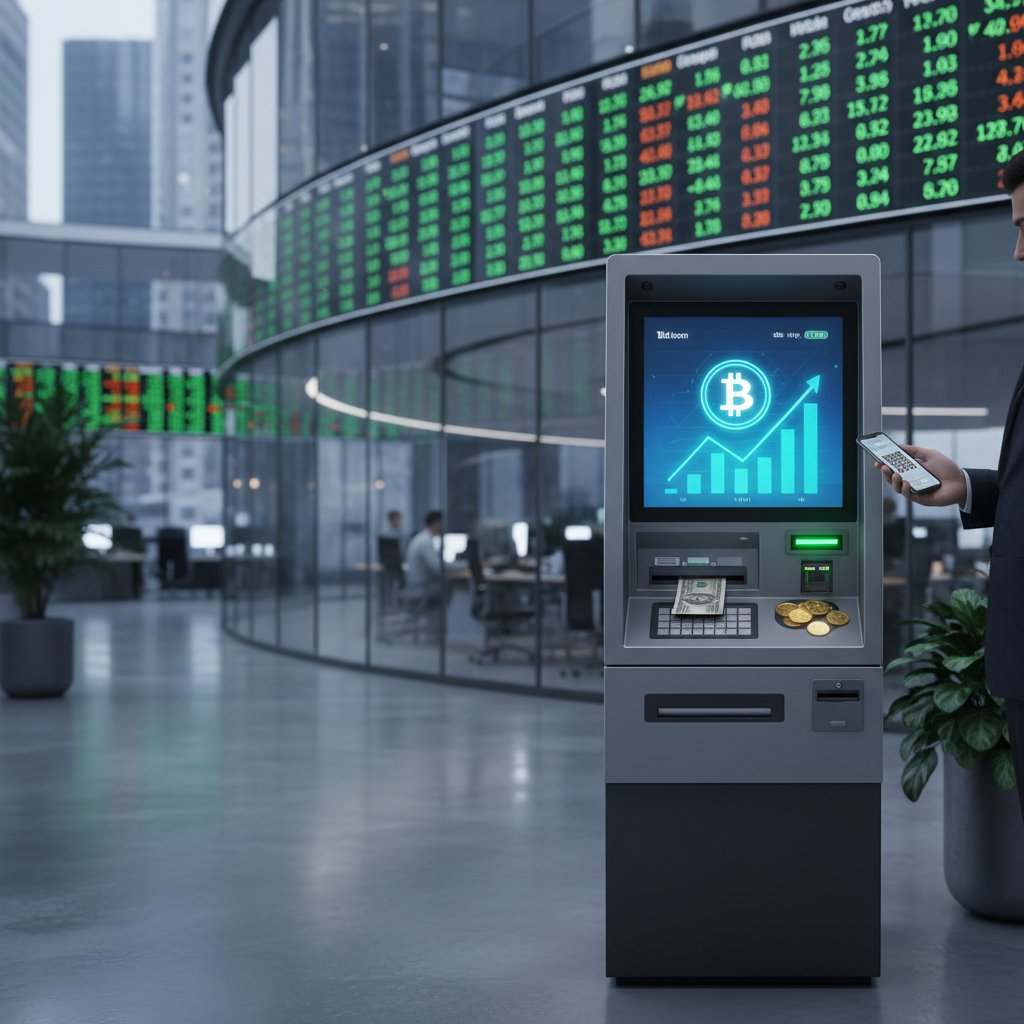
“The proliferation of Bitcoin ATMs is a double-edged sword,” says Sarah Jenkins, Director of Market Research at CryptoCompare. “They offer unparalleled convenience for the unbanked and spur adoption, but the fees are eye-watering and regulatory compliance is patchy.”
That sentiment captures the state of the Bitcoin ATM industry in 2024. Over the past decade, the number of machines has exploded from a single kiosk in Vancouver to more than 40,000 globally, according to data from CoinATMRadar. The US alone hosts roughly 32,000 of those machines-over 80% of the worldwide total-and Canada, the UK, and Australia round out the top five.
But behind the headline numbers lies a complex ecosystem of high fees, rising scam activity, and a regulatory patchwork that is rapidly tightening. For retail investors, understanding this landscape is crucial before swiping a credit card at a brightly lit kiosk.
The Numbers Behind the Boom
The growth trajectory is staggering. In January 2019, there were just 4,000 Bitcoin ATMs worldwide. By January 2021, that figure had doubled to 8,000. Today, installations are running at roughly 500 to 600 new machines per month, despite a down cycle in crypto prices. Operators like CoinFlip, Bitstop, and Genesis Coin have expanded aggressively, placing machines in convenience stores, gas stations, and shopping malls.
The United States remains the unchallenged leader, with major clusters in Texas, California, and Florida. Canada ranks second with around 2,900 machines, and El Salvador-where Bitcoin is legal tender-has seen a surge to over 200 kiosks since 2021. The UK, traditionally a stronghold for crypto adoption, only hosts about 200 machines, partly due to stricter Financial Conduct Authority (FCA) oversight.
“In markets with clear regulation, we see stable growth. In markets with uncertainty, operators either pile in or pull out overnight,” notes Mark Thompson, Partner at Fintech Law Group.
Indeed, regulatory divergence is shaping the geography of the industry. Australia added over 200 machines in the first quarter of 2024 alone, benefiting from the government’s relatively welcoming stance on crypto infrastructure. Conversely, Singapore and China have effectively banned them.
The Hidden Costs: Fees and Scams
For the casual user, the most jarring aspect of a Bitcoin ATM is the fee. While cryptocurrency exchanges like Coinbase charge trading fees of 0.5% to 1%, Bitcoin ATMs typically levy spreads of 7% to 12% for one-way purchases. Two-way machines-those that allow both buying and selling-can charge up to 15% on sell transactions.
“It’s the convenience premium,” says Sarah Jenkins. “You can walk into a 7-Eleven and buy $50 worth of Bitcoin with cash in five minutes. But you’ll pay a heavy markup for that anonymity and speed.”
The fee structure has also made Bitcoin ATMs a magnet for scams. The Federal Trade Commission (FTC) reported that in 2023 alone, consumers lost more than $110 million to scams involving Bitcoin ATMs-a tenfold increase from 2020. The typical ruse? A fake tech support call or an impersonator posing as a government agent demanding payment via a QR code generated at a kiosk.
Industry leaders have begun pushing back. CoinFlip, for instance, introduced daily purchase limits and mandatory ID verification for transactions above $500. Still, the anonymity of cash-funded purchases below certain thresholds remains a loophole that regulators and law enforcement are eager to close.
Regulatory Headwinds and Compliance
The regulatory temperature is rising. In the UK, the FCA issued a warning in early 2024 stating that no Bitcoin ATM operator is currently registered to operate legally. The watchdog has raided several unregistered kiosks and blocked bank transfers to known operators. Canada’s Financial Transactions and Reports Analysis Centre (FINTRAC) has similarly imposed strict KYC obligations, requiring operators to register and report suspicious transactions.
In the US, the absence of a federal framework has led to a patchwork of state laws. New York’s BitLicense, the most stringent state rule, has effectively limited ATM growth in the state. Meanwhile, other states like Texas have encouraged growth with minimal gatekeeping.
“The lack of uniformity is the biggest operational risk,” says Mark Thompson. “A national standard would clarify what’s allowed, but for now, operators must juggle compliance across 50 different sets of rules.”
The push for tighter regulation is not just about crime. Consumer protection groups have also raised concerns about price transparency, with some ATMs displaying a rate that can change before the transaction finalizes. A 2023 study by the University of Cambridge found that price variance among BTC ATMs within the same city could exceed 5%.
What’s Next for Bitcoin ATMs?
Despite the friction, the industry is not standing still. Several operators are rolling out two-way machines that let users withdraw cash from a Bitcoin balance, bridging the gap between crypto and fiat at the point of sale. Others are experimenting with lower fee tiers for repeat customers and integrating Lightning Network support for faster, cheaper transactions.
In emerging markets-particularly in Latin America and Africa-Bitcoin ATMs are being marketed as a tool for remittances and savings. El Salvador’s Chivo network, though government-operated, provides zero-fee transactions, demonstrating that volume can offset margins.
The next phase of growth will likely hinge on regulatory clarity. If the US Congress passes stable legislation like the proposed Digital Commodities Consumer Protection Act, operators may gain the confidence to invest in lower-fee, higher-volume models. Conversely, a crackdown could push the industry back into the shadows-or kill it entirely.
One thing is certain: the 40,000 machines already installed represent a massive sunk cost and a distributed infrastructure for onboarding new users. Whether they become a mainstream entry point for crypto or a cautionary tale of regulatory lag and high-fee extraction will depend on the choices made by operators, lawmakers, and consumers over the next two years. As Thompson puts it, “Bitcoin ATMs won’t disappear, but they will have to adapt-or die.”