







“The market is clearly bifurcated. Bitcoin’s resilience is a testament to institutional inflows through spot ETFs, but the altcoin sell-off suggests a rotation away from speculative risk.”
, Dr. Lena Voss, Chief Economist at CryptoQuant
That was the opening assessment from one of crypto’s top analysts as traders across the globe sat down to their screens on June 9, 2026. The date may seem unremarkable, but the action in digital assets tells a story of deepening maturity and sharp divisions.
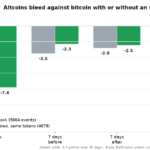
Bitcoin (BTC) held steady above the psychologically critical $120,000 mark for a third consecutive session, trading at $120,310 as of 18:00 GMT+0. Ethereum (ETH), however, slipped 2.3% to $3,150, while Solana (SOL) dropped 4.1% to $98. The broader CoinDesk 20 index fell 1.8%, with losses concentrated in smaller cap tokens.
The daily crypto discussion groups across Reddit, Telegram, and Discord were buzzing-not with euphoria, but with caution.
Bitcoin Holds the Line Above $120K
Bitcoin’s ability to cling to $120,000 comes against a backdrop of mixed global signals. The S&P 500 edged up 0.3% on Tuesday, while gold eased 0.5%, suggesting that traditional risk assets are not uniformly correlated with crypto today.
“Bitcoin is increasingly being treated as a macro hedge, not a risk-on asset,” noted Mark Tan, Head of Trading at Amber Group. “We’re seeing steady buying from US-based spot ETF managers, but also hedging in the futures market. Open interest is near all-time highs.”
On-chain data from Glassnode shows that exchange inflows for Bitcoin remain low, indicating that long-term holders are not rushing to sell. The realized cap, a measure of aggregate cost basis, has climbed to $780 billion, reinforcing the narrative of strong hands.
Yet the tight range-$119,500 to $121,200 since June 7-is testing the patience of short-term traders. Liquidity on the order books is thinning, which could spark a breakout in either direction.
Altcoins Face Pressure as Risk Appetite Wanes
While Bitcoin enjoyed relative calm, the altcoin market experienced a choppy session. Ethereum’s slide was attributed in part to profit-taking after a 12% rally last week. “Ethereum just hit a resistance wall near $3,250,” explained Elena Rodriguez, a technical analyst at Delphi Digital. “The momentum indicators are turning neutral, and we’re seeing large sells from whales.”
Solana fell below the $100 threshold for the first time in four days. The decline accelerated after a report that the Solana Foundation is delaying a planned network upgrade to address a validator consensus bug. “The market hates uncertainty around network stability,” said Rodriguez.
Chainlink (LINK) bucked the trend, rising 2.8% to $14.70, after a new partnership with a major European payments processor was announced. But such outliers were rare. The total crypto market cap slipped 1.2% to $3.12 trillion.
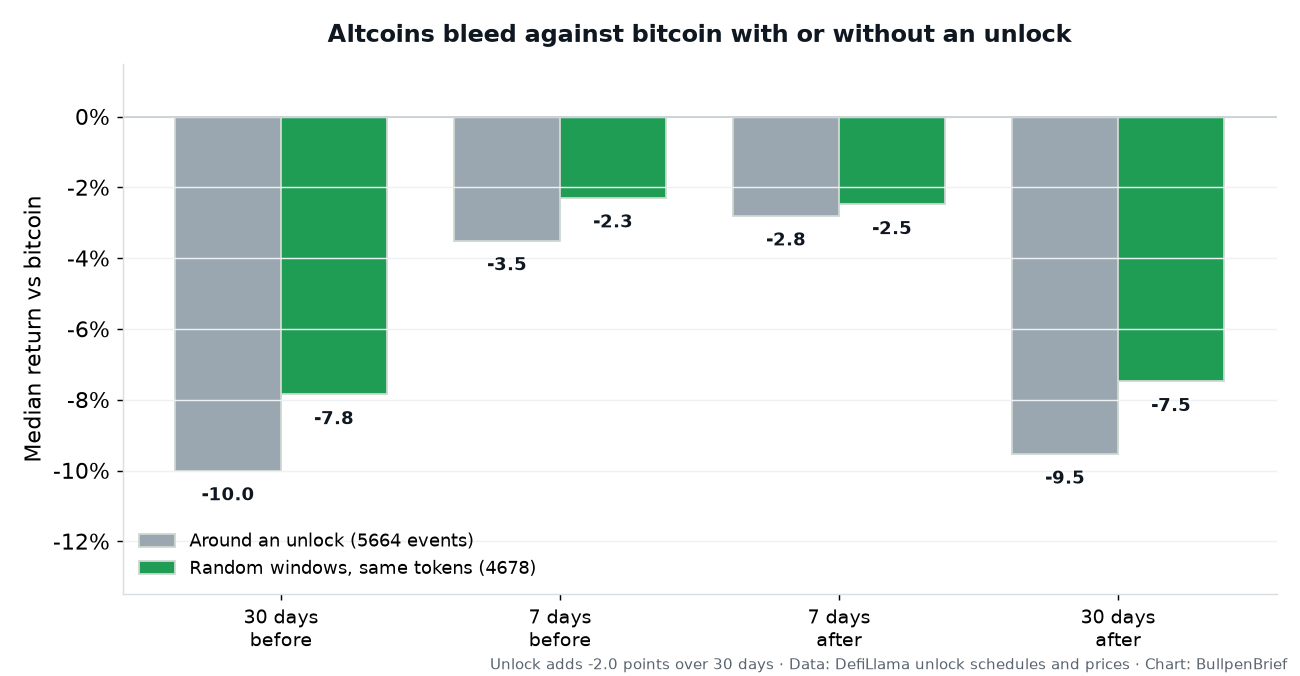
“Altcoin buyers are becoming more selective,” said Dr. Voss. “The easy money from memecoins and narrative plays is drying up. We’re back to fundamentals-or at least the perception of them.”
Regulatory Clouds Loom Over DeFi Tokens
One of the key talking points in daily crypto discussion circles today was the release of a new policy paper from the US Securities and Exchange Commission’s (SEC) Crypto Task Force. The paper, published earlier this morning, outlines proposed criteria for classifying decentralized finance (DeFi) tokens as securities versus commodities.
The guidance is not yet enforceable rulemaking, but it has already rattled the market. Uniswap’s UNI token dropped 5.3%, while Aave’s AAVE fell 4.7%. Compound (COMP) lost 3.9%.
“This is a shot across the bow for any protocol with a governance token that has a ‘controlling group’,” commented Professor Sarah Chen from Georgetown University’s Blockchain and Law Center. “The SEC seems to be trying to limit the ability of DeFi projects to claim total decentralization as a shield.”
Meanwhile, across the Atlantic, the UK Financial Conduct Authority (FCA) issued a warning about unregistered crypto exchanges targeting retail investors. The FCA added three more entities to its warning list, all allegedly based in the Cayman Islands and Singapore.
“Regulatory fragmentation is becoming the biggest hurdle for institutional adoption of DeFi,” added Chen. “We need a global framework, not a patchwork of national rules.”
What Traders Are Watching Next
With Bitcoin stuck in a narrow range and altcoins bleeding, the focus is shifting to the next macro event. The Federal Open Market Committee meeting on June 17 is now the primary risk event for the month. Markets are pricing in a 68% probability of a 25-basis-point rate cut, according to the CME FedWatch Tool.
A cut would likely boost risk assets broadly, but some analysts warn that a hawkish dot plot could offset the dovish move. “Crypto has priced in a cut already,” said Tan. “The real move will come from the tone of the statement.”
On the crypto-specific side, the Ethereum community is awaiting the final testnet launch for the “Pectra” upgrade, now scheduled for late June. And Bitcoin miners are watching the hash rate, which has reached a new all-time high of 720 EH/s, signaling network strength despite the quiet price action.
For now, the daily crypto discussion remains one of patience and positioning. As one Redditor on r/CryptoMarkets put it: “June is the month of waiting. Don’t get shaken out.”
Looking ahead, the convergence of regulatory clarity, monetary policy, and network upgrades could set the stage for a significant move in the third quarter. But as today’s session shows, the path is rarely linear-and the divide between Bitcoin and everything else is widening once again.