







For those who bought Bitcoin at $69,000 in 2021 and watched it crash to $16,000, the current rally feels like a cruel joke. But for new entrants piling into spot ETFs, it feels like the start of something permanent. The truth is, we are smack in the middle of the crypto cycle’s most critical phase-and the rules might have changed.
After a brutal 18-month bear market, the total crypto market cap has surged over $1 trillion since October 2023. Bitcoin alone is up more than 130% year-to-date, brushing past $45,000 and flirting with highs not seen since April 2022. But veterans know this dance. The typical crypto cycle-a four-year rhythm driven by halvings, retail FOMO, and regulatory crackdowns-has played out three times before. The question now: Is cycle 4.0 following the same script, or have spot ETFs, institutional adoption, and a shifting regulatory landscape rewritten the ending?
The Four Phases You Can’t Ignore
Every crypto cycle follows a brutal but predictable pattern. Phase one is the accumulation period-bottom-fishing by whales and patient funds. That lasted from November 2022 through mid-2023, when Bitcoin traded between $16,000 and $30,000. Blockchain data from Glassnode shows that wallets holding 1,000+ BTC accumulated over 100,000 coins during that stretch.
Phase two is the mark-up-where we are now. Prices climb on improving sentiment, ETF speculation, and institutional flows. “The mark-up phase historically lasts 12 to 18 months and delivers the highest percentage returns,” says Clara Delgado, Head of Market Research at Blockforce Capital in New York. “But it’s also when retail investors start piling in late, mistaking momentum for a new paradigm.”
Phase three is the mania-where FOMO goes parabolic and prices overshoot fundamentals. Think December 2017 or November 2021. Phase four is the crash-a 70-90% drawdown that washes out leverage and resets expectations. The median crypto bear market lasts about 12 months, but the recovery has gotten slower with each cycle, from 18 months after 2014 to 24 months after 2018.
“The crypto cycle hasn’t died-it’s just matured. The volatility is still there, but the drawdowns are shallower and the floors are higher because of institutional involvement.”, Dr. Michael Wu, Chief Economist at Amber Group
Spot ETFs: The Game Changer That Might Not Change the Cycle
The approval of spot Bitcoin ETFs in January 2024 was supposed to be the ‘sell the news’ event that ended the bull run early. Instead, BlackRock’s IBIT and Fidelity’s FBTC saw over $10 billion in net inflows in just six months, propping up prices even as retail sentiment wavered. This is unprecedented. Never before has a crypto cycle had a direct on-ramp for pension funds, endowments, and RIAs.
But don’t confuse ETF demand with cycle disruption. Historically, the 12-month post-halving period (April 2024 to April 2025) is when Bitcoin delivers its biggest gains. The 2020 halving preceded a 4x rally. The 2016 halving saw a 30x run. If history rhymes, we are only in the second inning. “ETFs add a layer of persistent buying pressure that didn’t exist before, but they don’t eliminate the four-year supply shock mechanism,” explains Jennifer Lo, Senior Crypto Strategist at Valkyrie Investments in Chicago. “If anything, they could amplify the next euphoria phase by making it easier for traditional capital to chase momentum.”
However, there’s a catch. ETFs also increase correlation with traditional markets. In August 2024, when the Bank of Japan raised rates and the Nikkei dropped 12% in a single day, Bitcoin fell 15%-its worst ETF-era crash. This suggests that the cycle is becoming tethered to macro liquidity conditions, not just crypto-native events.
Retail FOMO Is Late-But That’s Normal
One hallmark of the typical crypto cycle is retail’s delayed entry. Google Trends for “Bitcoin” is still 60% below its 2021 peak. Social media mentions of “altcoin season” are muted. Coinbase app downloads are flat. For cycle watchers, this is actually bullish. “The smartest money moves early, the dumbest money moves at the top,” says Tommy Shaughnessy, co-founder of Delphi Digital. “Right now, we see accumulating in OTC desks and macro hedge funds, not retail brokerages. That tells me we’re mid-cycle, not late-cycle.”
But there’s a new variable: the retail investor in 2024 is savvier. They use liquid staking derivatives, yield strategies on L2s, and perpetual swaps. This sophistication reduces panic selling during corrections, but it also creates systemic leverage risk. Total open interest in Bitcoin futures hit $20 billion in September 2024, a record outside of the 2021 peak. If a sharp deleveraging occurs, the drawdown could be faster than previous cycles.
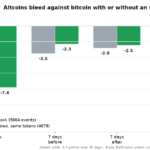
The typical crypto cycle also has a predictable altcoin rotation. Bitcoin dominates first, then Ethereum catches up, then Layer 1s and DeFi tokens explode. We saw Bitcoin dominance rise from 38% in late 2022 to 58% in mid-2024. That shift is textbook. The ETH/BTC ratio has been declining for 18 months, indicating that capital is still flowing into Bitcoin as the safe play. According to CoinMarketCap data, altcoins have underperformed Bitcoin in 2024 by an average of 35%. History suggests that will reverse in late 2025, but only after Bitcoin makes a new all-time high.
“People keep asking if this cycle is different because of ETFs. I say look at the on-chain data. The same patterns of HODLing, spending, and exchange flows are repeating. The venue has changed, but the music is the same.”, Ryan Lee, Chief Analyst at Bitget Research
What the Cycle Means for Your Portfolio Right Now
If the cycle holds, 2025 will be the mania year, with a peak between March and September. The average bull market peak occurs 18 months after the halving. That puts the window at October 2025. But here’s the uncomfortable truth: each cycle’s peak is lower in BTC-denominated percentage terms. The 2013 peak was a 55,000% gain from the prior low. 2017 was 12,000%. 2021 was 2,200%. If this cycle follows, a peak around $100,000 to $150,000 is plausible, but not the exponential gains of yesteryear.
For everyday investors, the playbook is brutally simple. DCA into Bitcoin and Ethereum until March 2025, then taper. Watch for signs of mania: celebrity NFT endorsements, excessive leverage on exchanges, and friends asking for coin buying advice. “When your Uber driver gives you a crypto tip, it’s time to sell,” quips Shaughnessy. “That’s not a joke-that’s data from three cycles.”
Risk management is more critical than ever because the cycle is also shortening and sharpening. The 2021 bull run lasted only 8 months from breakout to peak, compared to 15 months in 2017. Higher institutional participation means faster price discovery but also quicker exits. “The cycle is compressing,” says Delgado. “What used to take years now happens in months. That means investors have to be more nimble and set tighter stop-losses.”
One overlooked factor: regulatory timing. The US SEC has multiple high-profile cases against exchanges and issuers scheduled for 2025. A pro-crypto administration could accelerate a resolution, but a crackdown could hit during the mania phase, as happened in China in 2017 and the US in 2022. The cycle’s crash phase often coincides with a black swan event-FTX in 2022, Covid in 2020, Mt. Gox in 2014. The next one could be a regulatory hammer in the US or a stablecoin depeg, which would test the new ETF-driven infrastructure.
Finally, the typical crypto cycle is no longer an isolated phenomenon. With the Bitcoin’s market cap at $900 billion and correlations to equities rising, the cycle is now tied to global liquidity. The Federal Reserve’s pivot to rate cuts will fuel risk-on behavior-but a recession would kill the party early. In short, the crypto cycle still exists, but it now has a co-pilot in macroeconomics.