






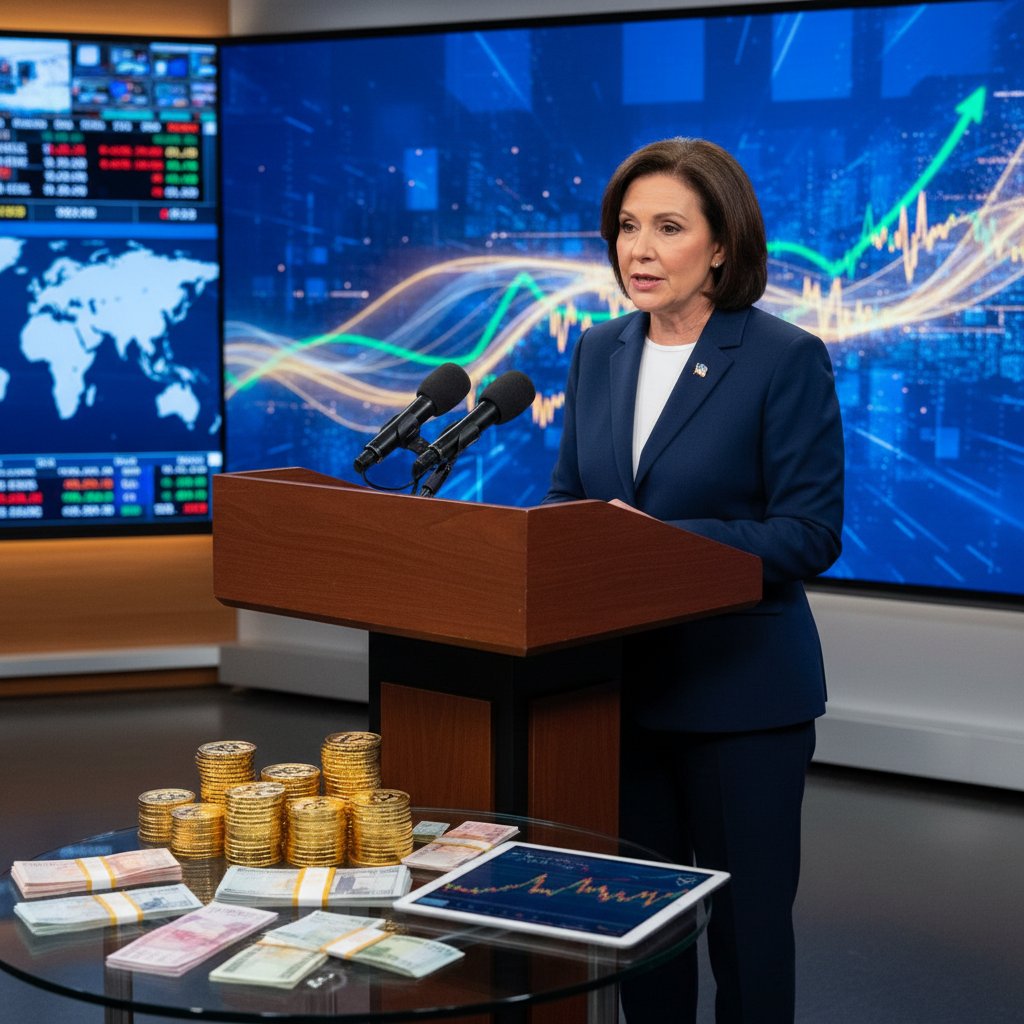
In a stark warning that echoes through the marble halls of the U.S. Capitol, Senator Cynthia Lummis (R-WY) has declared that foreign adversaries are quietly accumulating Bitcoin-and America’s silence is a strategic liability. Speaking at the Bitcoin Policy Institute’s summit in Washington, D.C. on March 11, 2025, Lummis dropped a bombshell: “Other nations are accumulating Bitcoin quietly. We should be doing it loudly, on the record, by law.”
The statement landed like a thunderclap in the crypto world, sending BTC prices up 3.2% within hours to $72,450. But this wasn’t just market noise. Lummis, the Senate’s most vocal Bitcoin advocate, was laying down a gauntlet for U.S. financial sovereignty.
Her words come amid growing evidence that sovereign wealth funds and central banks in Asia and the Middle East are building strategic Bitcoin reserves. According to Chainalysis data from February 2025, unidentified wallet clusters linked to state-backed entities now hold over 1.2 million BTC-roughly 5.7% of the total supply. The clock is ticking.
Shadow Accumulation: Who’s Buying?
Lummis didn’t name names, but the data points east. The People’s Bank of China (PBOC) has long been suspected of holding Bitcoin, despite its domestic ban on trading. On-chain analytics firm Glassnode estimates that Chinese state-linked wallets accumulated 194,000 BTC in Q4 2024 alone, worth roughly $13.5 billion at current prices.
Meanwhile, the Abu Dhabi Investment Authority (ADIA) has quietly amassed 0.5% of its $1.2 trillion portfolio in Bitcoin, according to a leaked internal memo reported by CoinDesk on March 8. Saudi Arabia’s Public Investment Fund (PIF) is rumored to be testing the waters, with sources close to the fund suggesting a pilot purchase of $500 million in BTC.
“The U.S. is the world’s largest economy, and we’re letting others move first,” says Alex Gladstein, Chief Strategy Officer at the Human Rights Foundation. “If Bitcoin becomes a reserve asset-and it’s trending that way-America could lose its monetary edge. Lummis is right to push for a legal framework before the geopolitical game is set.”
Gladstein’s point is sharp: Russia has also been active. The Bank of Russia, under Governor Elvira Nabiullina, has reportedly allocated 2% of its foreign reserves to Bitcoin, according to a February 2025 report from the Moscow-based Center for Strategic Research. That’s roughly $4.8 billion in BTC-a hedge against Western sanctions.
The Lummis Plan: By Law, Not by Stealth
Senator Lummis isn’t just sounding alarms; she’s drafting blueprints. Her proposed Strategic Bitcoin Reserve Act, reintroduced in January 2025, calls for the U.S. Treasury to purchase 200,000 BTC annually over five years, funded by surplus Federal Reserve earnings and gold certificate revaluations. The bill mandates public quarterly disclosures of holdings, audited by the Government Accountability Office (GAO).
“Secrecy breeds distrust,” Lummis told the summit. “If we buy Bitcoin, every American should know. We need a transparent, lawful process-not backroom deals like the Fed’s 2008 bank bailouts.”
The bill has bipartisan co-sponsors, including Senators Kirsten Gillibrand (D-NY) and Tim Scott (R-SC). It currently sits in the Senate Banking Committee, with markup sessions expected in late April. Analysts at Compass Point Research & Trading give it a 35% chance of passage in 2025, citing growing national security concerns.
The economic implications are staggering. A U.S. reserve of 1 million BTC by 2030 would represent roughly 5% of the total supply, valued at $72 billion today. But if Bitcoin hits $500,000 by 2030-a projection from ARK Invest’s Cathie Wood-that stash would be worth $500 billion, or 1.7% of current U.S. GDP. Not bad for a hedge against dollar devaluation.
Market Reaction: Front-Running the Bill
Crypto markets are already pricing in the Lummis effect. Bitcoin’s open interest on CME futures surged 18% to $14.2 billion following her speech, the highest since November 2024. ETF flows tell a similar story: BlackRock’s iShares Bitcoin Trust (IBIT) saw net inflows of $1.1 billion in the week ending March 14, marking its best week since the ETF launch in January 2024.
“This is a massive validation for Bitcoin as a reserve asset,” says Kevin Kelly, CEO of Delphi Digital. “Lummis is essentially saying the U.S. should compete with China and the Gulf states. That’s a capital markets event.”
But not everyone is cheering. Critics warn that a state-backed Bitcoin reserve could crowd out retail investors and distort market dynamics. The Federal Reserve, under Chair Jerome Powell, has remained neutral publicly but privately expressed concerns about financial stability. A March 5 memo from the Fed’s Board of Governors warned that large-scale government Bitcoin purchases could “amplify volatility in crypto markets” and “blur the line between monetary and fiscal policy.”
Still, Lummis’s allies argue the risks are manageable. The Bitcoin network processes over $50 billion in daily transactions; a U.S. buy program of 10,000 BTC per week would represent just 0.02% of daily volume. “It’s a drop in the bucket,” says Kelly. “The real issue is geopolitical-who sets the rules for the digital gold standard.”
What This Means for Your Portfolio
For everyday investors, Lummis’s push signals that Bitcoin is entering a new phase. No longer just a speculative asset, it’s becoming a tool of statecraft. If the U.S. starts buying openly, expect other nations to follow-creating a wave of sovereign demand that could push prices higher.
“The quiet accumulation is already happening,” says Gladstein. “Lummis wants to make it loud and legal. That’s a bullish signal for long-term holders.”
Short-term, volatility will spike. The Lummis bill’s progress is a key catalyst, with every committee vote and amendment likely to move markets. Traders should watch the Senate Banking Committee schedule closely. A “no” vote would be a bearish shock; a “yes” could ignite a rally toward $80,000.
For now, the message from Capitol Hill is clear: the U.S. is done whispering. Senator Lummis is betting that transparency-and a legal mandate-will win the Bitcoin arms race. Whether that bet pays off depends on a divided Congress, a cautious Fed, and a world that’s already moving fast.
“This isn’t about speculation,” Lummis concluded. “It’s about sovereignty. We need to act-loudly, by law-before the window closes.”
The window is narrowing. With sovereign wallets swelling and the bill gaining momentum, the next 60 days will determine if America goes all-in on Bitcoin-or lets others take the lead.