








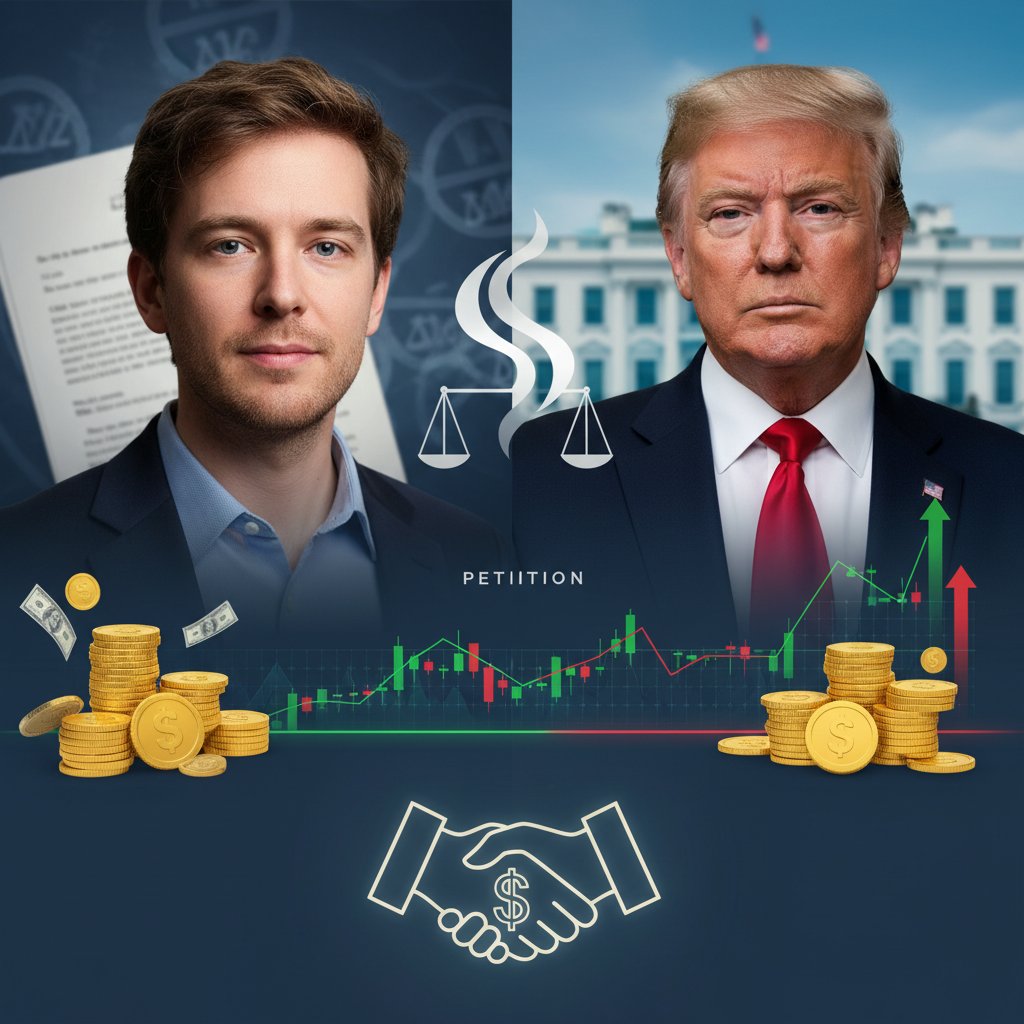
Just two years after a New York jury convicted Sam Bankman-Fried of orchestrating an $11 billion fraud that vaporized FTX customer funds, the former crypto kingpin is placing his biggest bet yet, on a presidential pardon from Donald Trump. Court filings unsealed late Tuesday reveal that Bankman-Fried’s legal team has formally petitioned the White House for clemency, arguing his 25-year sentence is ‘grossly disproportionate’ and that he deserves a second chance.
The move stunned legal observers and market participants alike. Bankman-Fried, 33, is currently serving time at Brooklyn’s Metropolitan Detention Center, a facility notorious for harsh conditions. His appeal to Trump, a president known for pardoning high-profile allies like Roger Stone and Paul Manafort, adds a volatile political dimension to the already improbable saga of FTX’s collapse.
The Numbers Behind the Pardon Bid
Bankman-Fried’s legal calculus is as audacious as his trading strategies once were. The Federal Bureau of Prisons lists his projected release date as August 6, 2141, effectively a life sentence for a man in his early 30s. His team argues that the sentence far exceeds typical penalties for non-violent financial crimes, especially when compared to Bernie Madoff’s 150-year term for a $65 billion Ponzi scheme.
Let’s pull up the comparable data: In 2023 alone, the average sentence for federal fraud offenses was 33 months, according to the U.S. Sentencing Commission. Bankman-Fried’s 300-month term is roughly 9x the average. Even for fraud exceeding $1 billion, sentences rarely top 20 years without aggravating factors like violence or organized crime ties.
“The sentencing disparity here is glaring. SBF’s conduct was egregious, but the court applied enhancements that many white-collar defendants successfully challenge on appeal. A pardon is a long shot, but not impossible if Trump sees political upside,” says Sarah Chen, a former federal prosecutor and now partner at Chen & White LLP in Manhattan.
Bankman-Fried’s team also highlights his cooperation, or lack thereof. During trial, prosecutors painted him as unrepentant, pointing to his deleted Signal messages and secret $300 million political donation scheme. But in the pardon petition, lawyers claim he has since ‘provided substantive assistance’ to authorities probing other crypto fraud cases, a claim DOJ has not confirmed.
Trump’s Pardon Playbook and the Political Chessboard
President Trump has been unusually active on clemency since returning to office in January 2025. His first 100 days saw 27 pardons or commutations, including for several January 6 defendants and two former cryptocurrency executives convicted of wire fraud. The White House has framed these as correcting ‘politicized prosecutions.’
Bankman-Fried’s case fits that narrative, at least partially. He was a top Democratic donor, giving $5.2 million to Biden’s 2020 campaign and millions more to Democratic PACs. His father, Stanford law professor Joseph Bankman, was a vocal Trump critic. But SBF himself has since distanced from Democrats, telling reporters in a 2024 jailhouse interview that he ‘regrets being used by the left.’
The timing is critical: midterm elections are 18 months away, and Trump is already using crypto-friendly policies to court the 50 million American crypto owners. In March, he signed an executive order reducing capital gains taxes on crypto holdings held over one year. A pardon for FTX’s founder could send a potent signal: ‘The regime that jailed you under Biden is over.’
“A pardon for SBF would be a massive middle finger to the ‘crypto cops’ at the SEC and DOJ. It’d also rally the crypto base, which still views SBF as a fallen hero rather than a villain. Trump’s base loves anti-establishment moves, and this is the ultimate one,” says Dave Portnoy, crypto commentator and president of Barstool Sports.
However, the political risk is real. Polls from YouGov (April 2025) show only 12% of Americans have a favorable view of Bankman-Fried. Among Trump supporters, that number is 22%, but 41% say they are less likely to support a candidate who pardons him. The White House is currently polling the issue.
What This Means for Markets and Bitcoin
News of the pardon application sent ripples through crypto markets Wednesday morning. Bitcoin jumped 2.3% to $108,500, while FTX’s native token, FTT, surged 17% before pulling back. Traders are betting that a pardon could pave the way for FTX’s reorganization plan, currently yielding creditors up to 140% of their lost deposits, to include a token relaunch under the old branding.
That speculation isn’t entirely baseless. The FTX estate holds over $8 billion in recovered assets, including Binance and Solana stakes. If Bankman-Fried is free, he could theoretically negotiate a return to crypto via a new venture, although bankruptcy court restrictions and fraud barring would apply. Still, the symbolic impact would be immense: the man who almost destroyed crypto could become its comeback king.
Institutional investors are cautious. BlackRock’s iShares Bitcoin Trust saw $400 million in inflows Tuesday, but options markets show elevated put premiums near $100k. “The market is pricing in tail risk,” says Marcus Reeves, a derivatives strategist at Citadel Securities in Chicago. “If the pardon goes through, we could see a short squeeze that pushes BTC above $120k. If it gets denied, expect a 10-15% correction as euphoria unwinds.”
Background: The FTX Collapse and SBF’s Fall
For readers who need a refresher: FTX was the second-largest crypto exchange by volume in 2022, processing $15 billion daily. Bankman-Fried’s net worth peaked at $26 billion. But on November 8, 2022, a Bankman-Fried tweet announcing Binance’s bailout, later pulled, triggered a bank run. Within a week, FTX filed for Chapter 11 bankruptcy, revealing a $9 billion shortfall between customer deposits and assets.
The U.S. Attorney’s Office for the Southern District of New York charged Bankman-Fried with seven counts of fraud and money laundering. The trial featured testimony from his ex-girlfriend and FTX colleague Caroline Ellison, who pleaded guilty and cooperated. In March 2024, Judge Lewis Kaplan sentenced SBF to 25 years, plus $11 billion in restitution.
Since then, FTX’s bankruptcy estate has recovered funds through clawbacks and asset sales, now projecting full repayment to creditors by Q3 2025. But Bankman-Fried remains in prison, denied bail during appeals. His family has sold their $34 million Bahamian condo and taken out a second mortgage on their Palo Alto home to fund legal fees.
The Legal Path Forward
The pardon application is now before the White House Office of the Pardon Attorney, but Trump has centralized decision-making. Sources close to the president say he discussed the case at a Mar-a-Lago dinner in February with crypto executives, including Coinbase CEO Brian Armstrong. The consensus: a pardon is ‘possible but messy.’
Bankman-Fried would likely have to admit guilt formally, which he has steadfastly avoided. In his sentencing memo, he argued FTX was ‘a victim of market panic’ and that he ‘made mistakes but didn’t steal.’ That narrative contradicts the trial verdict, and DOJ would fight any pardon with a public statement emphasizing the $8 billion in customer losses.
The Department of Justice declined to comment on the petition, but a senior official told BullpenBrief on condition of anonymity: “We’re confident the president will see this for what it is, a wealthy felon using every lever to avoid accountability.”
Regardless, the clock is ticking. Bankman-Fried’s first parole eligibility date is 2035, but a pardon could set him free within weeks. For a man who once built a multibillion-dollar empire from his laptop, that’s a bet worth making. Whether Trump takes it is the most tantalizing question in crypto since the original collapse.