







More than £8.5 million in assets seized from the notorious OneCoin cryptocurrency fraud have been returned to victims, Britain’s National Crime Agency (NCA) confirmed this week. For the thousands of ordinary investors who lost savings to what prosecutors call one of history’s largest Ponzi schemes, this marks the first real financial relief in nearly a decade.
The money doesn’t erase the £4 billion in total losses, but it does signal a shift in how authorities handle crypto crime proceeds. Instead of letting seized assets sit in government coffers, agencies like the NCA are increasingly using civil recovery powers to give victims a direct share of the takedown.
Who Is the ‘Cryptoqueen’?
The mastermind behind OneCoin is Ruja Ignatova, a Bulgarian-born former lawyer who vanished in 2017 just as investigators closed in. She remains on the FBI’s Ten Most Wanted list, with a reward of up to $5 million for information leading to her capture.
OneCoin, launched in 2014, was marketed as a revolutionary cryptocurrency with its own mining and trading platform. In reality, it had no real blockchain, the coins were simply entries in a database, and new investors’ money paid off old ones. The scheme operated globally, with a heavy presence in the UK, where thousands of victims poured in life savings, pensions, and inheritance money.
How the £8.5 Million Was Recovered and Returned
The NCA’s Civil Recovery Unit seized the funds from bank accounts linked to OneCoin promoters and money launderers. The agency used the Proceeds of Crime Act 2002, which allows authorities to confiscate assets even without a criminal conviction, provided they can show they came from unlawful conduct.
According to the NCA’s announcement on 18 March 2025, the £8.5 million was distributed among 1,600 verified UK-based claimants. That works out to roughly £5,300 per person, a fraction of the average loss, but a meaningful step toward restitution.
“This is a landmark case in crypto asset recovery,” said Dr. Leanne Williams, senior lecturer in financial crime at the University of Manchester. “The NCA has demonstrated that complex, cross-border cryptocurrency frauds are not beyond the reach of domestic seizure laws. Victims are finally seeing money come back, not just promises of prosecution.”
The Global Hunt for Ruja Ignatova
Ignatova’s disappearance remains one of the most baffling mysteries in modern finance. She was last seen boarding a flight from Sofia, Bulgaria, to Athens, Greece, in October 2017. Since then, there have been unconfirmed sightings in Austria, Germany, and even on a yacht in the Mediterranean. The FBI has said she may have undergone plastic surgery and acquired new identity documents.
In 2022, a German court sentenced Ignatova’s brother, Konstantin Ignatov, to 34 months in prison for his role in OneCoin. He testified that his sister had deliberately built the scheme to defraud investors and that she had moved hundreds of millions of dollars into cryptocurrency wallets that have never been traced.
The NCA’s recovery is separate from U.S. and German actions. U.S. prosecutors have so far seized over $744 million in OneCoin-related assets, including luxury properties, a yacht, and a Michelangelo painting. But much of that money has been tied up in forfeiture proceedings. The UK’s civil route may offer a faster model for returning cash to victims.
What This Means for Crypto Investors and Regulators
For everyday readers, this case is a sobering reminder that not all crypto projects are legitimate, even those that look professional and have slick marketing. OneCoin had a polished website, celebrity endorsers, and a global sales force that recruited through multi-level marketing tactics.
Regulators are now racing to catch up. The UK’s Financial Conduct Authority (FCA) has ramped up its scrutiny of crypto promotions, and the Economic Crime and Corporate Transparency Act 2023 gives authorities more tools to recover assets in cases like OneCoin.
“The return of this money is a drop in the ocean compared to the total losses, but it’s an important precedent,” said Marcus Fielding, a partner at the London law firm Stewarts, who has represented OneCoin victims. “It shows that civil recovery can work even when the primary criminal is on the run. We expect to see similar claims against other unrecovered crypto fraud proceeds in the coming years.”
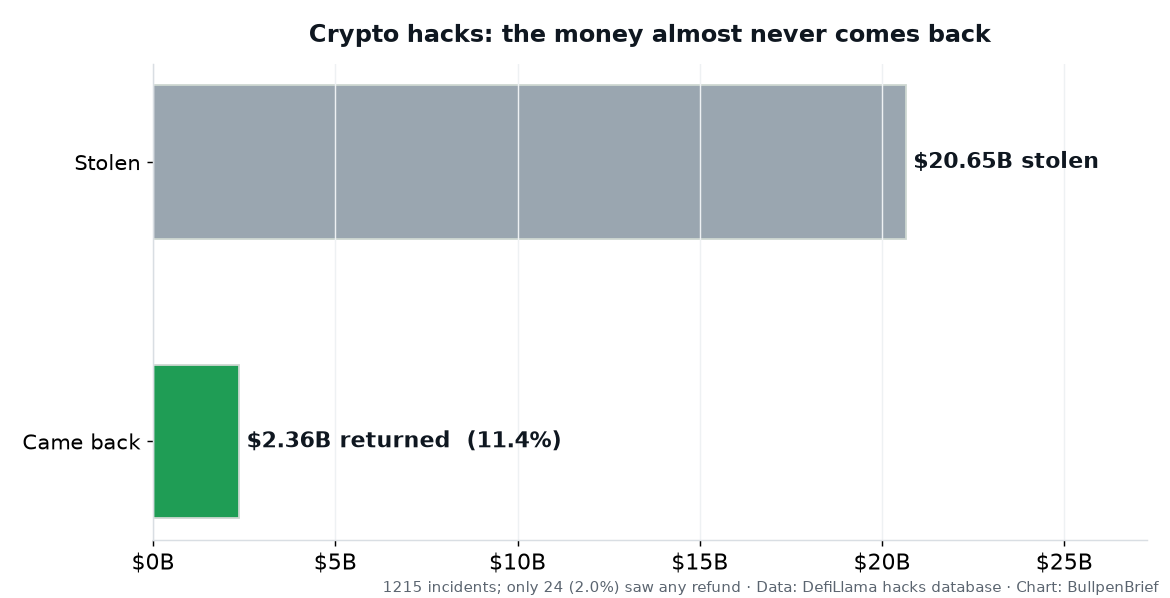
Still, experts caution that such recoveries are rare. Most crypto scams are structured to move money through anonymous wallets and offshore accounts before authorities can freeze them. The OneCoin recovery worked because the NCA identified UK bank accounts used by local promoters, a traceable link that many newer, more sophisticated scams avoid.
What’s Next for the Cryptoqueen Hunt
Despite the £8.5 million victory for victims, the central target remains at large. The NCA says it is still working with the FBI, Europol, and Bulgarian authorities to track down Ignatova. A warrant for her arrest remains active in the UK, and the agency has not ruled out a future reward for information.
Meanwhile, victims’ groups are pushing for a formal compensation scheme funded by the remaining seized assets that are still tied up in U.S. and international courts. If and when more money is freed, the UK model of civil recovery could become the template for distributing it quickly.
For now, the 1,600 people who received cheques from the NCA can finally close one chapter of a painful story. But with the true scale of losses still vast and the mastermind still missing, the broader hunt for the Cryptoqueen and her hidden billions continues.