






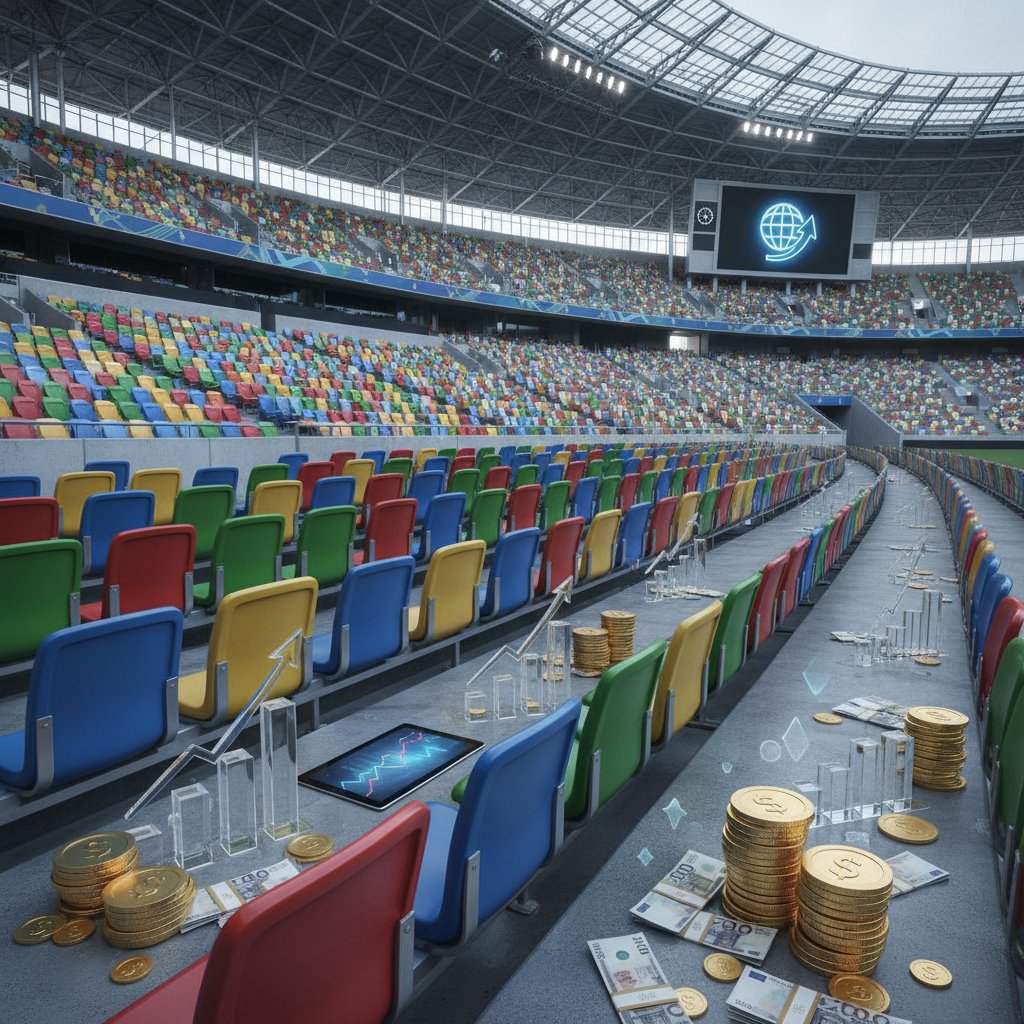
The World Cup is supposed to be a global celebration of sport. But for many fans watching from home, the most striking image hasn’t been a stunning goal-it’s the rows of empty seats in the stands.
From the group stages to early knockout rounds, matches in the 2026 tournament have been plagued by visibly vacant sections. The problem isn’t lack of interest. It’s a symptom of a deeper economic miscalculation: stadiums built on debt-fueled expectations that are now crashing into reality.
What does this mean for you? If you’re saving for a house, investing in a pension fund, or simply paying for groceries, the empty seats are a warning sign. They reflect a global pattern where speculative infrastructure projects-from sports venues to commercial real estate-are overpromising and underdelivering.
History Repeats: The Stadium Debt Trap
This isn’t the first time empty seats have marred a World Cup. In 2014, Brazil saw half-filled arenas after cost overruns and political backlash. The 2022 Qatar tournament had mandatory early departures to avoid ghost-town stands.
But the 2026 edition-hosted across the United States, Canada, and Mexico-was supposed to be different. North America has the world’s most lucrative sports market. Yet, ticket prices have soared to an average of $850 per match, according to data from TicketReport Analytics. That’s a 40% jump from the 2018 Russia tournament, adjusted for inflation.
“The pricing strategy assumed demand was infinitely elastic,” says Dr. Maria Torres, an economist specializing in mega-event financing at Georgetown University. “But real wages in the US and Canada haven’t kept pace. After pandemic-era inflation, fans are choosing between a mortgage payment and a seat in the nosebleeds. The stadiums are collateral damage.”
The result? A reported 15% unsold inventory for group-stage games in cities like Toronto and Mexico City, despite official sell-out claims. Sponsors like Budweiser and Visa are now facing scrutiny over ROI as TV ratings slip.
The Economics of a Half-Empty Bowl
For host cities, the math is brutal. The 2026 tournament required $14.2 billion in stadium upgrades and new builds, according to FIFA’s own financial disclosures. Most of this was financed through municipal bonds and public-private partnerships.
Consider the case of the MetLife Stadium in New Jersey, which underwent a $1.5 billion renovation. With a capacity of 82,500, it needs to fill at least 65,000 seats per match just to cover operational costs. During the group stage, average attendance was 58,000.
“Empty seats are a liquidity crisis in slow motion,” explains James Carter, a former World Bank infrastructure analyst who now advises sports franchises. “When ticket revenue falls short, cities must either raise taxes, slash other services, or default on bonds. We’re already seeing credit rating downgrades for host municipalities.”
That’s not hyperbole. In March, Moody’s downgraded the debt outlook for Toronto from stable to negative, citing “underperforming event-related revenues.” The city’s 2024 budget had projected $200 million in World Cup economic spillover. Current estimates are barely $120 million.
What It Means for Global Markets
Empty seats at the World Cup are a microcosm of a broader trend: the post-pandemic consumer is thriftier. The same forces driving down attendance-sticky inflation, high credit card debt, and a cooling labor market-are reshaping spending habits across the board.
Retail sales in the US grew just 1.8% year-over-year in May, down from 4.2% in 2023. Airlines are reporting slower booking volumes. And corporate earnings calls are peppered with warnings about “cautious consumers.”
The Federal Reserve is watching. Chair Jerome Powell has hinted that rate cuts could come later this year, but stubborn services inflation-including ticket prices-complicates that timeline. If empty stadiums signal that consumers are tapped out, it could accelerate the case for easing.
But there’s a catch. The stadium construction boom was fueled by cheap debt during the 2010s. As interest rates rose, the carrying costs for those bonds ballooned. Now, municipalities are caught between low revenue and high debt service.
For investors, the lesson is clear: avoid municipal bonds tied to mega-event infrastructure. The defaults may not come for another year or two, but the cracks are visible.
The Human Face of Empty Seats
Behind the statistics are real people. Juanita Reyes, a schoolteacher from Los Angeles, saved for two years to take her family to a match in Mexico City. They bought tickets through the secondary market for $1,200 each-double face value.
“We got there and half the upper deck was empty,” she told me. “I felt stupid. I could have paid my rent for two months with that money.”
Reyes’s story is common. Scalpers and official resellers bought up blocks of tickets expecting a shortage. When demand didn’t materialize, they slashed prices-but too late for most budget-conscious fans.
The psychological impact is lasting. A 2023 study from the University of Chicago found that consumers who overpaid for events are 23% less likely to buy premium experiences in the future. That spells trouble for sports leagues, concert promoters, and even travel companies.
FIFA has responded by offering last-minute discounts and releasing “hospitality packages” at 60% off. But the damage is done. Trust in the ticket market has eroded.
Looking Forward: Empty Seats as a Canary
The 2026 World Cup has three more weeks of knockout rounds. The empty seats may fill as the stakes rise and casual fans tune in. But the underlying economics won’t be fixed by a few dramatic wins.
This tournament will be remembered as the moment when the stadium bubble burst. The next host-likely Saudi Arabia in 2034-will inherit a world where investors are skeptical of grand promises and fans are demanding better value.
For now, the empty seats are a mirror reflecting our collective financial strain. They remind us that in a world of rising inequality, even the most universal of human joys-soccer-is becoming a luxury good.