






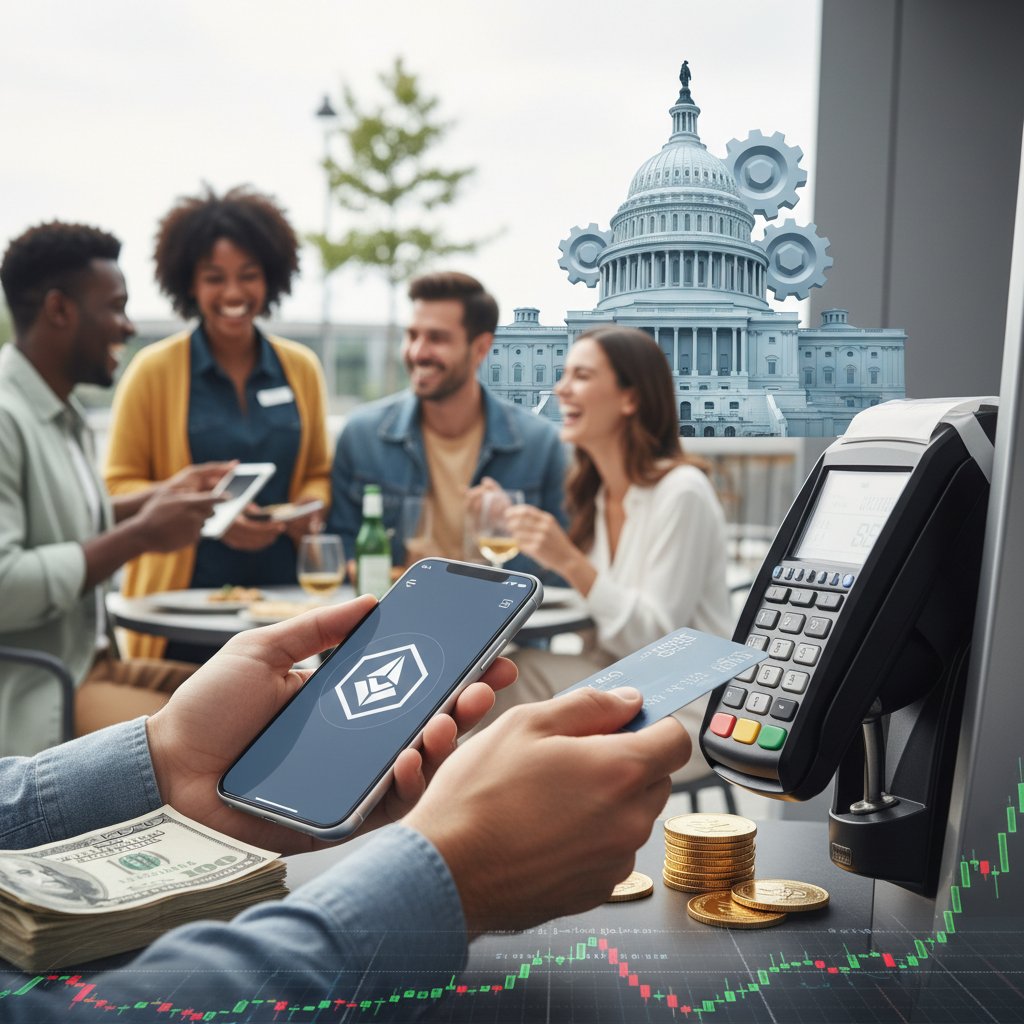
You’re at the pump, tapping your phone to pay for gas. The terminal flashes “Bitcoin accepted.” No Congress approval needed. No regulatory framework. Just a seamless transaction that feels normal, except it’s anything but.
For years, lawmakers on Capitol Hill have debated how to regulate cryptocurrencies. Hearings, white papers, competing bills. And while they dither, Americans have quietly started using crypto for everyday purchases, at restaurants, gas stations, even grocery stores. The most impactful consequence? Your morning coffee could now trigger a taxable event, and the IRS expects you to know the exact cost basis of that latte.
We are living in a regulatory vacuum where adoption has sprinted ahead of legislation. And for the average consumer, the risks are real.
The Quiet Revolution at the Point of Sale
The shift isn’t theoretical. According to a 2023 report from Chainalysis, global crypto payments at merchant terminals surged 40% year-over-year, with over $10 billion processed in the United States alone. Major payment processors like Flexa and BitPay now support transactions at tens of thousands of locations, including major chains like Sheetz, AMC Theatres, and Whole Foods (via third-party apps).
“We’ve seen a 300% increase in merchant signups over the past 18 months,” says Mike Chen, CEO of PayCrypto, a leading crypto payment gateway. “Consumers want the flexibility, and merchants see lower transaction fees compared to credit cards. The adoption is happening in real time, it’s not waiting for Washington.”
Gas stations are a prime example. In Ohio, a pilot program launched in 2022 allowed drivers to pay for fuel using Bitcoin at 30 locations. By mid-2024, that number had expanded to over 200. The convenience is undeniable: a few taps on a smartphone, and the transaction settles in seconds, no bank intermediaries, no chargebacks.
But here’s the kicker: every single one of those purchases is a taxable event in the eyes of the IRS.
The Tax Code Trap: Why Your Coffee Could Trigger a Taxable Event
When you spend a dollar, no capital gains tax applies. When you spend a Bitcoin that has appreciated in value, you owe capital gains tax on the difference between the purchase price and the price at the time of spending. That means every transaction, even a $3 coffee, requires you to calculate cost basis, holding period, and gains or losses.
“The current tax treatment is absurd for everyday transactions,” says Sarah Johnson, tax attorney at KPMG. “The IRS guidance from 2014 treats crypto as property, not currency. So every purchase is a barter exchange. You don’t need to report gains when you trade a stock for a sandwich, but with crypto, you do. It’s a compliance nightmare.”
Consider this: if you bought Bitcoin at $20,000 and later used it to pay for a $50 dinner when Bitcoin was at $60,000, you realize a capital gain of $40 on that dinner. That’s reportable. Multiply that by dozens of small transactions each month, and you’re looking at a tax reporting burden most Americans are unprepared for.
Data from the IRS Criminal Investigation division shows that crypto-related tax audits increased by over 60% in fiscal year 2023. The agency has sent warning letters to thousands of crypto users. The message is clear: they’re watching, even if Congress isn’t acting.
The Regulatory Vacuum: What It Means for Your Wallet
Without clear regulations, the crypto payments ecosystem is a Wild West. Consumer protections that apply to credit cards, like chargebacks or fraud liability limits, don’t exist for most crypto transactions. If you send Bitcoin to the wrong address, it’s gone. If a merchant’s payment processor gets hacked, your digital assets could be at risk.
“Regulation is not about stifling innovation; it’s about creating guardrails,” says Jennifer Lewis, financial policy analyst at the Brookings Institution. “The current patchwork of state-level money transmitter licenses and inconsistent federal guidance leaves consumers exposed. We need a federal framework that defines whether crypto is a commodity, a security, or a currency, because right now, it’s all three depending on who you ask.”
Congress has introduced over 30 bills related to crypto regulation since 2021, including the Lummis-Gillibrand Responsible Financial Innovation Act and the Digital Commodities Consumer Protection Act. None have passed both chambers. The SEC and CFTC continue to fight over jurisdiction, leaving businesses and consumers in limbo.
The result is a fragmented market. Some merchants accept crypto directly; others use third-party apps that convert to fiat instantly. The latter approach avoids volatility risk for the merchant but still creates tax liability for the consumer. Meanwhile, a growing number of gas stations and fast-food chains are experimenting with stablecoins like USDC, which theoretically eliminate the capital gains issue, but even stablecoins are not universally treated as non-taxable by the IRS.
What Comes Next: The Stakes for Everyday Americans
The gap between adoption and regulation is widening. If Congress continues to stall, we risk a scenario where millions of Americans unknowingly violate tax laws while trying to use a revolutionary payment method. The solution is not to ban crypto spending, that ship has sailed, but to modernize the tax code and create clear consumer protections.
Some lawmakers are pushing for a de minimis exemption for small transactions, similar to the foreign currency exemption that allows travelers to avoid reporting gains on small exchanges. A bill introduced in the House in early 2024 would exempt gains under $200 per transaction from taxation. It hasn’t advanced.
In the meantime, the adoption train keeps rolling. Major payment networks like Visa and Mastercard are integrating crypto settlement capabilities. The New York Stock Exchange is exploring crypto payment rails for dividends. And yes, that gas station pump in Ohio is still accepting Bitcoin.
For the everyday American, the bottom line is this: you can spend crypto today at thousands of locations, but you must track every single transaction for tax purposes. Use software like CoinTracker or Koinly to automate cost-basis calculations. Keep records of every purchase. And maybe, just maybe, wait until you’re at home before buying that $3 coffee with Bitcoin, because the IRS will want to know about it.
The future of crypto payments is already here. The question is whether Washington will catch up before the compliance burden crushes mainstream adoption.