


I remember the exact moment my wallet winced. It was July 2023, gate 12 at Stansted, and the woman in front of me was handed a tablet by a Ryanair gate agent. She had two kids under six. The fee to sit together? £16 each way, £32 round trip for the privilege of not having a five-year-old scream at a stranger. She paid it. Because what else are you going to do?
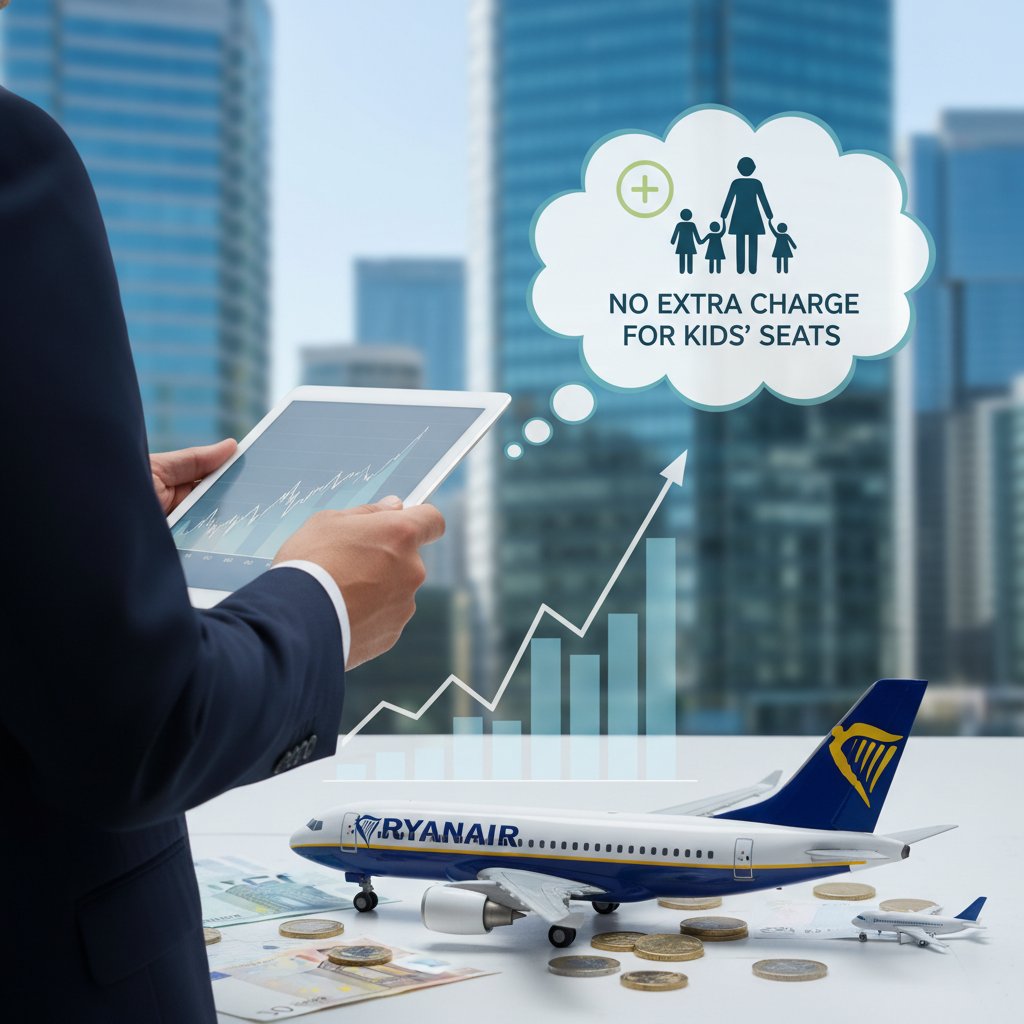
Well, as of this week, you no longer have to. After years of public backlash and quiet regulatory pressure, Ryanair has reluctantly scrapped its £8-per-leg fee for parents who want to sit next to their young children. The airline framed the move as a consumer-friendly gesture, but let’s be honest, if they’d had their way, they’d still be charging for the oxygen in the overhead bins.
Here’s the figure that matters: Ryanair generated roughly €45 million annually from seat selection fees for families, according to analysts at Goodbody. That’s now gone. In a market where the average fare is €42, losing that revenue stream is not a rounding error. It’s a hit. But the airline’s hand was forced, and the implications for budget carriers, family travel budgets, and consumer rights are bigger than one fee change.
The Backstory: How We Got Here
Ryanair’s policy was simple and brutal: if you booked a standard fare, seat assignments were random. Want to guarantee your three-year-old isn’t stuck next to a businessman who hasn’t slept in 36 hours? That’ll be £8 per person, per leg. The airline argued that parents could check in online and try to get seats together for free, a claim that rarely matched reality, as anyone who’s tried to game the Ryanair app at 23:59 knows.
Consumer groups pushed back hard. In 2023, the UK Civil Aviation Authority (CAA) issued guidance making clear that airlines should not charge extra for seating children next to parents. Ryanair initially resisted, saying it was a matter of operational efficiency. But the political heat kept rising. By early 2025, the European Consumer Organisation (BEUC) had filed complaints in six countries. Ryanair was facing potential fines and reputational damage just as summer bookings were heating up.
So they folded. The new policy, effective immediately, applies to children under 12 traveling with an adult on the same booking. Parents can now select adjacent seats at no extra cost during check-in. The airline says the change is a “positive step” but warns that it may lead to higher base fares. Translation: they’re going to recoup that €45 million somewhere, probably in your checked bag fee.
What This Means for Your Wallet
For a family of four flying from Dublin to Malaga, the savings are immediate. Two adults, two kids under 12, under the old system, you’d pay £32 each way for the guarantee of sitting together. That’s £64 per round trip. Enough to cover a nice dinner in the Algarve, or about half a tank of petrol in the UK these days. And speaking of energy costs, Brits have been crushed by rising bills, you can read our guide on how to slash energy costs as debt hits record for more on that broader squeeze.
The fee removal also aligns with a broader trend of family-friendly consumer wins. The UK government recently slashed VAT on family attractions to 5%, check out our breakdown on summer savings from the VAT cut on family days out. Between cheaper theme parks and free seat selection, parents might actually keep a few quid this summer. But don’t get too comfortable.
James McIlroy, an aviation analyst at Bernstein, put it bluntly: “Ryanair is a machine designed to extract every possible euro from passengers. They’re not doing this out of kindness, they’re doing it because the regulatory cost of not doing it was about to exceed the revenue. Expect them to find new ways to charge for things you didn’t know you needed.”
And he’s right. The airline has already increased its priority boarding fee by 10% in the last quarter. The checked bag fee is up 15% since 2023. Ryanair’s ancillary revenue per passenger hit €24.50 in 2024, up from €22.80 the year before. Removing the family seating fee might cost them €45 million, but they’ll quietly recover it through other add-ons. Classic Ryanair, give with one hand, pick your pocket with the other.
The Bigger Picture: Consumer Rights vs. Budget Airlines
This isn’t just about one airline. The CAA has been pushing for transparency in airline fees for years. In 2024, they launched a formal review into “drip pricing”, those irritating extras that turn a £29 advertised fare into a £120 booking. Ryanair’s seating fee was a textbook example. The CAA’s guidance on flying with children explicitly states that airlines should not charge for seats that ensure families sit together. Ryanair’s resistance was becoming a liability.
Other low-cost carriers are watching closely. Wizz Air and easyJet still charge for seat selection, though easyJet allows families to sit together free if they book early enough. Ryanair’s move could pressure them to follow. But don’t expect a wave of altruism. The budget airline model depends on unbundling, charging separately for everything from a bottle of water to the right to breathe cabin air.
The broader question is whether regulators will go further. In the US, the Department of Transportation proposed a rule in 2024 requiring airlines to seat families together for free. The EU is considering similar legislation. If that happens, the €45 million hit Ryanair just took will look like pocket change.
Dr. Elena Vasquez, a consumer rights economist at the University of Barcelona, sees this as a tipping point. “Airlines have been able to segment families as a captive market for too long. This is the beginning of the end for the worst of the ancillary fees. But, and this is the kicker, base fares will rise. You can’t have both rock-bottom ticket prices and free everything. Something has to give.”
And that’s the trade-off. Ryanair’s stock (RYA:ISE) dipped 0.8% on the announcement, but recovered within two trading days. The market isn’t panicking. Analysts at Davy Stockbrokers noted that the move could actually boost passenger numbers by 2-3% as families who previously avoided Ryanair reconsider. Higher load factors mean more onboard sales, coffee, scratch cards, and those weird lottery tickets they push at 35,000 feet.
The Bottom Line
So, parents, you won. Sort of. You’ll save £64 on a round trip to the Costa del Sol. But don’t be surprised if your base fare is £10 higher next summer, or if the bag weight limit drops another kilo. Ryanair isn’t a charity, they’re a publicly traded company with a 20% operating margin that would make most airlines weep with envy. They’ll find the money somewhere.
For now, though, I’ll take the win. My niece is three, and the thought of her being seated next to a stranger who hasn’t budgeted for a tantrum is enough to make me pay almost anything. Almost. Next up: convincing Ryanair to stop charging for using the loo. A man can dream.
Marcus Webb is a financial analyst and markets reporter with a decade on Wall Street. He flies Ryanair only when absolutely necessary.
Frequently Asked Questions
Does the free seating apply to all Ryanair flights?
Yes, the new policy applies to all Ryanair flights for children under 12 traveling with at least one adult on the same booking. Parents can select adjacent seats at no extra cost during online check-in. The airline warns that availability may be limited if the flight is full, but they will attempt to seat families together.
Will Ryanair raise other fees to compensate for this lost revenue?
Almost certainly. Ryanair’s CEO Michael O’Leary has a long history of recouping lost revenue through other charges. Priority boarding, checked bags, and even payment processing fees have all increased in recent years. The airline’s ancillary revenue per passenger is expected to rise further in 2025.
Does this mean I should book Ryanair for my family vacation now?
It depends on your priorities. If low base fare and free seat selection are your main concerns, Ryanair is now more attractive. But factor in the hidden costs, baggage, seat selection for older kids (over 12), and the fact that the airline still charges for nearly everything else. Compare total trip cost with alternatives like easyJet or even full-service carriers that include bags and seat selection in the fare.