


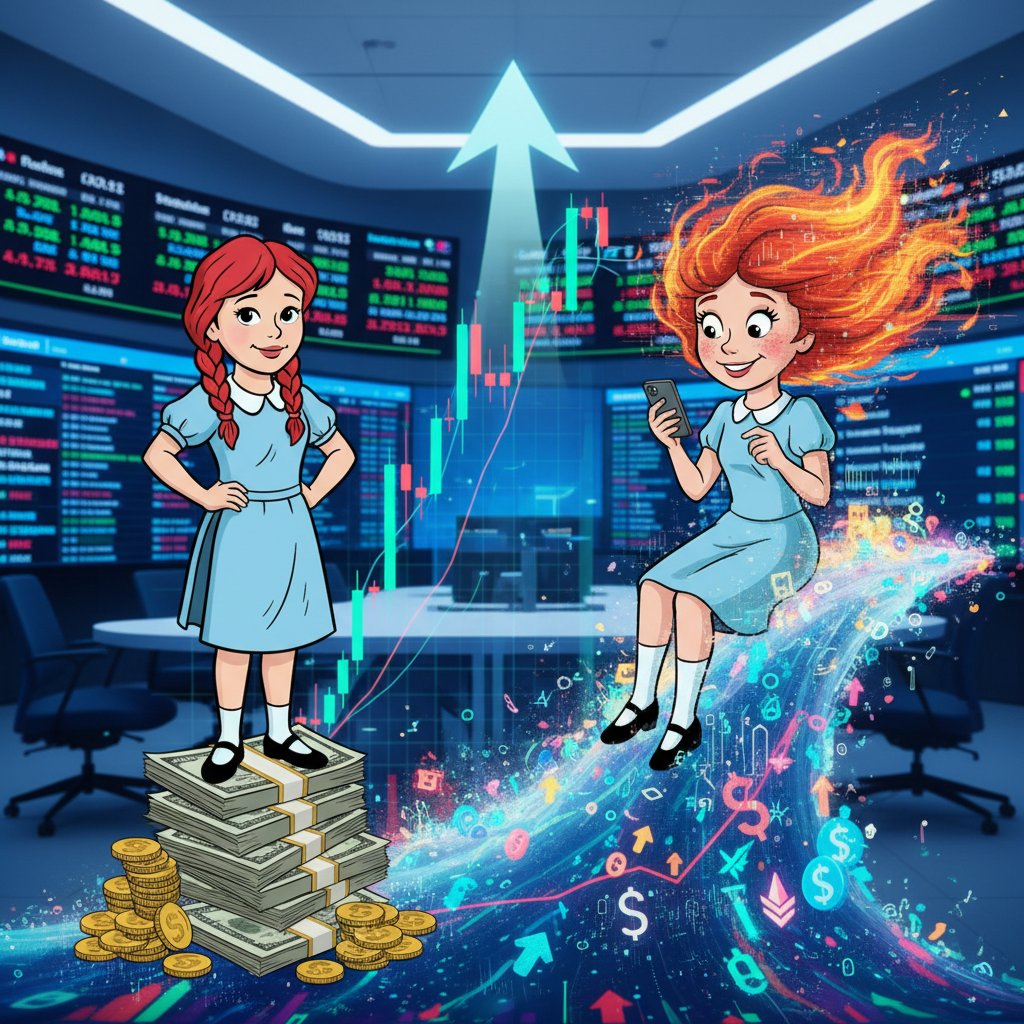
Wendy’s stock surged 87% in three trading sessions last week, adding $3.2 billion to its market cap. The trigger? A Reddit post. Not a new menu item, not a blockbuster earnings beat, not a franchise deal in Asia. Just a handful of retail traders in a subreddit chanting “Wen tendies?” and suddenly the fast-food chain became the latest meme stock spectacle.
But here’s the thing that’s getting buried under all the rocket emojis: Wendy’s is a fundamentally boring business. It sells square hamburgers and Frostys. Its same-store sales grew 3.4% last quarter-respectable but hardly explosive. Its dividend yield sits at a modest 2.1%. So why are traders treating it like the next GameStop?
Because meme stocks don’t follow earnings reports. They follow narratives.
This is a tale of two Wendy’s. One is a legitimate, 6,000-location QSR chain with $2.2 billion in annual revenue and a $4.7 billion market cap. The other is a ticker symbol that became a battleground between short-sellers and a pack of wired-up day traders. And for anyone who bought in at Monday’s high of $24.17, it’s already a bloodbath. Shares closed Friday at $18.40, down 24% from the peak.
Let’s dig into what really happened-and why this matters far beyond the drive-thru.
The Reddit Revival
It started, as most modern financial chaos does, on r/WallStreetBets. On Monday morning, a user with 14,000 karma posted a screenshot of a 200-share call option expiring Friday with a $22 strike price. The caption: “Wen Wendy’s?” Within hours, the post had 8,000 upvotes. By Tuesday, the stock opened 40% higher.
Short interest in Wendy’s had crept up to 18% of float-not extreme by meme stock standards (AMC hit 40% in 2021), but enough to catch the attention of gamma-squeeze hunters. As call buying exploded, market makers hedged by purchasing shares, which pushed the stock even higher. That, in turn, attracted more calls. A textbook short squeeze.
“We’re seeing a replay of the 2021 playbook, but the targets are different,” says David Kalt, chief strategist at Crossmark Global Investments. “Back then it was struggling video game retailers and movie theaters. Now it’s a profitable fast-food chain. The common thread is high short interest and a retail base that feels like it’s getting revenge on hedge funds.”
Volume on Wednesday hit 142 million shares-ten times the 90-day average. For context, that’s more shares traded in one day than Wendy’s entire outstanding float. FINRA issued a warning about “unusual options activity” in the name, but by then the rocket emojis were already in orbit.
Fundamentals Don’t Matter (Yet)
Let’s separate the signal from the noise. Wendy’s Q3 2024 earnings, released in November, showed revenue of $560 million, up 2.8% year-over-year. Same-store sales in North America grew 3.4%, driven largely by the $5 Biggie Bag value meal. Operating margins held at 16.2%. Nothing to sneeze at-but nothing to justify a 50% one-week stock surge.
The company’s enterprise value sits at roughly 12x trailing EBITDA. That’s in line with McDonald’s (13x) and above Burger King’s parent Restaurant Brands (11x). At the peak of the meme frenzy, Wendy’s was trading at 18x EBITDA-a valuation that assumes future growth the company hasn’t shown or guided toward.
“The math doesn’t work unless you believe Wendy’s is going to triple its store count or invent a new category of food,” says Maria Torres, senior equity analyst at Edward Jones. “And nothing in their filings suggests that’s happening. The company is executing well, but it’s not high-growth.”
CEO Kirk Tanner did announce a plan to install digital menu boards in all U.S. stores by 2026, with a cost of roughly $200 million. That’s smart, and it should improve margins. But it’s not a catalyst for a 90% stock pop.
So what is the catalyst? A social media mob. And that’s the uncomfortable truth for anyone trying to make sense of markets today.
The meme stock phenomenon has morphed. In 2021, it was about squeezing hedge funds who had over-shorted dying retailers. Now, it’s become a kind of performance art-a way for retail traders to signal defiance against institutional capital by pumping random tickers. Wendy’s wasn’t even the only one last week: BlackBerry (BB) popped 18%, and Nokia (NOK) rose 9%. Remember those names from the first wave? They’re back.
The Wendy’s Dividend Drama
There’s an ironic subplot here. Wendy’s has paid a quarterly dividend for 14 straight years and currently yields 2.1%. In theory, that makes it a defensive holding for income investors. But the meme frenzy has turned it into a speculative vehicle-exactly the kind of volatility dividend investors avoid.
During the surge, the implied dividend yield collapsed to 1.3% because the stock price inflated so quickly. Income investors who bought at the bottom last month are sitting on 30% gains, but new buyers aren’t buying for the dividend. They’re buying for the upside-or just for the thrill.
“There’s a real risk here that long-term shareholders get shaken out by the volatility,” says Andrew Freedman, portfolio manager at Smead Capital Management. “Wendy’s board should be worried about this. A stable stock attracts stable capital. A meme stock attracts Robinhood traders who dump it as soon as the options expire.”
And dump they did. On Thursday, with the stock at $23.50, more than 50,000 call options expired in the money. But by Friday morning, the stock had reversed and fallen below $19. The gamma squeeze worked in reverse: market makers sold shares to unwind hedges, accelerating the decline.
Retail traders who bought at the top are now underwater. Some are averaging down. Others are posting loss porn. The cycle is brutally predictable.
What This Means for You
If you’re holding Wendy’s stock, the fundamental case hasn’t changed. The company still generates $1.1 billion in free cash flow annually, still returns capital via dividends and buybacks, and still has room to grow breakfast sales. Breakfast now accounts for 7% of sales, up from 5% two years ago. That’s incremental, but real.
If you’re trading Wendy’s options, you’re playing against market makers and algorithms that have seen this movie before. The short interest has actually increased slightly since the surge-meaning more bets against the stock-which could set up another squeeze. But each squeeze tends to be weaker than the last, as the options market adjusts and liquidity deepens.
And if you’re just watching from the sidelines, this is a textbook case of how social media can override fundamentals in the short term. But the short term is dangerous. As the BBC noted during the original GameStop saga, “the market can remain irrational longer than you can remain solvent.”
One more thing: Wendy’s also faces external headwinds that no Reddit thread can fix. Labor costs are rising, beef prices are volatile, and Trump’s threatened 100% tariff on European goods could indirectly hit fast-food supply chains if it triggers retaliatory tariffs on American agricultural exports. That would raise input costs across the industry.
The bottom line? Wendy’s is a solid company. But it’s not a solid trade-not at these levels, not with this volatility. The meme stock crowd will move on to the next target next week. And when they do, the only people left holding the bag will be the ones who thought the party would last forever.
– James Park is a crypto and fintech reporter for BullpenBrief, tracking digital assets and market anomalies since 2017.
Frequently Asked Questions
Why did Wendy’s become a meme stock?
Wendy’s recently had short interest around 18% of float, making it a target for retail traders on r/WallStreetBets looking to trigger a short squeeze. A viral post about call options ignited buying volume, and gamma hedging by market makers amplified the move. It’s the same pattern seen with GameStop and AMC in 2021.
Is Wendy’s a good long-term investment?
From a fundamentals perspective, Wendy’s generates solid cash flow, pays a dividend, and is expanding breakfast and digital menu boards. However, the stock is now trading at elevated multiples due to the meme surge, making it unattractive for new long-term buyers. Investors should wait for the volatility to subside before considering a position.
How can I protect myself from meme stock volatility?
Avoid buying stocks that have surged more than 30% in a week without a fundamental catalyst. Use limit orders to control entry prices, and never invest money you can’t afford to lose. If you’re trading options, be aware that implied volatility is extremely high-options are priced for big moves, so small adjustments can lead to large losses.