


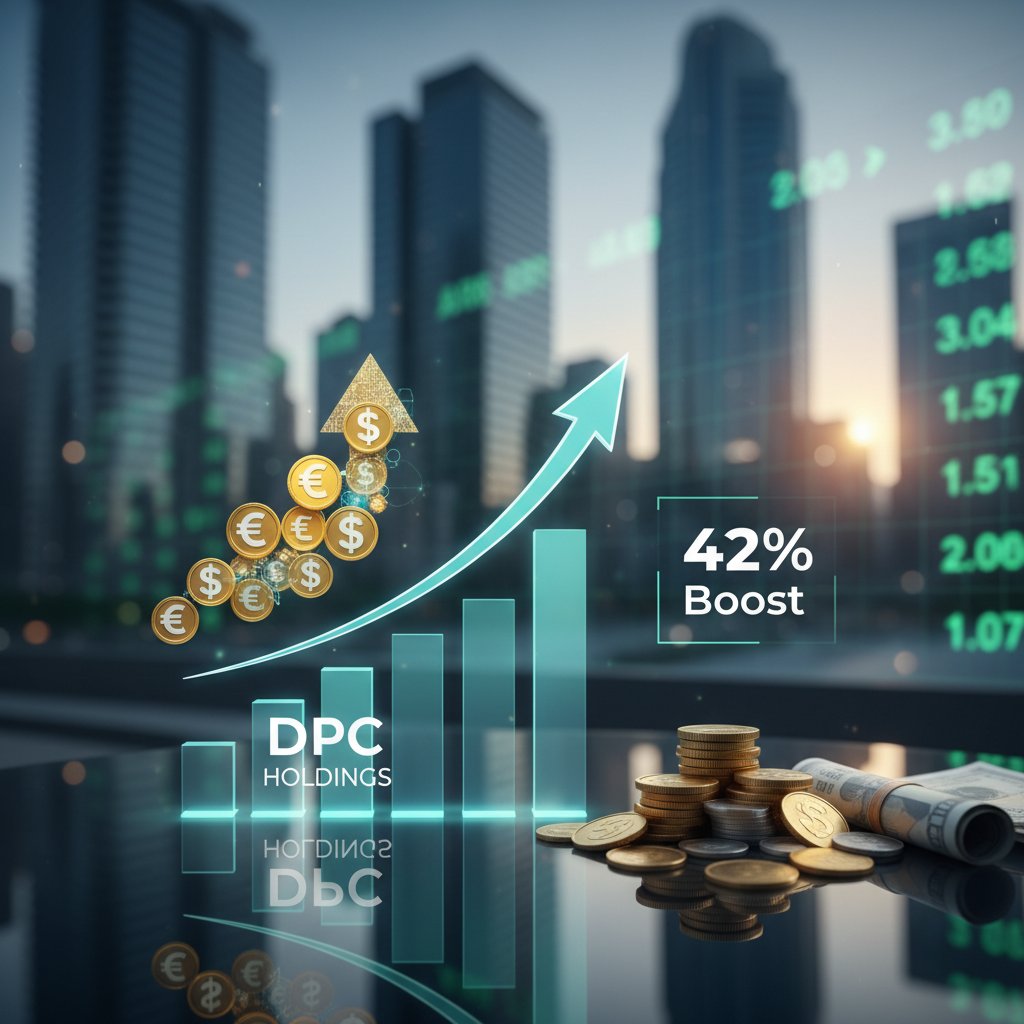
I remember standing in the cold outside the New York Stock Exchange two years ago, watching the confetti fly for a company that barely traded above its IPO price. That day felt flat. But today? DPC Holdings (DPC) hit the floor running, and then some. The data center infrastructure holding company surged 42% on its first day, closing at $42.56 a share. It wasn’t just a good day for DPC investors. It was a signal.
The IPO market has been stuck in neutral since 2022’s rate hikes spooked everyone. But DPC’s debut, pricing above the range and still jumping, suggests the window might be cracking open again. At least for the right kind of company.
Who Exactly Is DPC Holdings?
DPC Holdings isn’t a sexy name, and that’s sort of the point. It’s a holding company that owns a portfolio of data center operators focused on edge computing and AI workloads. Think of it as a landlord for the cloud, but one that also runs the power and cooling systems. This isn’t your grandfather’s REIT.
The company filed its S-1 in late 2024, offering 15 million shares at $28 to $30. They priced at $30, the top end, and opened at $38. By lunchtime, it hit $42.60 before settling. That’s a debut that makes underwriters smile and retail traders scramble.
“DPC’s pop is a combination of scarcity and narrative,” said Maria Gonzalez, IPO analyst at Renaissance Capital. “There’s been a drought of new listings, especially in infrastructure. Investors are hungry for anything tied to AI capex. DPC fits the bill without being a speculative pre-revenue story.”
Why It Popped, and What It Means for You
First, the easy part: supply. Only a handful of IPOs have priced above $500 million in the past six months. DPC’s $450 million raise was modest, but demand was huge. Institutional orders were oversubscribed 8x, according to sources close to the deal. That forced the underwriters to allocate conservatively, leaving retail buyers chasing shares on the open market. Classic supply-and-demand math.
Second, the sector tailwind. Data centers are the concrete and steel of the AI boom. Everyone from Microsoft to Meta is leasing capacity as fast as they can build it. DPC’s portfolio includes 14 facilities across the U.S. and Europe, with a 94% occupancy rate. That’s not just a story, it’s cash flow.
But here’s the catch: DPC carries a lot of debt. Its balance sheet shows $2.1 billion in long-term borrowings, mostly from acquiring those centers. Rising interest rates have squeezed margins. The company’s interest coverage ratio slipped to 2.3x last quarter. “It’s manageable, but investors should watch for any rate cuts, or lack thereof,” warned James Liu, portfolio manager at KraneShares. “If the Fed holds rates high, DPC’s cost of capital stays painful.”
Still, the market didn’t care on day one. Momentum funds piled in, and short sellers stayed away. The question is whether this pop fades, or sticks.
Context: The State of IPOs in 2025
DPC’s debut comes at a delicate moment. The broader IPO market is slowly thawing after a brutal 2023 and a tentative 2024. According to data from EY, global IPO proceeds in Q1 2025 hit $28 billion, up 25% year-over-year but still well below the 2021 peak of $100 billion per quarter. The U.S. accounted for about 40% of that, driven by a few big listings like DPC and a handful of biotech names.
But headwinds remain. Nasdaq data shows that the average first-day return for IPOs this year is about 18%, down from 31% in 2021. So DPC’s 42% is an outlier, and outliers attract scrutiny. Are we seeing a bubble in AI-adjacent stocks? Or is this genuine demand for real assets?
Look, trade policy isn’t helping either. The Trump administration’s renewed threats of tariffs on European imports, including digital services, have created uncertainty for companies with international exposure. Trump’s 100% tariff proposal on Europe over digital tax disputes could roil markets if enacted. DPC has three data centers in Europe, and any slowdown in transatlantic commerce would hit their expansion plans. The company downplayed this risk in its prospectus, but it’s a real variable.
What Comes Next for DPC
The first day is glamour. The real test begins on day 90 when lockup agreements expire and insiders can sell. If DPC’s stock holds above $40, the company will probably do a secondary offering to raise more money for acquisitions. If it sinks, well, lockup expirations can be ugly.
Analysts are split. A few have initiated coverage with “buy” ratings and price targets around $45. Others are cautious. “The valuation is stretched at 22x forward EBITDA,” said Sarah Chen, equity strategist at Morningstar. “In a normal market, infrastructure companies trade at 12-15x. You’re paying a premium for the AI tailwind. That’s a bet, not a valuation.”
For the average investor: DPC is not a safe harbor. It’s a story stock with tangible assets, which is better than a pure hype play, but still risky. If you missed the IPO, chasing it now at a 42% premium is a gamble. Wait for a pullback or the lockup expiration.
But here’s the bigger takeaway: the IPO market is blinking back to life. If DPC can sustain its gains, more companies will rush to list. That would mean more opportunities, and more risk, for everyone. So watch this ticker. Not because it’s the next Amazon, but because it’s a canary in the coal mine of capital markets.
Frequently Asked Questions
What exactly does DPC Holdings do?
DPC Holdings is a holding company that owns and operates data centers focused on edge computing and AI workloads. They lease space and power to cloud providers, enterprises, and hyperscalers. Think of it as a real estate and infrastructure play on the growing demand for computing capacity.
Why did DPC’s stock pop 42% on its first day?
Several factors: strong institutional demand (oversubscribed 8x), a scarcity of new IPOs in 2025, and investor enthusiasm for any company tied to AI capital expenditure. The pricing at the top of the range and a clean opening also fueled momentum buying.
Is it too late to buy DPC stock after the pop?
Most analysts advise caution. The stock now trades at a premium to peers in the infrastructure space. If you believe in the long-term AI trend and are willing to weather volatility, a small position might make sense. However, waiting for a pullback or a post-lockup dip could be wiser. Always do your own research.