


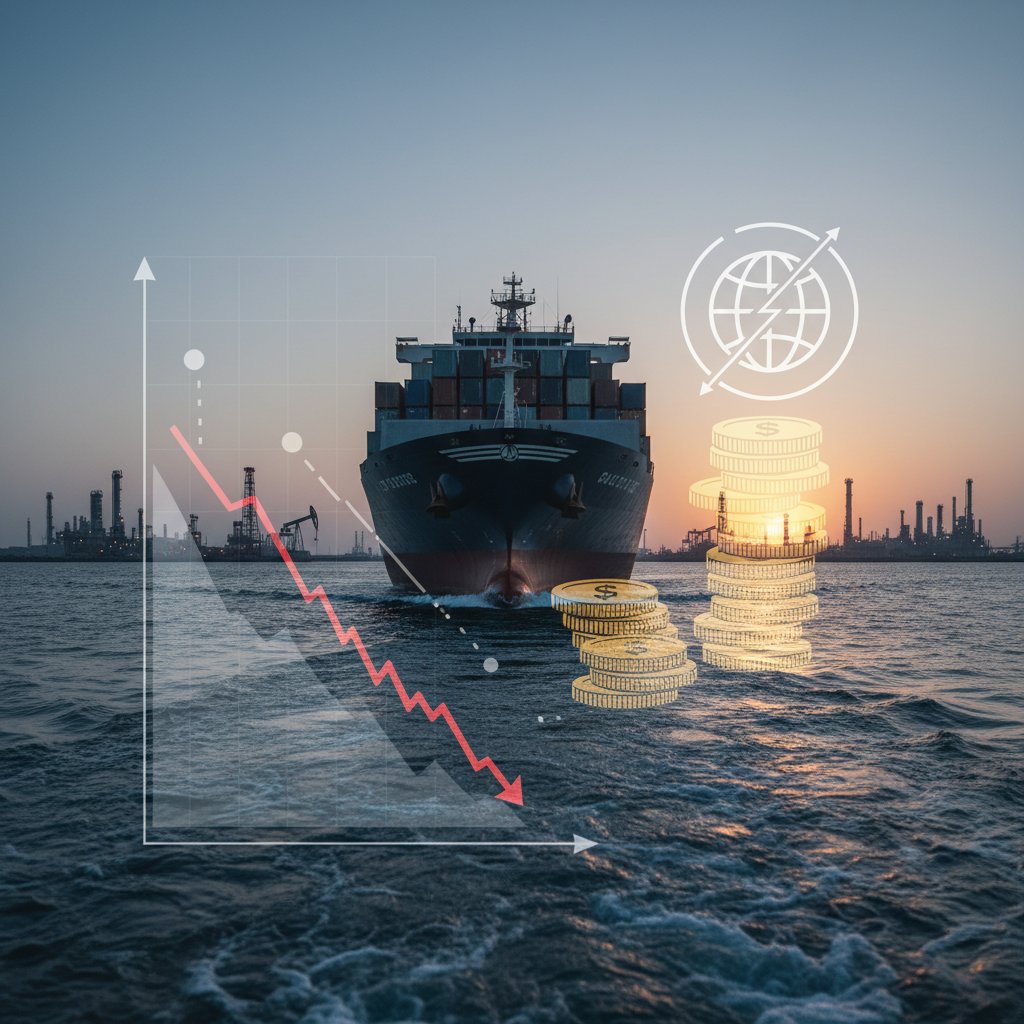
Let’s be blunt: the shipping recovery in the Persian Gulf was a mirage. And now the mirage has evaporated.
Renewed strikes in the region have sent shockwaves through maritime traffic, threatening to undo the fragile rebound in shipping that has been building over recent months. The attacks come at a particularly painful moment: traffic through the Strait of Hormuz had just reached its highest levels since the start of the U.S. war in Iran, according to tanker tracking data from Vortexa. For a brief window, it looked like the shipping industry was finally turning a corner, lower insurance premiums, more vessels willing to transit, and a cautious easing of war risk surcharges. That window is now slamming shut.
“This is a classic case of two steps forward, one giant leap back,” says Dr. Lina Al-Rashid, a shipping and logistics analyst at Gulf Maritime Research in Dubai. “The past few weeks saw a 15% increase in tanker transits. Now we’re likely to see that number drop by at least half within a week. Insurers are already repricing.”
The Fragile Recovery, and Why It Was Always Tenuous
To understand why this is such a setback, you need to look at what the shipping industry had managed to claw back. Since the U.S. launched military operations in Iran, starting with airstrikes in late March, the Strait of Hormuz became a no-go zone for many commercial vessels. War risk premiums skyrocketed, some shipping lines suspended operations entirely, and crude oil tankers faced a 10x jump in insurance costs. By mid-summer, traffic had bottomed out at roughly 40% of normal levels.
But then came the gradual thaw. In October and November, as diplomatic backchannels flickered and some security guarantees were tentatively offered, shipping companies began to test the waters. By early December, traffic had reached its highest point since the war began. For context, that’s still only about 70% of pre-conflict levels, but it was a sign of hope.
Look, the shipping industry is a barometer for global risk appetite. And when you see more vessels lining up to pass through the world’s most important oil chokepoint, it signals that investors and insurers are willing to bet on stability. That bet just got blown up.
Why Now? The Timing of the Attacks
The strikes, which reportedly targeted a commercial tanker and a military escort vessel near the Strait of Hormuz on Monday, weren’t random. They came just as the U.S. Navy was scaling back its escort operations, and as Iran-backed militia groups were signaling a desire to disrupt any normalization of shipping. “It’s a deliberate message,” says James Colton, a senior geopolitical risk analyst at Control Risks. “The attackers want to demonstrate that no one is safe, no matter how careful the routing. They want to re-instill fear in the insurance market.”
And it worked. By Tuesday, the London insurance market had added a 0.5% surcharge for any vessel entering the Gulf of Oman, and war risk premiums for Hormuz transits jumped from 0.1% of hull value to 0.75% overnight. At current oil prices, that translates to roughly $200,000 extra per supertanker voyage. It’s a tax that most shippers cannot absorb, not when freight rates are already depressed.
“We were just starting to see some of the smaller independent tanker owners come back into the market,” says Maria Kostova, a senior research analyst at Poten & Partners, a shipbroking firm. “Now they’ll likely pull back again. The big shipping lines have the balance sheets to handle the volatility; the little guys don’t. And that’s exactly who the attacks target.”
Ripple Effects: Oil Prices, IPO Markets, and Broader Sentiment
The immediate impact on crude oil was predictable: Brent crude spiked 3.2% on Tuesday, briefly touching $92 a barrel before settling back to $89.50. But the real story isn’t the price, it’s the widening of the Brent-Dubai spread, a sign that traders are pricing in a structural disruption to physical oil flows from the Gulf. Asian buyers are now scrambling for alternative supplies from the Atlantic Basin, lifting tanker rates there, but those journeys take weeks.
Then there’s the broader market sentiment. DPC Holdings soared 42% on its debut last week, fueling chatter that the IPO market was finally waking up from its slumber. That kind of risk-on euphoria doesn’t sit well with geopolitical shocks in the Gulf. History shows that insurance costs, shipping delays, and oil price spikes tend to curb investor enthusiasm for new listings, especially for companies with exposure to global supply chains. And if you’re thinking about the shiny new world of tokenized assets, consider this: Invesco’s new tokenized money market fund is built on the assumption that real-world assets can be seamlessly traded. Disrupted shipping undermines that assumption at every level, from the physical commodities that back many stablecoins to the logistics of settlement.
“The market wants to believe that blockchain and smart contracts have made the world frictionless,” says Colton. “But oil tankers don’t run on code. They run on fuel and insurance and safe passage. And when that safe passage disappears, all the tokenization in the world can’t move a barrel of crude.”
What Comes Next: A Long, Dangerous Holding Pattern
So where do we go from here? The immediate outlook is grim. Expect shipping companies to revert to wartime protocols: slower speeds, zigzag routes, armed security teams, and rerouting around the Cape of Good Hope, adding 10-12 days to journeys. That will push up freight costs for everything from crude oil to LNG to consumer goods moving through the region. Insurance costs will remain elevated until there is a credible reduction in threat levels, and that’s hard to achieve when the attackers are decentralized and have no single command structure to negotiate with.
The U.S. Navy has promised to increase patrols, but that’s a Band-Aid. The real solution requires a diplomatic off-ramp that doesn’t appear to be forthcoming. Meanwhile, the shipping recovery that was the envy of the industry just three weeks ago is now a cautionary tale. For investors in oil tanker stocks, LNG carriers, or even broader infrastructure funds with Gulf exposure, this is a stark reminder that geopolitics always trumps economics.
As for the broader market, the IPO rally, the crypto boom, the enthusiasm for new financial products like tokenized funds, they may well shrug off the news for a few days. But if the strikes persist, the underlying supply chain disruption will eventually find its way into earnings reports, inflation data, and central bank thinking. So enjoy the brief moment of calm while it lasts. The Strait of Hormuz doesn’t stay quiet for long.
Frequently Asked Questions
What caused the renewed strikes in the Persian Gulf?
The latest attacks appear to be orchestrated by Iran-backed militia groups seeking to disrupt the gradual normalization of shipping through the Strait of Hormuz. They targeted a commercial tanker and a military escort vessel, likely to signal that no vessel is safe, regardless of protective measures.
How will this affect oil prices and global supply chains?
Oil prices have already spiked 3% on the news, and the Brent-Dubai spread has widened, indicating a structural disruption. Shipping insurance costs have surged, and many independent tanker owners are expected to withdraw from the Gulf. This will increase freight costs and transit times, potentially hitting consumers in the form of higher energy and imported goods prices.
What is the outlook for shipping through the Strait of Hormuz in the coming weeks?
Short-term, traffic will drop significantly, possibly by half from the recent peak. Vessels will likely resort to slower, safer routes or avoid the area entirely by going around Africa. A sustainable recovery depends on a diplomatic breakthrough that reduces the threat level, which currently appears unlikely. The industry is bracing for a prolonged period of high risk and elevated costs.