




You just watched your brand-new Kia EV6 roll away on CCTV. A thief, maybe two, cracked the security in under 90 seconds. You pull out your phone, open the Kia Connect app, and tap “Locate My Vehicle.” And then, nothing. No pin-drop. No flashing red dot on a map. Just a spinning wheel of despair.
Welcome to the grim reality of modern car tracking. Despite automakers stuffing vehicles with GPS receivers, cellular modems, and satellite antennas, the vast majority of stolen cars in the UK, US, and Canada simply vanish for good. The tracking tech is there. It’s just not allowed to work the way you’d expect.
Kia recently told the BBC that UK privacy laws prevent its location tracking function from being used to live-track vehicles. Translation: even if your car has a GPS chip powerful enough to guide a missile, Kia’s hands are tied. They can tell you where the car was, maybe. They cannot tell you where it is right now. That split-second delay is all a thief needs to stash the car in a shipping container, chop it for parts in a Birmingham lock-up, or drive it onto a ferry to Eastern Europe.
“The technology exists to locate a stolen car within 10 meters. The problem is that the law, particularly in Europe, treats real-time location data as a privacy violation rather than a theft prevention tool,” says Dr. Eleanor Cross, automotive cybersecurity researcher at the University of Warwick.
This isn’t just a Kia problem. Ford, Volkswagen, BMW, Toyota, almost every major manufacturer offers some form of stolen vehicle tracking. But the systems are almost universally designed to be passive. They report location only after the car has been reported stolen, a police case number has been generated, and in some cases, a court order has been obtained. By that point, the car has been in a thief’s hands for four, six, maybe twelve hours. Long gone.
The Legal Red Tape That Kills Real-Time Tracking
Here’s where it gets ugly, and a bit absurd. The UK’s Investigatory Powers Act 2016, Europe’s GDPR, and Canada’s PIPEDA all classify continuous location data as “highly sensitive personal information.” The logic from regulators: if a car company can track your car 24/7, that same data stream could track you, your trips to the doctor, visits to a lover’s house, the fact that you spend three hours every Tuesday at an AA meeting. Privacy advocates argue that private companies should never hold real-time tracking data on millions of people without explicit, ongoing consent.
But here’s the rub. Car theft is not a privacy issue. It’s a property crime. And the current regulatory framework prioritizes the hypothetical privacy of the owner over the actual theft of the physical asset. The car is gone. The owner wants it back. Instead, the system treats the owner like a potential stalker.
In the US, the situation is slightly better but still messy. The Stored Communications Act requires a warrant for real-time location data older than 180 days. For newer data, like, say, the location of a car stolen 45 minutes ago, the standard is lower. Law enforcement can request it with a subpoena. But car companies often still drag their feet, citing terms of service that say they won’t use tracking without the user’s permission. And if a thief has already turned off the car’s cellular connection (many now jam GPS with a cheap $30 device from Amazon), the entire debate is moot.
Why Aftermarket Trackers Aren’t a Silver Bullet Either
So you go out and buy a $200 OBD-II tracker from AutoZone or a subscription to LoJack. Problem solved, right? Not so fast.
Aftermarket trackers are better than nothing, but barely. Most plug into your car’s diagnostic port, which means a savvy thief knows exactly where to look. And they do look. In interviews with police forces across the UK, recovery teams report that thieves spend an average of 90 seconds inside a stolen car specifically hunting for tracking devices. They pop the OBD cover, yank the dongle, and toss it out the window on the A38.
Battery-powered AirTags? Thieves now use Bluetooth scanners to detect them. If you’ve hidden an AirTag in your spare tire well, don’t be shocked when it’s found and crushed under a boot heel within two minutes of the theft.
“Professional theft rings treat trackers like a cost of doing business. They sweep for them systematically. The only trackers that survive are ones hardwired into the vehicle’s body panels, and even those can be defeated if the thief has time and a signal jammer,” says Marcus Webb, BullpenBrief’s financial analyst and a former vehicle theft investigator for a major UK insurer.
The irony is that the one thing that could work, real-time, cloud-connected tracking that alerts you the second the ignition is tampered with, is already built into most modern cars. It’s just switched off by default, buried in a privacy menu, or blocked by legal counsel’s advice to avoid lawsuits from privacy watchdogs.
What This Means for Your Wallet
Let’s talk numbers, because that’s what I do. According to data from the UK’s Office for National Statistics, car thefts rose 11% in 2023, with some areas like the West Midlands seeing a 24% surge. In the US, the National Insurance Crime Bureau reports that over 1 million vehicles were stolen in 2023, a 7% increase from 2022. The average cost to insurers per stolen vehicle? Roughly $9,000 in the US, £7,500 in the UK, and C$11,000 in Canada.
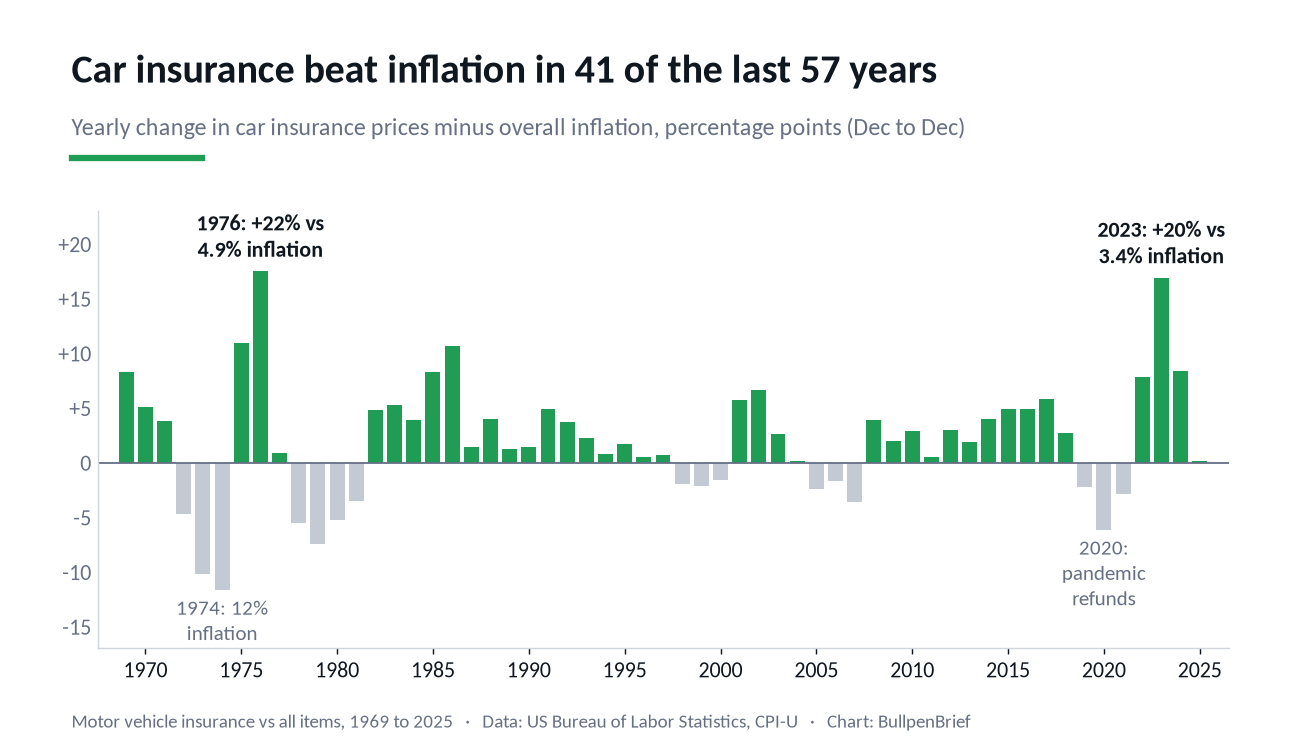
Those costs get passed straight to you. If you own a Kia or Hyundai from the early 2020s, models famously vulnerable to a USB-cable hack that went viral on TikTok, your insurance premiums have already gone up by 15% to 30%, even if your car is parked safely in your garage. Insurers are now flatly refusing to insure certain high-theft models without an aftermarket immobilizer or tracker.
And for the high-end market? Watch the luxury segment closely. A stolen Range Rover or BMW X7 isn’t just a car, it’s a mobile crime asset. Thieves use them for ram-raids, getaway vehicles, or export to markets in West Africa and the Middle East where these SUVs fetch a premium. The lack of real-time tracking means these cars often vanish for good. In a bizarre twist, some wealthy owners are now turning to companies like TrackStar or Cobra for ultra-high-end aftermarket tracking that uses hidden SIM cards and military-grade encryption. But that service costs £500 a year, and still doesn’t guarantee the police will act on a real-time ping.
The Dealer’s Dilemma: When Security Hurts Sales
Here’s a truth the auto industry doesn’t like to admit: security features sometimes hurt sales. Car dealers in the UK have actually lobbied against mandatory real-time tracking requirements, arguing that it makes vehicles more expensive and complicates the customer’s “digital experience.” Translation: if a buyer has to sign a 14-page privacy waiver just to unlock the GPS tracker, they’re less likely to buy the car.
It’s a tragic Catch-22. The very technology that could dramatically reduce theft rates, maybe by 50% or more, is voluntarily neutered by the industry itself because of perceived consumer resistance and legal risk. Meanwhile, thieves laugh all the way to the scrapyard.
And speaking of strange business decisions, while we’re talking about assets that vanish without a trace, it’s worth noting that not everything missing is a stolen car. Some assets just disappear under the weight of bad management. Take a look at what happened to WHSmith, which is shuttering up to 150 stores after a rescue deal. Sometimes the biggest theft happens in the boardroom.
The Way Forward: Could Law Change?
There is some movement. The UK Home Office launched a consultation in late 2024 on whether to mandate real-time tracking as part of new vehicle type-approval regulations. The European Commission is considering similar rules under the upcoming Cybersecurity Act revision. And in Canada, the RCMP’s Auto Theft Task Force has quietly recommended that Transport Canada require all vehicles sold after 2026 to include a “kill switch” and geofencing capability.
But don’t hold your breath. Privacy lobby groups like Big Brother Watch in the UK and the Electronic Frontier Foundation in the US are already mobilizing against these proposals, framing them as a “car surveillance state.” The auto industry is split, luxury brands want it (because their customers demand it), but mass-market brands fear the cost and complexity.
The bottom line? For now, if you’re buying a car expecting the onboard GPS to save you from theft, you are setting yourself up for disappointment. The tracker is there. It’s just not yours. At least, not legally.
“The car you bought is essentially a black box with your permission slip locked inside a drawer, and the key is held by a lawyer reading GDPR in Brussels,” says Webb. “Until regulators decide that a stolen car is a bigger problem than a hypothetical privacy breach, you’re on your own.”
So what do you do? Invest in a mechanical immobilizer, a wheel lock, a gear stick lock, or even a good old-fashioned steering wheel club. Install a hidden, hardwired GPS tracker that uses its own cellular network (something like a Bouncie or a Moove). And consider paying the extra few pounds per month for gap insurance that covers the full replacement cost if your car vanishes.
Because the digital knight-in-shining-armor you thought was in your dashboard? He’s on vacation. And the check didn’t clear.
Frequently Asked Questions
Can my car’s built-in GPS be used by police to track it immediately after theft?
Generally, no. In the UK and EU, real-time GPS tracking is restricted by privacy laws. Police typically need a court order or warrant, which can take hours. In the US, the standard is slightly lower but still requires a subpoena for recent location data. By the time legal hurdles are cleared, the car is often gone.
Are aftermarket trackers like AirTags or Tile effective against professional thieves?
Not reliably. Professional thieves use Bluetooth scanners to detect AirTags and other small trackers within seconds. OBD-II port trackers are easily yanked out. Hardwired, hidden GPS trackers with their own cellular SIM cards are more effective but can still be jammed. No tracker is foolproof, and thieves treat trackers as an expected nuisance, not a deterrent.
Will insurance premiums go down if I install a tracker in my car?
It varies. Some insurers offer a small discount (5-10%) for having a Thatcham-approved tracker, especially on high-value cars. But for most standard vehicles, the discount is minimal or nonexistent because the tracker’s recovery rate is low. The real premium impact comes from the overall theft rate of your car model, not whether you personally have a tracker.