







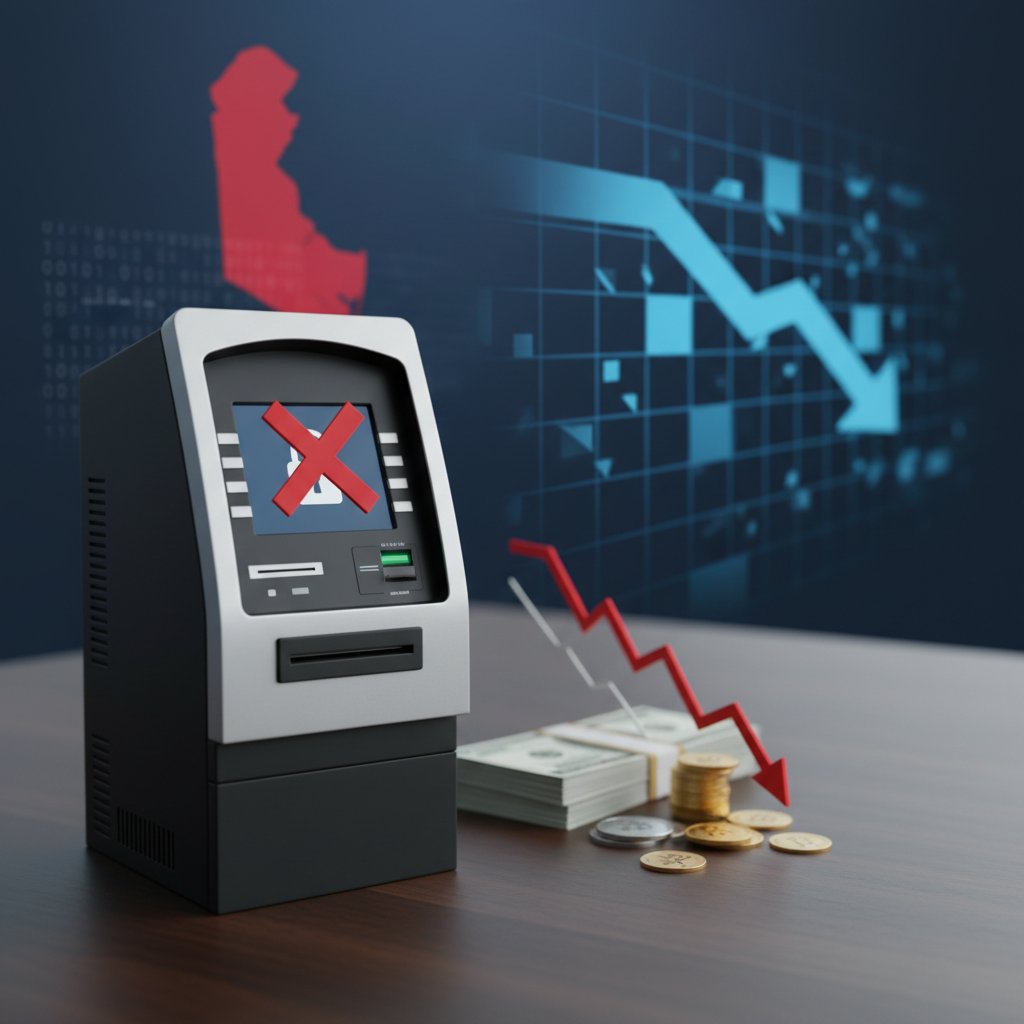
If you’ve ever walked into a convenience store and seen a shiny kiosk offering to buy or sell Bitcoin in minutes, you’ve encountered a crypto ATM. For many, these machines are a gateway to digital currency. But for far too many-especially the elderly and less tech-savvy-they have become a tool for devastating financial scams. Now, two states are moving to pull the plug. Delaware and New Jersey are advancing legislation that would effectively ban or severely restrict crypto ATMs, a move that could reshape how everyday Americans access cryptocurrency and, more importantly, how they get defrauded.
The most immediate consequence for you, the reader, is this: if you live in or travel to the Mid-Atlantic region, the convenience of walking into a corner store to convert cash into crypto is about to disappear. But the deeper story is about a regulatory tipping point. States are no longer waiting for federal action. They are taking matters into their own hands after a surge in reported losses from Bitcoin ATM scams-losses that the Federal Trade Commission says topped $110 million in 2023 alone, with victims over 60 losing a median of $10,000 each.
The ATM Gold Rush That Turned Into a Scam Highway
Crypto ATMs first appeared around 2013, offering a novel way to buy Bitcoin with cash. By 2024, there were over 30,000 machines in the United States, concentrated in gas stations, bodegas, and malls. The pitch is simple: insert cash, scan a wallet QR code, and receive crypto. No bank account needed. No ID verification beyond a basic phone number. That same ease of use has made them ideal for criminals.
Scammers impersonate government officials, tech support, or even romantic interests. They instruct victims to withdraw cash, go to a crypto ATM, and deposit it into a wallet the scammer controls. The transactions are irreversible, and the anonymity of the machines makes tracing the funds nearly impossible. “We’re seeing it every single day in our senior fraud hotline,” says Margaret Chen, a consumer protection advocate at the nonprofit Older Adults Technology Services. “Elderly people who would never wire money to a stranger are being convinced to use these machines because they see them in legitimate businesses. They trust the kiosk.”
Regulators have taken notice. In 2023, the FBI issued a public warning about the rising threat. But state lawmakers want more than a warning.
Delaware’s Legislative Knife
In January 2025, Delaware State Senator Darius Brown introduced Senate Bill 95, which would ban the operation of any unlicensed crypto ATM in the state. The bill mandates that all machines be registered with the state’s Office of the State Bank Commissioner and that each transaction be subject to a daily limit of $500. Operators would also be required to post clear warnings about potential scams on every screen.
“These machines are operating in a regulatory gray zone, exploiting a loophole that never anticipated the scale of fraud we now see,” said Senator Brown in a committee hearing. “Our seniors deserve better. This bill closes the barn door before more horses get stolen.”
The bill has bipartisan support and is expected to pass by late spring. If signed into law, Delaware would join a small but growing list of states-including California and Vermont-that have cracked down on the industry. The typical crypto ATM operator in Delaware, often a small franchisee, would face steep licensing fees and compliance costs that many argue will drive them out of business.
New Jersey: From Garden State to Gray Market Monitor
Just across the Delaware River, New Jersey is moving even faster. In February 2025, the New Jersey Division of Consumer Affairs proposed new rules that would require all crypto ATM operators to obtain a money transmitter license and submit to state audits. But the most controversial provision is a proposed outright ban on machines in businesses that primarily serve liquor or tobacco, a move aimed at the convenience stores where many ATMs are housed.
“New Jersey is tired of being a haven for these unregulated kiosks that facilitate money laundering and elder exploitation,” says Dr. Raymond Ortiz, a professor of financial regulation at Rutgers University who has testified before the state legislature. “The proposed ban on machines in liquor stores is novel, but it targets the physical locations where fraud complaints are highest. It’s a surgical strike.”
The New Jersey rules, currently in a 60-day public comment period, could take effect by September 2025. If implemented, they would affect an estimated 1,200 crypto ATMs across the state-roughly 4% of the national total. The American Crypto ATM Association has vowed to challenge the rules in court, arguing that they disproportionately burden small businesses.
What This Means for Everyday Users
For the average crypto enthusiast, the Delaware and New Jersey actions signal a broader shift. Legitimate users-people sending remittances abroad or buying small amounts of Bitcoin as an investment-will lose a frictionless on-ramp. They’ll need to rely on regulated exchanges like Coinbase or Kraken, which require bank accounts and identity verification. That might be an inconvenience, but it also adds a layer of protection.
The bigger picture is regulatory momentum. “What happens in Delaware and New Jersey often sets a template for other states,” notes Dr. Ortiz. “If these measures survive legal challenges, expect to see copycat bills in Pennsylvania, Maryland, and even New York.” The crypto industry has long warned that overregulation could stifle innovation and push users to unregulated peer-to-peer markets. But for now, the political winds favor consumer protection.
Local businesses are caught in the middle. Ahmed Patel owns a convenience store in Trenton, New Jersey. He installed a crypto ATM two years ago, attracted by the promise of passive income. “It brought in about $300 a month,” Patel says. “But now the state wants to tell me I can’t have it next to the lottery machine? I’ll have to take it out. That’s money out of my pocket.” Patel’s frustration is real, yet he admits he’s heard stories from customers who were scammed. “Maybe this is for the best.”
As the comment period closes in New Jersey and Delaware’s bill moves through the Senate, the crypto ATM industry is bracing for a make-or-break year. The machines aren’t disappearing nationwide-not yet. But for the first time, state-level bans are advancing with genuine speed and bipartisan support. The message is clear: the era of the anonymous, unregulated crypto ATM is drawing to a close in the Delaware Valley. Whether that model revives elsewhere or withers under regulatory pressure will define the next chapter of mainstream crypto adoption.