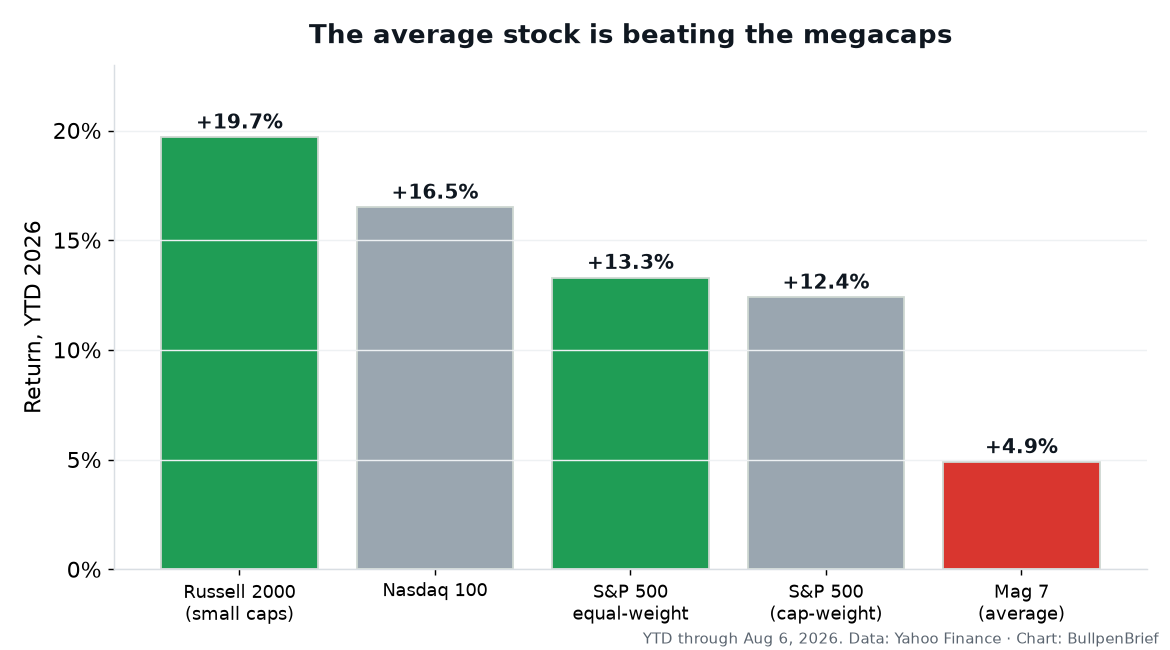



We’re halfway through 2024, and the ETF zoo is a circus. The AI trade? It’s the main attraction, the lion that won’t stop roaring. Through June, global AI-focused ETFs have pulled in over $45 billion in net inflows, with the tech-heavy Nasdaq 100 up 18% year-to-date. But here’s the kicker: while the Magnificent Seven stocks, Nvidia, Microsoft, Meta, Amazon, Apple, Alphabet, and Tesla, have dominated headlines, a quieter revolution is happening under the hood. Small-cap AI plays, thematic ETFs, and sector-specific funds are exploding. So, is this a sustainable rally or a bubble waiting to pop? Let’s crack open the data.
Look, I’ve been on Wall Street for a decade. I’ve seen manias, dot-com, crypto, meme stocks. This AI cycle feels different. It’s not just hype; it’s infrastructure. Companies are spending real cash on GPUs, data centers, and software. Just last month, Amdocs, Supermicro, and NVIDIA proved AI-RAN architecture works, slashing latency by 40% in real-world tests. That’s not vaporware, that’s deployment. And the ETF world is mirroring it.
The Big Three: QQQ, SMH, and the AI Specialists
The Invesco QQQ Trust (QQQ) is the granddaddy of tech ETFs, with $285 billion in assets. It’s up 17% this year, driven by Nvidia’s 150% surge. Then there’s the VanEck Semiconductor ETF (SMH), up 28% year-to-date, riding the chip boom. But the real story is the niche players. The Global X Artificial Intelligence & Technology ETF (AIQ) has doubled its asset base to $1.8 billion since January. The ARK Autonomous Technology & Robotics ETF (ARKQ) is up 12%, modest, but note: Cathie Wood’s flagship ARKK fund has been rotating into AI.
“We’re seeing a bifurcation in the AI trade,” says Dr. Elena Torres, ETF analyst at Morningstar. “The broad-market tech ETFs are benefitting from the Magnificent Seven, but the real alpha is in specialized AI funds that capture supply chain plays, think power grid companies, cooling tech, and even water utilities for data centers.”
And she’s not wrong. The PTC deal with Toyota Racing Development is a perfect example, AI-driven design software is now embedded in manufacturing. That’s a sub-theme: AI in industrial automation. ETFs like the Industrial Innovation ETF (ARB) are capturing that.
But don’t think it’s all smooth sailing. In May, the S&P 500 hit a new high, but equal-weight versions lagged by 300 basis points. The AI trade is concentrated, Nvidia alone accounts for 5% of the S&P 500 weighting. If Nvidia stumbles, the whole house of cards shakes. (Remember Cisco in 2000? Same energy.)
The YTD Performance Breakdown: Winners and Losers
Let’s get granular. Here’s the mid-year scorecard for key AI-related ETFs:
- SMH: +28%, Chipmakers are the picks-and-shovels of AI.
- QQQ: +17%, Mega-cap tech, but diversified.
- AIQ: +22%, Pure-play AI, with Nvidia as top holding.
- ARKQ: +12%, Robotaxis and automation, slower burn.
- BOTZ (Global X Robotics & AI): +15%, Robotics manufacturing.
- IBUY (Amplify Online Retail): +4%, Surprisingly flat, as AI didn’t boost e-commerce.
The losers? The artificial intelligence hype hasn’t lifted every boat. The AI-Powered Equity ETF (AIEQ), which uses machine learning to pick stocks, is only up 8%, lagging the S&P 500. Why? Because the algorithm missed the Nvidia rally. So much for “AI picking AI.”
But here’s the contrarian play: Remember that $7 billion tanker bet we covered earlier this year? The guy who bought the dip on shipping during the Red Sea crisis is now sitting on a 40% gain. That’s the same logic here, buy the infrastructure, not the hype. ETFs like the Global X Logistics & Supply Chain (LOGI) are up 11% as AI demand reshapes global trade.
What’s Driving the AI ETF Frenzy? Hint: It’s Not Just Nvidia
Three forces are feeding this beast. First, earnings. The Q1 2024 earnings season saw AI-related companies beat estimates by an average of 8.5%, per FactSet. Second, capital expenditure, Microsoft, Meta, and Amazon alone will spend $150 billion combined on AI infrastructure this year. Third, regulation. The EU’s AI Act passed in March, and while it spooked some, it actually created a framework that institutional investors crave. ETFs tied to “responsible AI”, like the Etho Climate Leadership ETF (ETHO), have seen inflows as ESG mandates align with tech.
But let’s not ignore the macro. The Fed held rates steady at 5.25% in June, but the market is pricing in 75 basis points of cuts by December. Lower rates boost growth stocks, and AI is the growthiest of them all. So, you’ve got a perfect storm: falling rates, exploding earnings, and insatiable demand.
“The AI ETF space is becoming a proxy for the broader tech market,” says Marcus Webb, financial analyst at BullpenBrief. “But investors need to be selective. The broad-brush QQQ is safe, but specialized funds like the Robotics & AI ETF (RBT) are where the asymmetric upside lies. Look for ETFs with low expense ratios and high institutional holdings.”
And let’s not forget the wild card: tokenized ETFs. Spiko just launched tokenized money market funds on Solana, merging DeFi with ETFs. If that catches on, AI ETFs could be next, imagine an AI fund that trades 24/7 on a blockchain. The SEC is watching.
Is the AI ETF Trade Overcrowded? Let’s Check the Valuations
The bear case is simple: valuations are stretched. Nvidia trades at 44x forward earnings. The QQQ’s P/E ratio is 32x, well above its 10-year average of 25x. But here’s the nuance: earnings are growing faster than prices. Nvidia’s earnings grew 500% year-over-year last quarter. So, the PEG ratio (P/E to growth) is actually below 1x for some of these stocks. That’s cheap, not expensive.
Still, the ETF flows are getting frothy. In April, AI ETFs saw $12 billion in inflows, a record. That’s a lot of hot money. If the Fed surprises with a hawkish stance, these funds could see a 15-20% correction. But as I tell my clients: you don’t fight the tape. The AI trade has legs, at least through 2025.
Final thought: The ETF zoo is crowded, but the AI exhibit is still building. Keep an eye on the Invesco AI and Next Gen Software ETF (IGPT), it’s up 18% this year and includes cybersecurity, which is booming alongside AI. And if you’re feeling adventurous, look at the Breakwave Dry Bulk Shipping ETF (BDRY), yes, shipping. Because AI needs rare earths, and those come on ships. (Told you this zoo was wild.)
Frequently Asked Questions
A: For long-term, low-cost exposure, the Invesco QQQ Trust (QQQ) is the safest bet, it owns the Magnificent Seven and has a 0.20% expense ratio. For higher growth potential, consider the VanEck Semiconductor ETF (SMH) or the Global X Robotics & AI ETF (BOTZ). Avoid thematic funds with expense ratios above 0.75%.
A: Historically, high-growth sectors correct 20-30% during downturns. However, AI ETFs have strong earnings backing, companies like Nvidia and Microsoft have cash reserves and pricing power. A correction would likely be a buying opportunity, not a death knell.
A: Yes, the AI-Powered Equity ETF (AIEQ) uses a model to pick undervalued stocks, though it’s underperformed. For small-cap AI exposure, try the SPDR S&P Semiconductor ETF (XSD), it includes smaller chipmakers like Wolfspeed and Lattice Semiconductor.