





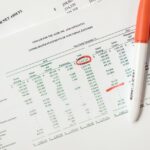

The screen went red before I finished my morning coffee. Not the gentle crimson of a market dip, but the violent crimson of an explosion. My position-a stack of call options on a major tech stock I’d been touting to colleagues-had shed 30% in a single session. The blood drained from my face as I double-checked the numbers: $15,000 whittled to $10,500 in the time it takes to commute from Brooklyn to Midtown.
I sat frozen, the quiet hum of the office news feed mocking me. This wasn’t theory. This was my money, my ego, my bad decision crystallized in red ink.
As BullpenBrief’s economics correspondent, I’ve written dozens of articles about avoiding exactly this kind of leveraged disaster. But knowledge and discipline are distant cousins. That morning, I learned the difference-and it cost me $4,500.
The Setup: A Trade That Felt Too Good
The bet was simple, and in hindsight, textbook overconfidence. On Tuesday, I bought weekly call options on a semiconductor giant that was due to report earnings after the bell Thursday. The stock had been on a tear-up 14% in the prior fortnight-and whisper numbers on earnings were rosy. My reasoning: momentum plus news catalyst equals a quick pop. I allocated 7% of my trading account to the trade, convinced the risk was contained.
But the implied volatility (IV) was sky-high, around 62%, meaning the options were expensive. I ignored that. I ignored the fact that options are decaying assets-theta eats value with every passing day. And I ignored the macro calendar: the Fed’s preferred inflation gauge, the PCE price index, was due Friday. Any hawkish surprise could torpedo risk appetite across the board.
The reality check arrived Thursday at 8:30 a.m. A stronger-than-expected U.S. GDP revision for Q3-annualized growth revised up to 3.3% from 2.9%-sent bond yields spiking. The 10-year Treasury note jumped six basis points to 4.68%. Tech stocks, especially high-beta names, were punished. The semiconductor company missed revenue estimates by a whisper, but the stock fell 5% in pre-market. My calls, which had been 20% out of the money, became deeply out of the money. Implied volatility collapsed, and my contract was crushed.
By 9:45 a.m., when the market opened, the loss was 30%. I watched, numb, as the position hemorrhaged. I didn’t sell. I hoped for a recovery. It never came.
The Anatomy of a Bad Decision
What makes a smart person make a dumb trade? Behavioral finance has a name for it: narrative bias. I had a compelling story-earnings beat, AI boom, chip demand-and I let that story override the probabilities. I forgot that options are not stocks. They’re instruments that multiply gains and losses, and they punish indecision.
According to data from the Options Clearing Corporation, in the first quarter of 2025, individual investors lost an average of 62% on single-leg long options trades that were held to expiration. The odds are stacked against the buyer: time decay, volatility compression, and the market’s randomness create a 75-80% failure rate for out-of-the-money calls.
“Most retail traders treat options like lottery tickets,” says Dr. Lisa Cheng, a behavioral finance professor at the University of Chicago Booth School of Business. “They overestimate their ability to predict short-term price moves and underestimate the role of path dependency and volatility changes. A 30% daily loss is extreme, but not rare in this space.”
My mistake was compound. First, I didn’t check the macro calendar-the GDP revision was a known release. Second, I ignored position sizing: 7% of an account on a single binary outcome is reckless. Third, I lacked an exit plan. When the pre-market data hit, I should have cut the position rather than wait for the open.
The math was brutal: My breakeven required a 9% stock move in the next two days. That’s roughly a four-standard-deviation event for a weekly move. I was betting on a miracle.
What I Should Have Done Differently
After the loss, I talked to Marcos Rivera, a veteran options strategist at brokerage firm TD Ameritrade (now part of Charles Schwab). He listened without judgment, then gave me a checklist I now keep taped to my monitor:
- Check the volatility surface, Is IV over 50%? If so, theta will gut you quickly.
- Size for a wipeout, Never risk more than 2% of your capital on any single options trade.
- Set a time stop, For weekly options, exit if the stock hasn’t moved in your direction by Wednesday at the latest.
- Know the macro events, Fed speeches, GDP releases, CPI data, and Treasury auctions all matter more than earnings for short-dated options.
“The biggest mistake I see is assigning too much weight to the stock story and not enough to market structure,” says Riverside. “Options are not a magic lever. They’re derivatives that require a thesis about volatility, time, and path. Most people only have a thesis about direction.”
I had direction. I had no path.
If I could replay that Thursday, I would have waited until after the GDP release to place the trade. I would have bought a longer-dated call (say, 45 days out) to reduce theta decay. And I would have set a mental stop at 15% loss and executed it without hesitation. Instead, I froze-the classic “anchoring” bias, clinging to the price I paid and hoping the market would come back.
The Aftermath and What’s Next
As of this writing, the stock has recovered 2% from the post-earnings lows, but my options expired worthless Friday. That 30% drop became 100%. The loss is real. It stings. But it’s also a $4,500 tuition payment for a lesson I should have already learned.
For readers who trade options: Please don’t let my pain be in vain. The math is not on your side for short-dated OTM calls. The market is a complex adaptive system where macro shocks override micro stories. If you’re going to trade options, treat them as part of a portfolio-not a lottery ticket. And always, always have an exit plan before you enter.
The Fed’s next decision is June 18, and the PCE print is due May 31. I’ll be watching, not trading. My account needs a reset. My ego needs a lesson.
But I won’t quit options entirely. As Rivera told me, “The tool isn’t broken-the user was.” Next time, I’ll use it with the respect it demands.
For now, I’m licking my wounds and watching the screen from a safe distance. The red ink is gone, but the memory of that 30% dive-the gut-punch realization that I had bet wrong-remains. It’s a reminder that in markets, humility is the only asset that never depreciates.