


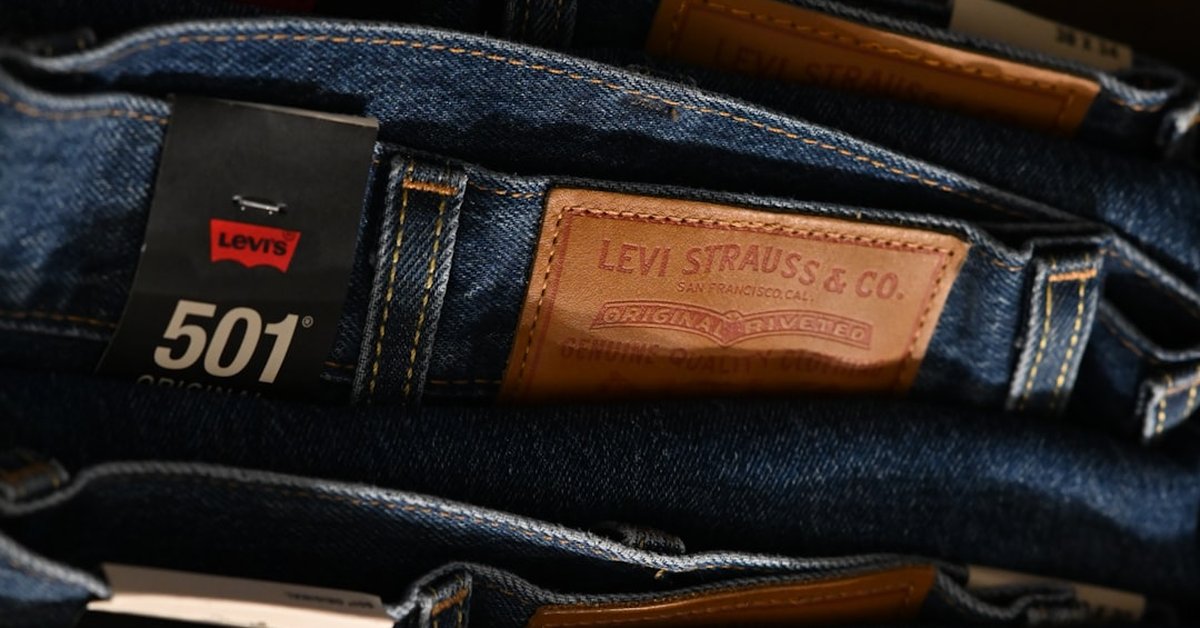
Can a company built on blue jeans reinvent itself by selling more tops and a concept called ‘denim luxury’? Levi Strauss & Co. is betting big that the answer is yes, and the market is taking notice, even if Wall Street’s reaction was mixed.
The 170-year-old denim giant raised its full-year outlook for the second straight time on Wednesday, driven by a surprising pivot: fewer jeans, more shirts. But shares still dipped 3% in after-hours trading, a reminder that even good news isn’t always enough to soothe investors worried about consumer spending.
Outlook upgrade, but shares slip
Levi’s reported fiscal third-quarter revenue of $1.52 billion, up 8% year-over-year and above analyst expectations of $1.48 billion. Net income jumped to $135 million from $122 million a year ago. The company now expects full-year adjusted earnings per share in the range of $1.20 to $1.25, up from an earlier forecast of $1.17 to $1.22. That marks the second consecutive quarterly upgrade to guidance.
But the after-hours sell-off, down 3.1% as of 6 p.m. ET, suggests the market wanted more. “Investors are hypersensitive to any hint of caution in the retail space right now,” said Sarah Mitchell, retail analyst at GlobalData. “Levi’s is executing well, but the broader consumer environment is uncertain, and that’s weighing on sentiment.”
The company cited strong demand in its direct-to-consumer channel, which grew 12% in the quarter, and a rebound in wholesale after months of inventory destocking. But the real story is what Levi’s is selling, and how it’s selling it.
Tops take center stage
Levi’s has long been synonymous with denim bottoms, jeans, jackets, skirts. But the company is quietly shifting its product mix toward tops, including shirts, blouses, and even t-shirts. In Q3, tops revenue grew 15% year-over-year, outpacing bottoms growth of 5%. The category now accounts for nearly 30% of total apparel sales, up from 22% two years ago.
“We’re not walking away from denim, it’s our heritage and our core,” CEO Michelle Gass said on the earnings call. “But we see a massive opportunity to outfit the whole wardrobe. Tops are higher margin, they turn faster, and they give customers a reason to come back more often.”
That strategy is resonating with younger shoppers. Levi’s reported that Gen Z and millennial customers now make up over 55% of its direct-to-consumer sales, and their basket size is 20% larger when they buy a top alongside a bottom. The shift also helps Levi’s reduce its dependence on the volatile denim cycle, where trends shift annually between skinny, straight, and baggy fits.
These changes come as consumer spending patterns evolve in unexpected ways. BullpenBrief recently covered how weight-loss jabs are altering shopping habits across categories, from food to clothing. Levi’s is positioning itself to adapt to those shifts, especially as more shoppers seek versatile, comfortable pieces that work across body types and lifestyles.
The ‘denim luxury’ gamble
Alongside the push into tops, Levi’s is going upmarket with a new sub-brand called Levi’s Premium, which it describes as ‘denim luxury.’ Think higher-quality selvedge denim, limited-edition washes, and price tags that can reach $200 or more, a far cry from the $70 standard jeans.
“Denim luxury isn’t about being exclusive, it’s about craft and permanence in a fast-fashion world,” said Michael Choe, a retail strategist at McKinsey & Company. “Levi’s has the brand equity to pull this off because they own the heritage of jeans. If they can convince consumers that their $200 jeans are worth the investment, the margins are substantial.”
Early signs are promising. The Levi’s Premium line, launched in limited stores and online in August, has already outsold expectations by 40%, according to the company. Management plans to roll it out to 200 doors by year-end and increase marketing spend by 15% in the fourth quarter.
But the luxury push also carries risk. Levi’s core customer base, middle-income families and value-conscious shoppers, may balk at three-figure jeans, especially with inflation still pressuring budgets. The company is hedging by keeping its main line priced between $70 and $100, while using Premium to capture aspirational spenders.
What this means for investors
For shareholders, the story is about margin expansion. Levi’s gross margin improved to 56.3% in Q3, up 90 basis points from a year ago, driven by a richer product mix and fewer discounts. The company reiterated its goal of reaching 60% gross margin within three years, a target that looks more achievable with tops and premium denim in the mix.
Yet the stock remains volatile. Levi’s shares are down 6% year-to-date, even as the S&P 500 has gained 12%. Analysts are divided: some see the transformation as a blueprint for legacy brands to modernize, while others worry that the top-line growth rate (8%) isn’t enough to justify a forward P/E of 15.
“Levi’s is doing a lot of things right, but the market is punishing any retail stock that isn’t growing at double digits,” Mitchell added. “The next quarter will be telling, holiday spending will determine whether this is a true turnaround or just a flash in the pan.”
Forward-looking, the denim luxury bet could define Levi’s for the next decade. If the premium line catches on, Levi’s will have successfully expanded its addressable market from the mass consumer to the luxury shopper. If it stalls, the company still has its core jeans business and a growing tops segment to fall back on. Either way, the 170-year-old brand is proving it can still move, even if Wall Street wants faster.
Frequently Asked Questions
How has Levi’s stock performed after the earnings report?
Shares fell about 3% in after-hours trading on Wednesday despite the company raising its full-year outlook for a second straight quarter. The decline reflected cautious investor sentiment around the broader retail sector and concerns about consumer spending heading into the holiday season.
What is Levi’s ‘denim luxury’ strategy?
‘Denim luxury’ is a new sub-brand called Levi’s Premium featuring higher-quality materials, limited editions, and price points up to $200 or more. The company aims to capture fashion-forward shoppers willing to pay a premium for craftsmanship and exclusivity, while its main line remains in the $70-$100 range. Early sales have exceeded expectations by 40%.
Why is Levi’s focusing on tops instead of just jeans?
Tops offer higher margins, faster inventory turnover, and encourage larger basket sizes, shoppers who buy a top alongside jeans spend 20% more. The category now accounts for 30% of apparel sales, up from 22% two years ago, and helps diversify Levi’s away from the volatile denim cycle, where fits change rapidly.