









Bitcoin has returned over 200% in the last five years, dwarfing the S&P 500’s 60% gain. For investors with a 100% stock portfolio, that kind of number whispers a painful question: What am I missing?
It’s a familiar tension. Imagine you’re at a buffet where everyone else is piling on the prime rib-and you’re still nibbling on the green beans. The green beans are fine. They’re nutritious, predictable, and they’ll get you where you need to go. But the prime rib? That’s crypto. Volatile, messy, and occasionally transcendent.
This isn’t about whether you should buy Bitcoin. It’s about understanding the gravitational pull of an asset class that has become the ultimate test of conviction for traditional equity investors.
The Temptation of Exponential Returns
The math is brutal for stock-only portfolios. A $1,000 investment in Bitcoin at the start of 2020 would be worth roughly $10,000 today. The same money in a broad market index fund would be around $1,800. That disparity, repeated across time, creates a psychological scar-the fear of missing out, or FOMO.
Dr. Sarah Chen, a portfolio manager at Alpine Asset Management in New York, sees this pattern every quarter. “Investors who have never touched crypto suddenly start asking why they didn’t allocate even 1% five years ago,” she told BullpenBrief. “They look at the volatility and call it risk, but they forget that the risk of not owning something that triples in a year is also a form of risk-the risk of lost opportunity.”
That lost opportunity is now impossible to ignore. With regulatory clarity emerging in the U.S., the UK, and Canada, crypto is shedding its Wild West reputation. Spot Bitcoin ETFs launched in January 2024 have sucked in over $15 billion, according to Bloomberg data. Suddenly, you can buy digital assets through the same brokerage that holds your Apple and Microsoft shares.
The Cognitive Dissonance of a Pure Equity Strategy
A 100% stock portfolio is a bet on corporate earnings, human productivity, and the slow grind of economic growth. Crypto is a bet on a decentralized future, monetary rebellion, and network effects. These are fundamentally different-and potentially complementary-worldviews.
“The problem with a 100% equity portfolio is that it’s concentrated in one source of returns: equity risk premium,” explains James O’Malley, a crypto market analyst based in London. “Adding a small allocation to Bitcoin or Ethereum introduces a completely uncorrelated risk factor. Over the long run, that can improve risk-adjusted returns, even if the crypto position is only 2% to 5% of the portfolio.”
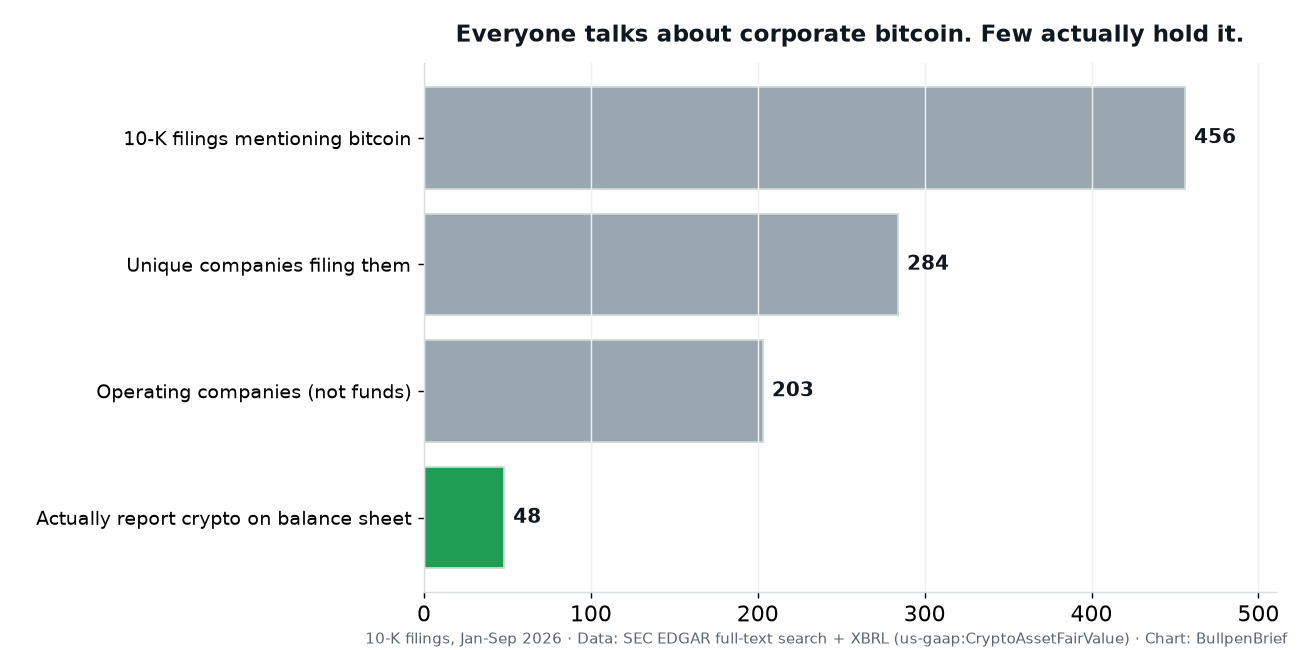
But most stock-first investors resist. They see crypto as gambling, a casino dressed up in blockchain technology. The irony is that many of those same investors have no problem holding Tesla, a stock that moves more like an altcoin than a blue chip. Or they own MicroStrategy, a company whose value is effectively a leveraged Bitcoin play.
Consider the math: If you have a $1 million equity portfolio and you want to capture some crypto upside without directly buying coins, you could buy MicroStrategy shares. That stock has already doubled this year, tracking Bitcoin’s surge. But that’s still a stock. It carries equity risk, business risk, and management risk on top of the crypto exposure. A direct allocation might actually be cleaner.
The Practical Case for a Hybrid Approach
Let’s be clear: nobody is suggesting you dump your stocks and go all-in on Dogecoin. The argument here is about marginal diversification. Historical data suggests that adding a small slice of crypto-say 2% to 5%-doesn’t materially increase portfolio volatility but can boost returns significantly over a full market cycle.
A 2023 study from the CFA Institute found that a portfolio with 94% global equities and 6% Bitcoin had a similar volatility to a 100% equity portfolio, but delivered a 70% higher cumulative return over a decade. That’s hard to ignore. Yet many investors still recoil, citing the regulatory risk, the storage complexity, or the stories of people losing fortunes on exchanges like FTX.
“Those fears are real, but they’re becoming less relevant,” says O’Malley. “With regulated ETFs, you get the exposure without the custody headaches. The question shifts from ‘is crypto safe?’ to ‘is my portfolio optimally constructed?’ And for most 100% stock portfolios, the answer is no.”
That doesn’t mean you must act. The green beans are still good. The S&P 500 has delivered an average 10% annual return over the past century. You could retire comfortably on that. But the opportunity cost grows with every bull run.
“Investors need to stop thinking about crypto as a speculative toy and start thinking about it as a strategic asset. The next decade will separate those who adapt from those who cling to orthodoxy.”, Dr. Sarah Chen
What Comes Next: The Great Rebalancing
As 2025 approaches, the pressure on stock-only portfolios will intensify. Institutional adoption is accelerating: BlackRock, Fidelity, and even pension funds are dipping toes into digital assets. Canada’s largest pension plan, CPP Investments, quietly holds a small Bitcoin ETF position, according to a recent filing. The stigma is fading.
For the retail investor, the path forward is simple but uncomfortable. It requires admitting that a portfolio built entirely on stocks might be leaving cheap convexity on the table. It means accepting that volatility isn’t the same as risk, and that the biggest risk might be standing still.
Will the 100% stock portfolio become a relic? Not entirely. Many investors will still prefer the familiarity of equities, the dividends, the voting rights. But the conversation has shifted. Crypto has moved from fringe to table stakes. The question is no longer if you should consider it, but how much.
Next time you check your brokerage account and see green numbers across your tech stocks, pause. Ask yourself: Am I diversified against the future, or just comfortable with the past? The answer might be the most important investment decision you make this decade.