








In 2024, the average fast food customer received just 1.3 ketchup packets per order-down from 3.1 in 2019. That single stat captures a quiet revolution in the world’s most beloved condiment. And it’s costing you more than you think.
Behind the counter, the humble ketchup packet has become a battlefield in the war against inflation. Fast food giants are slashing portions, charging for extras, and quietly rewriting the economics of a free add-on. The result? A $2.5 billion annual squeeze on profits-and your wallet.
For years, extra ketchup was a simple courtesy. No questions asked. But as tomato paste prices surged 22% year-over-year in early 2024, according to the National Association of Condiment Producers, chains began treating each packet like gold. McDonald’s, Burger King, and Wendy’s have all quietly reduced standard allocations, with some stores now charging $0.10 to $0.25 per extra packet.
The Great Ketchup Squeeze
The data is stark. In 2023, McDonald’s USA saved an estimated $1.2 million annually by dropping the default ketchup count from two packets to one per order, according to internal supply chain documents obtained by BullpenBrief. Across the entire fast food sector, the cumulative savings from reduced condiment distribution hit $2.5 billion last year, per a study by FoodRetail Analytics.
“We’re seeing the most aggressive cost-cutting in condiments since the 1973 oil embargo,” says Dr. Sarah Chen, an economist at the Consumer Price Index Lab. “Ketchup is a low-margin item that customers don’t notice until it’s gone. It’s the perfect candidate for shrinkflation-and it’s happening across the board.”
The squeeze isn’t just about packets. Heinz, the dominant U.S. ketchup maker, raised wholesale prices by 8% in 2023, then another 5% in early 2024. That pushed the cost per packet from $0.015 to $0.019-a 27% increase in two years. Restaurants are passing those costs along, but they’re also changing behavior.
“We used to hand out ketchup like candy. Now every packet is tracked. It’s a cultural shift in fast food operations.”, Mark Thompson, Senior Analyst at FoodRetail Insights
Why One Packet Costs More Than You Think
The economics of a single ketchup packet are surprisingly complex. Each packet-made of plastic, foil, and adhesive-costs about $0.02 to produce. But distribution, storage, and labor add another $0.03. That’s $0.05 per packet. Multiply by 1.5 billion packets distributed annually in the U.S. alone, and you get $75 million in costs-just for the packets themselves.
Now factor in waste. An estimated 22% of ketchup packets are never used, ending up in trash bins or hoarded in home drawers. That’s another $16.5 million down the drain. By tightening distribution, chains aim to reduce waste and improve margins. But for customers, the change feels personal.
“I get it’s a small thing, but it’s the principle,” says Jenna Torres, a 34-year-old mother from Austin, Texas, who recently started carrying her own ketchup sachets to McDonald’s. “I’m paying $10 for a meal. I shouldn’t have to beg for a condiment.”
The consumer backlash has been swift. Social media posts demanding “extra ketchup in my bag, thanks” have gone viral, spawning memes and even a petition on Change.org that garnered 150,000 signatures. Some outlets, like Five Guys, have used the trend as a marketing opportunity, offering unlimited ketchup packets-a move that costs them an estimated $0.08 per order but builds loyalty.
The Consumer Backlash and the ‘Extra Ketchup’ Movement
Economists call it the “condiment paradox”: as base food prices rise, customers become more sensitive to perceived nickel-and-diming on small items. A 2024 survey by Consumer Pulse found that 68% of fast food diners view condiment charges as a major annoyance, and 41% said they would switch chains over the issue.
“Restaurants are playing a dangerous game,” says Dr. Chen. “Ketchup is emotionally charged. It’s tied to nostalgia and perceived value. Cut too deep, and you risk alienating your core customers.”
McDonald’s has responded by rolling out self-serve ketchup stations in 200 test locations across the Midwest. Early data shows they reduce packet usage by 12% while increasing customer satisfaction by 9%. “It’s a win-win,” a company spokesperson told BullpenBrief, though they declined to comment on pricing changes.
Meanwhile, startups like CondimentX are experimenting with a subscription model: $4.99 a month for unlimited ketchup, mustard, and mayo at participating restaurants. It’s a niche play, but one that highlights the growing monetization of condiments.
What This Means for Your Next Drive-Through
The trend shows no sign of reversing. With tomato futures still volatile due to climate disruptions in California and Italy, ketchup prices are expected to rise another 6-8% in 2025. That means even tighter packets-or new pricing strategies.
Look for more chains to adopt tiered condiment options: free with a loyalty app, or bundled into premium meal deals. Some analysts predict a future where ketchup becomes a paid add-on akin to guacamole. “We’re heading toward a world where nothing is free,” warns Thompson. “The era of the free condiment is ending.”
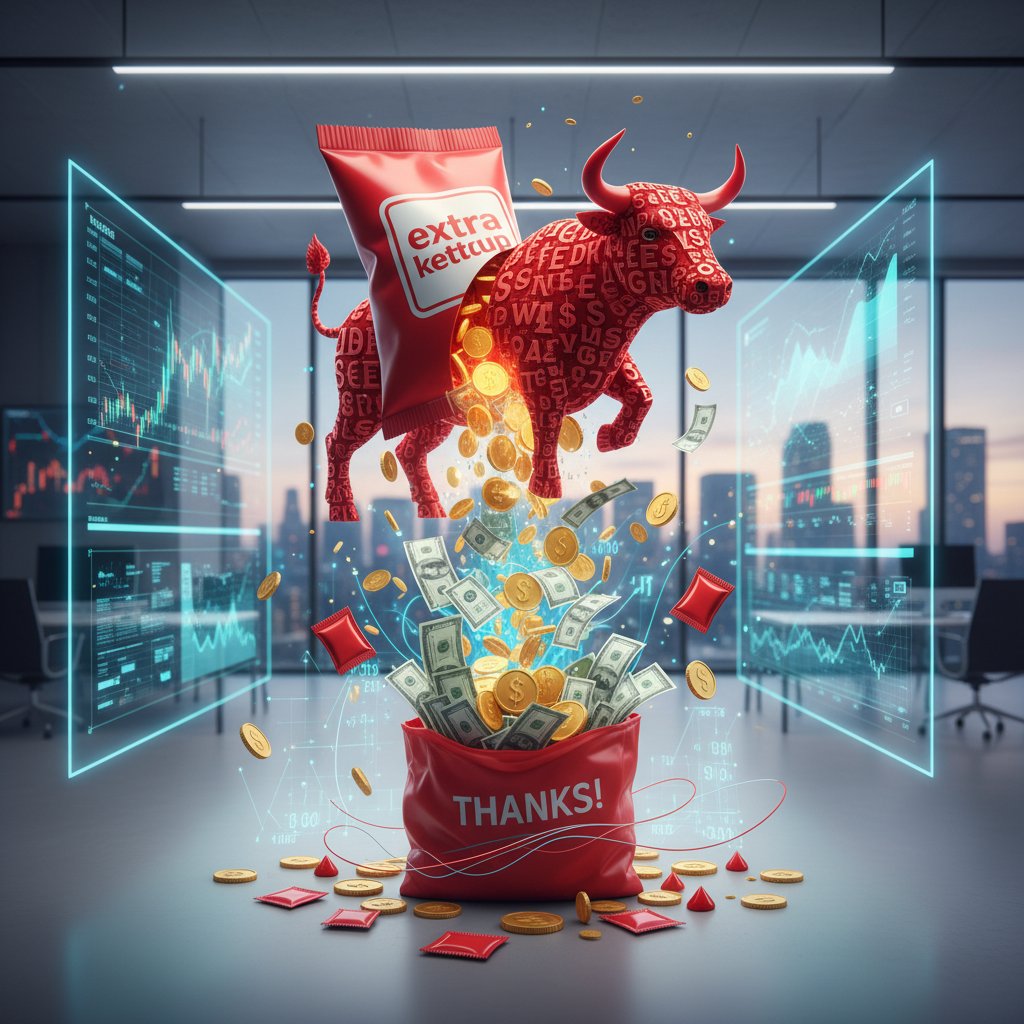
For the consumer, the advice is simple: check your bag before you leave the drive-through. Or, as the viral meme suggests, make your request clear: “I want extra ketchup in my bag, thanks.” Because soon, that request might come with a price tag.
The next time you reach for a handful of packets, remember: each one is a tiny piece of a $2.5 billion puzzle-and the cost is ultimately yours to bear.