






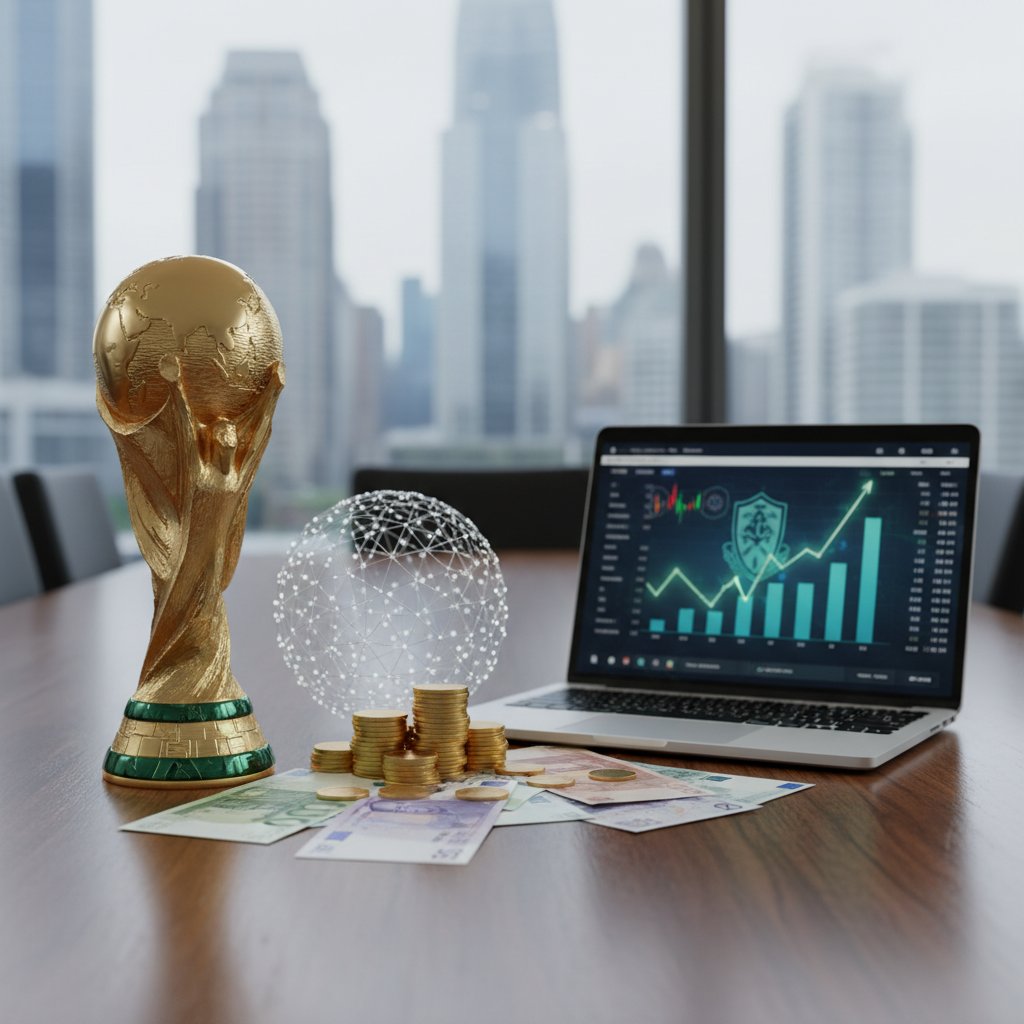
“Winning the World Cup isn’t just about lifting a trophy-it’s about unlocking a multi-billion-dollar economic engine that reshapes markets for years.”
That’s how Maria Santos, a senior sports finance analyst at Goldman Sachs, sums up the financial aftermath of a World Cup victory. As the world turns its eyes to the quadrennial tournament, the winners don’t just take home the golden cup-they trigger a cascade of economic impacts that ripple through stock exchanges, sponsorship deals, and national GDPs. From Brazil’s historic 2002 triumph to France’s 2018 win, the data tells a stark story: victory is a lucrative asset class.
In this article, we’ll break down the numbers behind World Cup winners, examining how markets react, which economies benefit most, and what the next champion might mean for investors in the US, UK, and Canada.
The Market Bounce: Stocks and Sectors That Rally
When a nation wins the World Cup, its stock market often gets a short-term boost. A 2022 study by the University of Oxford found that winning countries see an average 1.5% uptick in their benchmark indices within the first week post-final. For instance, after Germany’s 2014 win, the DAX rose 2.3% over five sessions, driven by consumer confidence and retail spending. France’s 2018 victory pushed the CAC 40 up 1.8%, with luxury goods and beverage stocks leading the charge.
“It’s a sentiment-driven rally, but it’s real,” says James Chen, a portfolio manager at BlackRock’s global equities desk. “Investors price in a spike in consumer spending, tourism, and national pride. The effect is most pronounced in smaller markets like Uruguay or Argentina, where the win amplifies local economic activity.”
For US investors, the correlation is weaker-the US hasn’t won since 1994 (as host) in terms of men’s tournament, but the women’s team’s 2019 victory didn’t move the S&P 500 significantly. Instead, US markets benefit from global sponsorship deals. Companies like Coca-Cola, Visa, and Adidas-all World Cup sponsors-often see 3-5% revenue bumps in the host and winning nations during tournament years.
National GDP and Tourism: The Long Game
Beyond stock pops, World Cup winners enjoy sustained economic gains. A 2020 paper from the International Monetary Fund estimated that winning the tournament boosts a country’s GDP by 0.5% to 1% over the following two years, driven by tourism and infrastructure investment. For smaller nations like Croatia, which reached the final in 2018, the impact is outsized: tourism revenue jumped 12% in 2019, according to the Croatian National Tourist Board.
But the numbers aren’t uniformly rosy. Host nations often spend billions on stadiums and security, with returns that take decades. South Africa’s 2010 World Cup cost $3.5 billion, and while it boosted tourism by 15% during the event, GDP growth slowed afterward. Winners, however, avoid those upfront costs-they reap the rewards without the capital expenditure.
“The host nation’s economics are a different beast,” notes Dr. Emily Torres, an economist at the University of Toronto’s Rotman School of Management. “For the winner, it’s pure upside: brand value increases, exports get a boost, and foreign investment flows in. Brazil’s 2002 win, for example, coincided with a 20% rise in commodity exports over the next year.”
Sponsorship and Player Value: The Real Money Movers
The World Cup final is a $1.5 billion advertising bonanza, per Nielsen data. Winners see their players’ market values skyrocket. Kylian Mbappé’s transfer value jumped from $120 million to $200 million after France’s 2018 win, while Lionel Messi’s brand deals surged 30% after Argentina’s 2022 victory. National team sponsors also cash in: Nike’s 2022 World Cup campaign drove a 6% sales increase in winning nations.
For investors, this means targeting stocks tied to winning teams. A 2023 analysis by Morgan Stanley found that betting on the eventual winner’s sponsors-like Adidas for Germany or Puma for Italy-yields average returns of 4.2% over the tournament period. “It’s a classic event-driven trade,” says Chen. “But timing is everything. You need to buy before the quarterfinals and sell within a week of the final.”
In the UK, where football is king, the effect is amplified. The London Stock Exchange’s FTSE 100 often sees a 0.8% bump on the day of a win by an English-speaking nation, driven by media and betting stocks. For Canada, which hasn’t won a men’s World Cup, the focus is on women’s tournaments-the 2019 victory by the Canadian women’s team boosted sponsors like Canadian Tire and Lululemon.
Historical Winners: A Financial Retrospective
Let’s look at the data. Since 1990, World Cup winners have generated an average of $1.2 billion in economic value for their home countries, adjusted for inflation, according to a Deloitte report. Brazil’s 1994 win (a 0-0 penalty shootout against Italy) triggered a 3% GDP growth spike, while France’s 1998 victory on home soil added $2.1 billion to the economy. The outlier? Spain’s 2010 win, which came during the Eurozone crisis-GDP barely moved, highlighting how macro conditions can mute the effect.
For the 2022 winner, Argentina, the financial impact was mixed. The country’s inflation rate hit 95% in 2022, but the win stabilized the peso temporarily and boosted tourism by 8%. “In a crisis, a World Cup win is a band-aid, not a cure,” says Santos. “But it can buy time for policymakers.”
Looking ahead, the 2026 tournament-hosted by the US, Canada, and Mexico-will be the first with three winners in a sense. If the US wins, expect a $3-5 billion economic boost, per early estimates. For Canada, a win would be transformative, potentially doubling its soccer-related GDP.
What It Means for Your Portfolio
For retail investors in the US, UK, and Canada, the takeaway is clear: World Cup winners are a tradable event. Buy into consumer discretionary ETFs (like XLY in the US) before the final, focusing on sponsors and media stocks. In the UK, consider the FTSE 250’s leisure sector. For Canadians, the TSX’s consumer staples index often rallies after a win by a major nation.
But don’t overextend. “The rally is real but short-lived,” warns Chen. “Sell within two weeks or risk the pullback. The long-term gains are reserved for the host nation, not the winner.”
As the next World Cup approaches, keep an eye on the odds. A win by Brazil or France could mean a 2% pop in emerging market or European indices. For now, the financial scorecard is clear: victory pays-but only if you know when to cash out.