


It was a grim Tuesday on Wall Street. The opening bell had barely faded when the selling began in earnest. By midday, the Nasdaq had shed over 1.5%, dragged down by a handful of the market’s biggest names. Apple, Microsoft, Amazon, Alphabet, the usual suspects, all took a hit. Software stocks, once the darlings of the pandemic era, were getting hammered even harder. The S&P 500 slipped 0.8%, and the Dow, propped up by a few defensive names, barely managed to stay in the green. This wasn’t a broad-based panic. It was surgical. And it was aimed squarely at the tech behemoths that have propped up the market for years.
So what’s going on? The short answer: interest rates are playing coy again. The 10-year Treasury yield ticked up to 4.35% on Tuesday, a level that makes future profits, especially for high-growth tech companies, look less attractive. When bonds start paying more, the promise of a software startup’s earnings ten years from now suddenly feels a lot less thrilling. Simple math, really. But the implications are anything but.
The Weight of Giants
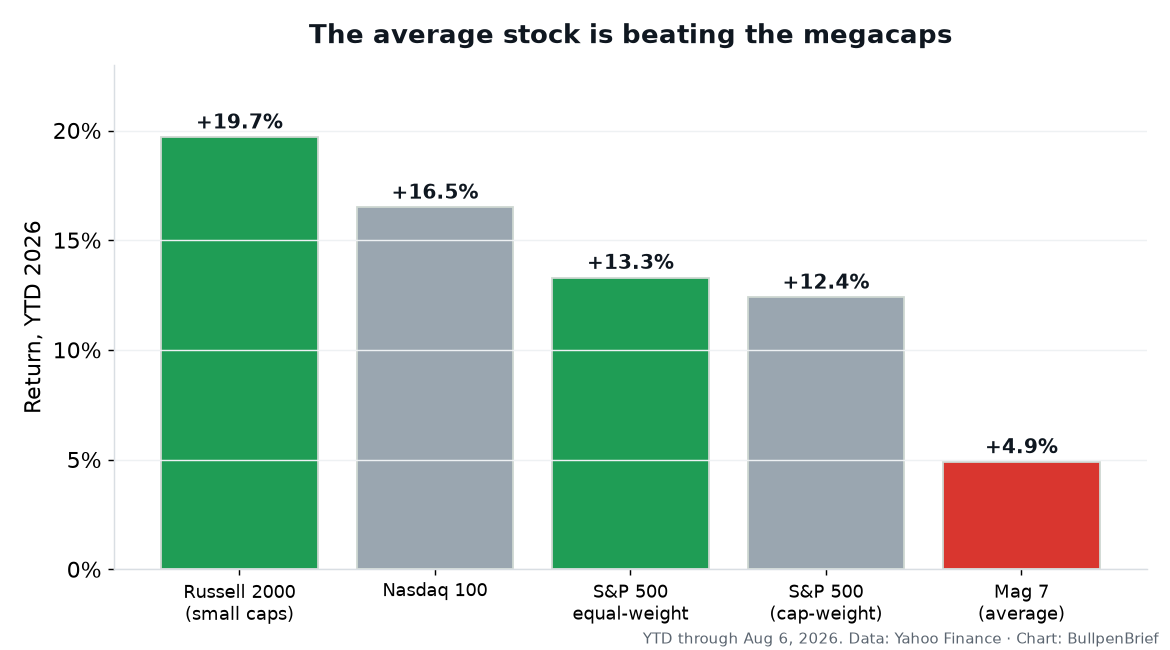
Megacap tech stocks have become the market’s center of gravity, and that’s a problem. The top five stocks in the S&P 500 now account for over 25% of the index’s total market cap. That’s a concentration not seen since the dot-com bubble. When those stocks sneeze, the whole market catches a cold. On Tuesday, Apple fell 1.8%, Microsoft dropped 2.1%, and Amazon slid 2.5%. Nvidia, the AI chip darling that’s tripled in value over the past year, lost 3.2%. Even Alphabet, which recently reported solid earnings, couldn’t escape the downdraft, falling 1.4%.
Look, this isn’t a crash. It’s a recalibration. Investors are repricing risk. The Federal Reserve‘s messaging has been clear: rates are staying higher for longer. Fed Chair Jerome Powell reiterated last week that the central bank needs “greater confidence” that inflation is sustainably heading toward 2% before cutting rates. That patience is eating into the premium investors are willing to pay for growth. And when growth stocks, especially software, start to wobble, the whole house of cards trembles.
Software Stocks: The Canary in the Coal Mine
If megacap tech was the headline, software stocks were the fine print that made everyone wince. The iShares Expanded Tech-Software Sector ETF (IGV) fell 2.8% on Tuesday, its worst single-day drop in three months. Names like Salesforce, Adobe, and ServiceNow each lost over 3%. Even Microsoft-owned GitHub, a developer darling, saw its valuation questioned in analyst notes.
The logic is brutal but simple. Software companies often trade on forward earnings expectations, sometimes years out. When discount rates rise, those future earnings are worth less today. It’s like promising someone a dollar in five years: if interest rates are high, that dollar is worth maybe 80 cents now. If rates stay high, make that 70 cents. Multiply that across thousands of software companies, and you’ve got a sector-wide sell-off.
And there’s another layer: the AI hype cycle. Investors have poured billions into software stocks with promises that AI would revolutionize everything. But the reality is messy. Many companies are spending heavily on AI infrastructure without clear returns. A recent note from Goldman Sachs warned that “the AI payoff may take longer than the market expects,” adding that “the current valuation premium for AI-exposed stocks may be excessive.” That’s Wall Street speak for: “We’re not sure these prices make sense.”
“The market is finally asking the hard questions about AI spending,” said Dr. Lisa Chen, a senior equity strategist at Vanguard. “Companies are investing billions in chips and data centers, but the revenue uplift isn’t there yet. When rates are high, that gap gets punished.”
What This Means for Your Portfolio
For everyday investors, this feels like déjà vu. We’ve seen this movie before, higher rates, tech sell-off, everyone panics, then it bounces back. But the sequel might have a different ending. The macroeconomic backdrop is trickier this time. Inflation, while cooling, is sticky. The labor market remains tight, which keeps upward pressure on wages and, by extension, prices. The Fed has made it clear it won’t cut rates until it sees consistent progress. That could take months.
So what do you do? First, don’t panic. This is a correction, not a crash. But it’s also a good time to check your diversification. If your portfolio is heavy on tech, especially megacap names, consider rebalancing. Defensive sectors like healthcare, utilities, and consumer staples have held up better. Energy stocks are also benefiting from geopolitical tensions. And if you’re sitting on cash, this could be an opportunity to buy quality names at a discount, just don’t try to catch a falling knife.
Also, keep an eye on the bond market. The 10-year yield is the most important number in finance right now. If it breaks above 4.5%, expect more pain. If it falls back toward 4%, tech stocks could rebound quickly. The Stanford AI study recently highlighted how AI adoption is still in its infancy, which could mean long-term growth, but the market is pricing in short-term profits. That tension won’t resolve overnight.
The Bigger Picture: A Shift in Leadership?
Some analysts are starting to wonder if this is the beginning of a leadership change in the market. For years, tech has been the undisputed king. But value stocks, think banks, industrials, and energy, have been quietly outperforming this year. The S&P 500 Value Index is up 8% year-to-date, while the Growth Index is flat. That’s a dramatic reversal from 2023, when growth crushed value by 30 percentage points.
“We’re seeing a rotation,” said Mark Thompson, chief investment officer at Thompson Wealth Management. “Investors are moving from ‘story stocks’ to ‘show me the money’ stocks. Companies with real earnings, real dividends, and real pricing power are getting rewarded. Tech has to prove it can deliver.”
That shift could have political implications, too. The current administration has been pushing for industrial policy and reshoring, which benefits traditional sectors. The Trump tax pick recently made headlines for his ties to a firm that saved the former president millions, a reminder that tax policy is always a wild card for markets. Lower corporate taxes could boost value stocks, while higher taxes on buybacks (a favorite tech tool) could pinch growth names.
And then there’s the global angle. Alibaba’s lawsuit against the US government over a military blacklist designation is rattling Chinese tech stocks, which adds another layer of uncertainty for multinational tech firms with exposure to China. Apple, for instance, gets about 20% of its revenue from Greater China. Any trade friction there could hurt.
So where does this leave us? In a holding pattern. The market is waiting for clarity, on rates, on AI, on earnings. Until then, expect volatility. But remember: corrections are normal. They’re healthy. They shake out the weak hands and create opportunities for the patient. The key is not to get caught up in the noise. Focus on the fundamentals. And maybe, just maybe, don’t bet the farm on the next AI startup pitch.
Looking ahead, all eyes are on next week’s Fed meeting. No one expects a rate cut, but the tone of Powell’s press conference will matter. If he signals that cuts are coming in the second half of the year, tech could roar back. If he stays hawkish, brace for more selling. Either way, it’s going to be a bumpy ride. Buckle up.
Frequently Asked Questions
Why are tech stocks falling when the economy seems fine?
Tech stocks, especially megacap and software names, are sensitive to interest rates because their valuations are based on future earnings. When the Fed keeps rates high to fight inflation, those future earnings are discounted more heavily, making the stocks less valuable. This is a valuation adjustment, not a sign of economic weakness.
Should I sell my tech stocks now?
It depends on your time horizon and risk tolerance. If you’re a long-term investor, trying to time the market is usually a losing game. Consider rebalancing if tech is overweight in your portfolio, but don’t sell in a panic. Corrections can create buying opportunities for quality names at lower prices.
What sectors are performing well right now?
Defensive sectors like healthcare, utilities, and consumer staples have held up better during the sell-off. Energy stocks are also gaining due to geopolitical tensions. Value stocks, banks, industrials, energy, have been outperforming growth stocks year-to-date. Diversifying into these areas can help cushion your portfolio.