


“This is not just about Alibaba, it’s about the weaponization of American bureaucracy against Chinese business,” says Dr. Li Wei, professor of international trade at the University of International Business and Economics. “The implications stretch far beyond one company.”
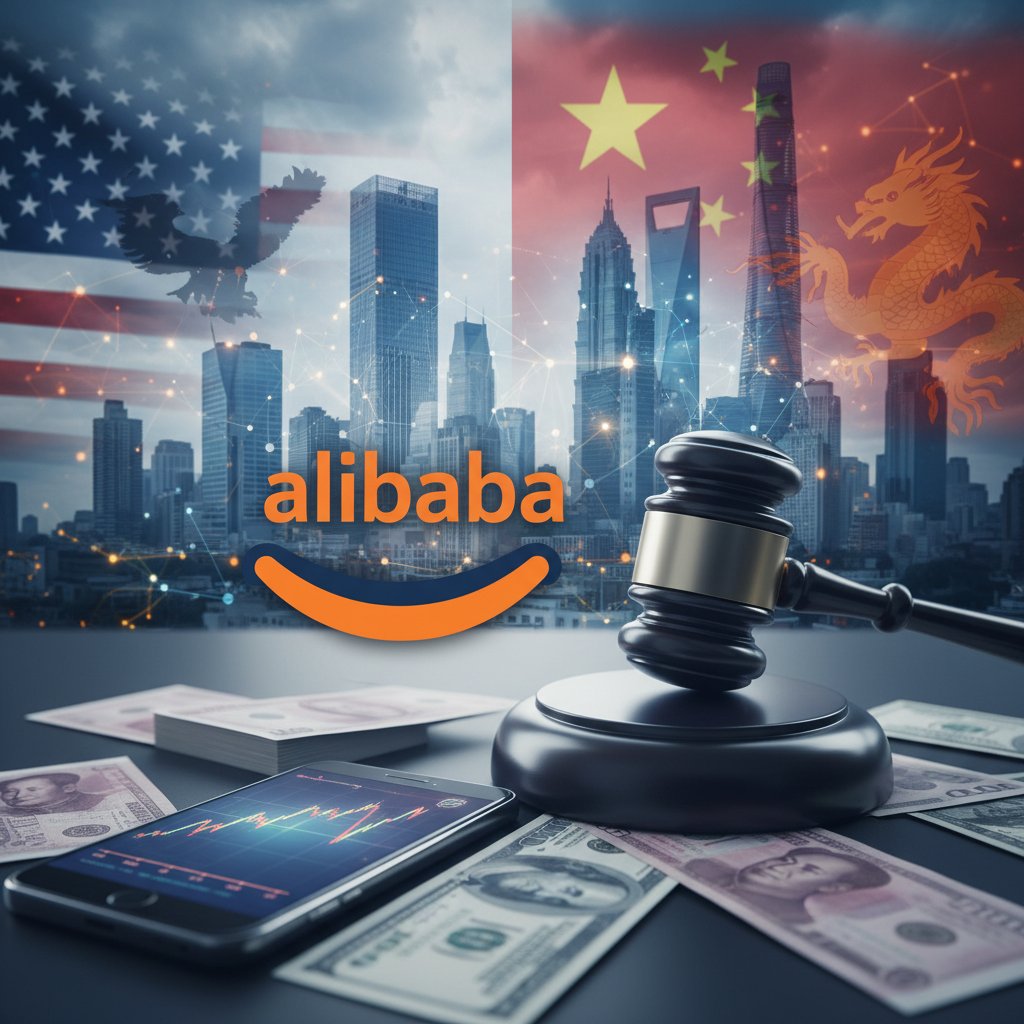
Alibaba Group Holding Ltd. has filed a lawsuit against the U.S. Department of Defense, challenging its inclusion on a controversial blacklist of companies allegedly linked to the Chinese military. The e-commerce giant, headquartered in Hangzhou, China, filed the complaint in a Washington D.C. federal court on Wednesday, arguing that the designation is “arbitrary and capricious” and has already inflicted real financial damage.
The Blacklist That Shook Markets
The U.S. Defense Department added Alibaba to its “Chinese Military Companies” list in December 2024, a move that immediately spooked investors. Shares of Alibaba’s U.S.-listed stock dropped 7.2% in the following session, wiping out roughly $15 billion in market capitalization. The list, created under the 1999 National Defense Authorization Act, identifies firms the Pentagon believes have ties to China’s People’s Liberation Army.
Here’s the kicker, Alibaba has never manufactured weapons, never worked on military contracts, and doesn’t even have a defense division. The company’s core business? E-commerce, cloud computing, and digital payments. So why the blacklist? The Pentagon hasn’t publicly detailed its evidence, but sources close to the matter suggest it’s linked to Alibaba’s cloud services and partnerships with state-owned enterprises.
Alibaba’s legal team is pulling no punches. In the 47-page complaint, they argue the designation violates the company’s due process rights under the U.S. Constitution. “The Secretary of Defense has provided no meaningful explanation for including Alibaba on the list,” the filing states. “This is not a designation based on facts, it’s a presumption of guilt by association.”
Collateral Damage: Investors and Partners
The lawsuit isn’t just about principle. It’s about money, and lots of it. Since the blacklist was published, several U.S. investment funds have dumped Alibaba shares. The company’s stock has underperformed the broader market by 12% since the announcement, according to data from Bloomberg.
“Institutional investors are terrified of holding stocks that could trigger sanctions,” says Sarah Chen, portfolio manager at Horizon Capital in New York. “Even the perception of risk is enough to trigger a sell-off. We’ve seen this movie before with Huawei and ZTE.”
The blacklist also complicates Alibaba’s cloud business, which competes directly with Amazon Web Services and Microsoft Azure. U.S. government agencies and defense contractors are now prohibited from doing business with listed companies. That’s a problem for Alibaba Cloud, which had been targeting a 15% market share in the Asia-Pacific region by 2026. The company’s AI spending and cloud expansion plans are now under intense scrutiny from analysts who question whether the U.S. market is still viable.
And it gets worse. The Pentagon list has a domino effect. Other U.S. agencies, including the Treasury Department and Commerce Department, often use the defense list as a reference for their own restrictions. Alibaba could find itself barred from federal contracts, export licenses, and even certain banking services. The company’s legal team is fighting to stop the bleeding before it becomes systemic.
A Legal Battle With Precedent
This isn’t the first time a Chinese company has sued the U.S. government over national security designations. In 2020, Huawei sued the Federal Communications Commission after being labeled a national security threat. The case dragged on for two years before the Supreme Court declined to hear the appeal. But Alibaba’s lawyers are banking on a different outcome, they argue the Pentagon’s list lacks the same legal framework as the FCC’s designation.
“The Defense Department’s process is opaque and lacks any meaningful review mechanism,” says John Morrison, a trade attorney at Morrison & Lee in Washington D.C. “Alibaba has a strong procedural argument. The question is whether any court will stand up to the national security narrative.”
The case, Alibaba Group Holding Ltd. v. United States Department of Defense, has been assigned to Judge Timothy J. Kelly of the U.S. District Court for the District of Columbia. No hearing date has been set, but legal experts expect a preliminary ruling within 60 days.
Meanwhile, Alibaba is not alone in this fight. Xiaomi Corp. successfully sued to be removed from the same list in 2021, after a federal judge ruled the company had no military ties. That precedent could help Alibaba’s case, though the geopolitical climate has worsened since then. The Biden administration has maintained a hardline stance on Chinese technology companies, and the trade war shows no signs of cooling. The broader tech sell-off driven by AI spending concerns has only added to the pressure on Chinese ADRs.
What It Means for the Average Investor
If you own Alibaba stock through an ETF or mutual fund, you’re already feeling the heat. The company’s market cap has dropped from $280 billion in early 2024 to around $210 billion today. That’s a 25% haircut, and the lawsuit hasn’t even been heard yet.
Analysts are split on the outcome. Some see the lawsuit as a Hail Mary, a desperate attempt to undo damage that’s already been done. Others view it as a calculated move to force the Pentagon to show its cards. “If Alibaba wins, it sets a huge precedent for every other Chinese company on that list,” says Chen. “If it loses, it’s a signal that the U.S. is serious about decoupling.”
The list currently includes 134 companies, ranging from semiconductor giant SMIC to drone maker DJI. Each one is watching this case closely. A win for Alibaba could trigger a wave of similar lawsuits. A loss could accelerate the exodus of Chinese tech from U.S. markets.
For now, Alibaba is playing offense. The company has also hired lobbying firms in Washington and launched a PR campaign emphasizing its civilian commercial operations. But the clock is ticking. The U.S. election cycle is heating up, and China bashing is a bipartisan sport. Alibaba’s legal team knows they’re fighting not just a court case, but a political narrative.
One thing is certain: this case will be a bellwether for U.S.-China tech relations for years to come. Whether Alibaba wins or loses, the message to Chinese companies is clear, doing business in America comes with strings attached. And those strings can snap at any moment.
Frequently Asked Questions
What is the Chinese Military Companies list?
The list, maintained by the U.S. Department of Defense, identifies foreign companies believed to have ties to the People’s Liberation Army. Inclusion triggers restrictions on U.S. government contracts and can spook private investors. The list was created under the 1999 National Defense Authorization Act.
Can Alibaba win this lawsuit?
Legal experts say Alibaba has a strong procedural case, especially given Xiaomi’s successful 2021 lawsuit. However, courts are often deferential to the executive branch on national security matters. The outcome will likely depend on how much evidence the Pentagon is willing to disclose.
Should I sell my Alibaba stock?
That depends on your risk tolerance. The stock is volatile and the lawsuit adds uncertainty. Some analysts see the current price as a buying opportunity if Alibaba wins, while others warn of further downside if the blacklist is upheld. Consult a financial advisor for personalized advice.