


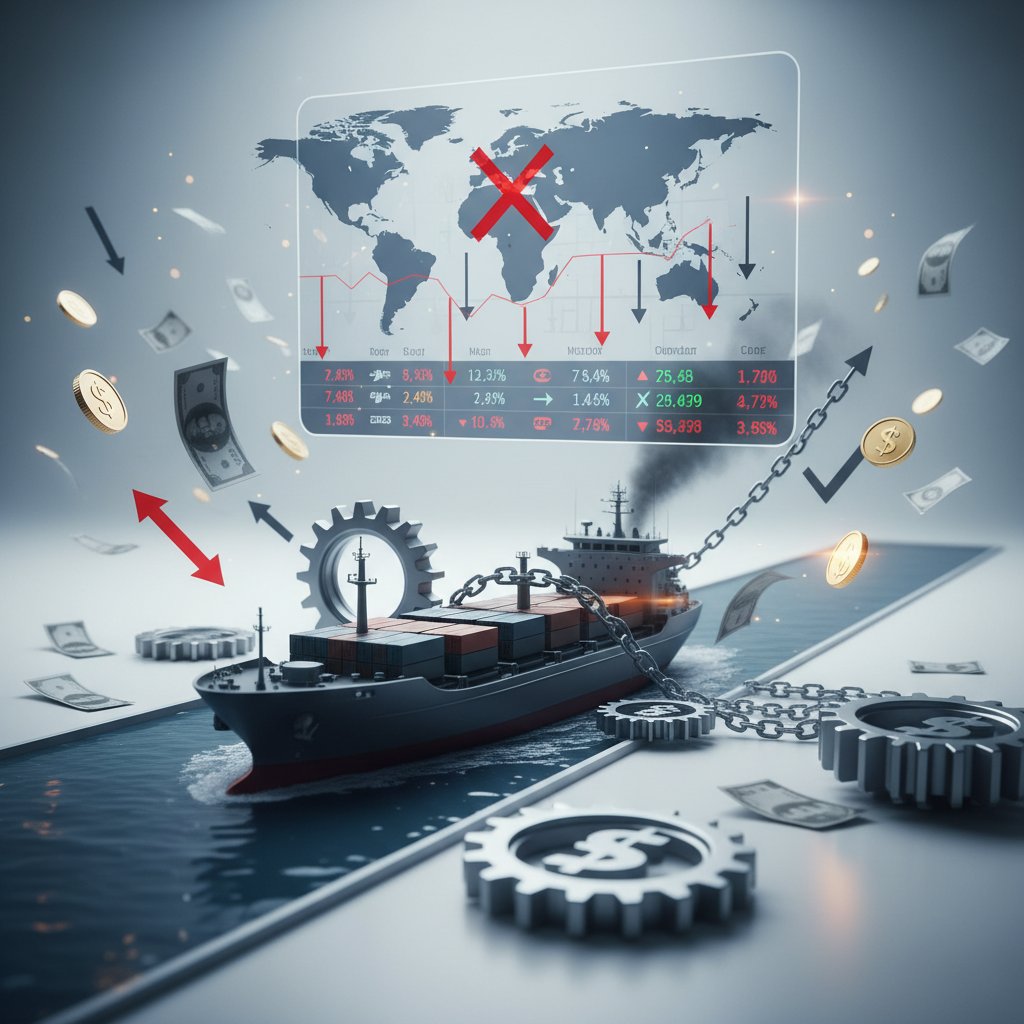
If you filled up your car this morning, brace yourself. The price at the pump is about to get ugly, and fast. A strike on a cargo vessel off the coast of Oman has brought the Strait of Hormuz to a grinding halt, triggering a United Nations agency to suspend all evacuation movements through the Persian Gulf’s narrowest chokepoint. The strait handles about a fifth of the world’s oil supply. That’s now backed up. And oil prices? They’ve already spiked more than 5% in early trading.
This isn’t just a shipping story. It’s a credit-card-at-the-pump story. It’s a heating-bill-in-October story. And for anyone watching the global economy, it’s a reminder that the world’s energy supply runs on a razor’s edge, one missile, one stray drone, and everything freezes.
The attack happened early Wednesday local time, roughly 50 nautical miles east of the Omani port of Duqm. A Panamanian-flagged tanker, the M/V Golden Horizon, was struck by what the crew described as a “fast-moving aerial object.” The vessel suffered moderate damage but remained afloat. No casualties were reported. But the psychological damage was instant. Within hours, the International Maritime Organization (IMO) issued a rare directive pausing all scheduled evacuations of ships transiting the strait, a move that effectively shut down the waterway for commercial traffic.
The Attack and Immediate Aftermath
The strike near Oman has no immediately claimed responsibility. Iran and the Houthi rebels in Yemen both have the capability, but analysts are pointing fingers carefully. “We’re looking at a deliberate escalation,” said Dr. Amir Hashemi, shipping security analyst at the Middle East Institute. “The strait is the most militarized waterway on earth. Any disruption here isn’t an accident, it’s a message.”
In the hours following, insurance premiums for vessels transiting the Gulf of Oman skyrocketed. Some shipping lines announced immediate rerouting. That means longer voyages, higher costs, and eventually, higher prices for consumers in London, New York, and Toronto.
Oil prices jumped $4.50 a barrel, pushing Brent crude above $78. That’s a 6% surge. And if the strait remains closed for more than a week? Some traders are whispering about $90.
Global Energy Supply at Risk
The Strait of Hormuz is a 21-mile-wide passage between Iran and Oman. Every day, about 17 million barrels of oil pass through it, roughly 20% of global consumption. Also transiting: liquefied natural gas, refined fuels, and cargo containers carrying everything from electronics to grain.
“Shutting Hormuz is like cutting the main artery of global energy trade,” said Sarah Chen, senior energy economist at S&P Global Commodity Insights. “The world has limited spare capacity and even less spare tanker capacity. We’re looking at a supply crunch that could ripple across every oil-importing nation.”
Japan, India, South Korea, and China are the biggest buyers of Gulf crude. Europe depends on the strait for about 40% of its LNG imports. The US is less exposed, thanks to domestic shale, but global prices still affect American drivers. And the UK? British motorists are already reeling from high energy bills. This could push household energy costs into record territory again.
The UN agency involved, the IMO, hasn’t given a timeline for resuming evacuations. Evacuations here refer to scheduled ship movements under the Maritime Security Transit Corridor, a system designed to keep commercial vessels safe from regional conflicts. Without that confidence, shipping lines won’t risk the strait.
What This Means for Your Wallet
Look, it’s not just oil traders in London who feel this. Every element of the supply chain gets hit. Transport costs go up. That gets baked into the price of everything, food, clothes, electronics. Analysts at Goldman Sachs estimate that a sustained $10 increase in oil prices shaves 0.3% off global GDP growth within a year.
For UK households, the pain is familiar. Petrol already hovers around £1.50 per litre. Add another 10p-15p and you’re looking at the highest prices since the 2022 crisis. And heating oil? Homes in rural Scotland and Northern Ireland that rely on it could see bills jump 20% or more.
There’s also a knock-on effect for monetary policy. Central banks, the Fed, the Bank of England, the ECB, have been warily watching inflation. A oil price spike like this complicates their plans. Do they keep rates high to fight inflation? Or cut to support growth? They’re trapped.
In the past, when Hormuz has been threatened, like during the 2019 tanker attacks, the market panicked briefly and then normalized. But this time feels different. The Houthis have shown they can hit deep into the Red Sea. Iran has shadow fleet tankers. And no one seems willing to de-escalate.
“We’ve lost the diplomatic guardrails that used to contain these crises,” said Dr. Hashemi. “The strait has become a bargaining chip, and the world is paying the price.”
Interestingly, some analysts recall that when traffic does resume, and it likely will, prices can tumble just as fast. As the Oil Price Tumbles Back to Pre-Iran Conflict Levels as Strait Traffic Resumes article notes, the market often overcorrects when fear subsides. But that’s a big if right now.
The Geopolitical Chessboard
Who’s behind the attack? That’s the trillion-dollar question. Iran has denied involvement. Houthi spokesmen claimed responsibility for a separate strike in the Red Sea but not this one. The US Navy’s Fifth Fleet, based in Bahrain, said it was investigating. Rear Admiral James Hartley told reporters: “We are treating this as a hostile act. We will respond appropriately.”
The timing is brutal. Negotiations over Iran’s nuclear program are stalled. The Saudis are normalizing ties with Israel. And the Houthis, emboldened by Yemen’s civil war, have turned the Red Sea into a no-go zone. Add in Russia’s shadow fleet dodging sanctions and you’ve got a recipe for maritime chaos.
Commercial shipping has already been rerouting around the Cape of Good Hope to avoid the Red Sea since late 2023. That added 10 days to voyages from Asia to Europe. Now this? The cost of global trade is ratcheting up by the week.
For the everyday reader in the UK, US, or Canada, the immediate takeaway is simple: check your energy bills. Check your grocery budget. And don’t be surprised if the next Bank of England decision sounds a little more hawkish than expected.
Looking ahead, the next 72 hours are critical. If the strait reopens within days, the price spike fades. If it stays closed, or if another vessel is hit, we could be looking at a new era of energy insecurity. The world has been here before, but never quite like this. Not with the Red Sea already burning. Not with oil markets so tight. The strait is the world’s fuse. And right now, it’s lit.
Frequently Asked Questions
How long might the Strait remain closed?
That’s the $64,000 question, literally. Past disruptions have lasted anywhere from a few hours (a brief Iranian threat in 2019) to several weeks (the 1980s Tanker War). Right now, it depends on whether shipping lines regain confidence in the security corridor. If the attacking party is identified and deterred quickly, traffic could resume within a week. If not, we’re looking at a prolonged closure that could reshape global energy routes.
Will this push petrol prices higher immediately?
Yes, almost certainly. Oil is a globally traded commodity, and the threat of supply disruption gets priced in within hours. UK motorists could see an extra 10-15 pence per litre within days. US drivers might see a $0.20-$0.30 per gallon jump at the pump. The actual retail impact depends on how long the crisis lasts and whether governments release strategic petroleum reserves.
What alternative routes exist if the Strait stays shut?
Very few that can handle the volume. Oil can be diverted via two land pipelines: the 1,200-km Saudi East-West Pipeline (capacity 5 million barrels per day) and the UAE’s Habshan-Fujairah pipeline (1.5 million bpd). But that’s only about a third of what passes through the Strait. More tankers would need to sail around Africa’s Cape of Good Hope, adding 6,000 miles and 10-15 days per voyage. That drives up shipping costs and delays deliveries, a nightmare for just-in-time supply chains.