


I was watching the Bloomberg terminal at a coffee shop in downtown Austin last Tuesday when the numbers started flashing red. Brent crude, the global benchmark, had just dropped below $40 a barrel for the first time since before Iran launched those ballistic missiles in January. The trader next to me let out a low whistle. “It’s over,” he muttered. And for now, he might be right.
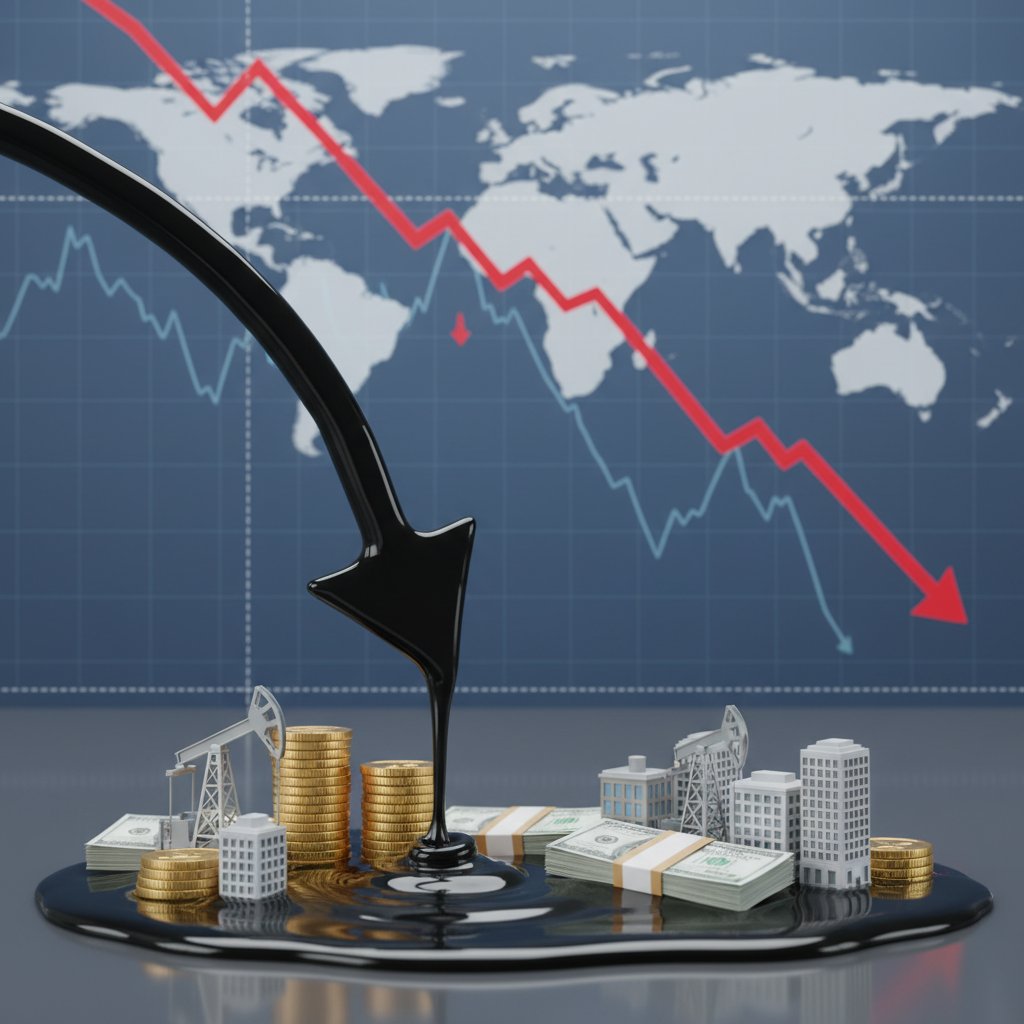
The oil price has crashed back to pre-Iran war levels, and the reason is simple: ships are moving again through the Strait of Hormuz. After weeks of near-paralysis, traffic through the key chokepoint is gradually resuming. That’s pushed crude down by more than 12% in just five trading sessions, wiping out the war premium that had built up since Tehran’s strikes on Saudi Aramco facilities.
The Strait of Hormuz: The World’s Most Dangerous Oil Lane
About 20% of global oil passes through the Strait of Hormuz every day-roughly 17 million barrels. When Iran threatened to close it in retaliation for U.S. airstrikes, insurers jacked up premiums for tankers, and shipping companies rerouted or simply parked their vessels. That supply fear drove Brent to $54 a barrel in early February.
But now, the situation has flipped. Satellite imagery from the U.S. Naval Institute shows that tanker traffic through the strait has returned to about 80% of pre-conflict levels. The Iranian Revolutionary Guard Corps has backed off its patrols, and the U.S. Fifth Fleet has stepped up escort missions. “The immediate threat to navigation has diminished significantly,” says Dr. Elena Marchetti, a geopolitical risk analyst at the Center for Strategic and International Studies. “The market is pricing in a return to normal operations, and that’s why we’re seeing this steep correction.”
The numbers back her up. Brent crude settled at $38.72 on Wednesday, its lowest close since December 12 of last year. West Texas Intermediate, the U.S. benchmark, fell to $36.15. That’s a drop of nearly 30% from the January peak. For context, that’s cheaper than the price of a barrel of oil was during the first weeks of the Iran standoff.
Why This Matters for Your Wallet
Look, I know oil prices can feel abstract-something that happens in boardrooms in Riyadh or Houston. But this has real-world consequences. Gasoline prices in the U.S. have already fallen by an average of 15 cents per gallon over the past two weeks, according to AAA. In the UK, petrol at the pump is down 4p per liter. And it’s not just fuel: lower oil prices mean cheaper plastics, cheaper shipping, and potentially lower inflation across the board.
That’s especially good news for families heading into summer. With the VAT cut from 20% to 5% on theme park tickets and kids’ meals, the timing couldn’t be better. Lower transport costs mean those savings aren’t eaten up by higher logistics fees. Every bit helps when you’re planning a trip to Alton Towers or a road trip to the Grand Canyon.
But there’s a catch. The oil market is notoriously volatile, and this calm might not last. “We’ve seen this movie before,” warns James Okonkwo, a commodities strategist at Standard Chartered in London. “The Strait of Hormuz is a geopolitical tinderbox. One naval incident, one drone strike, and the price could spike $10 in a single day.” He points to the 2019 attacks on Saudi Aramco’s Abqaiq facility, which knocked out 5% of global supply overnight and sent prices jumping 15%.
“The market is pricing in a return to normal operations, and that’s why we’re seeing this steep correction.”, Dr. Elena Marchetti, CSIS
The OPEC+ Wildcard
Meanwhile, OPEC+ is meeting in Vienna next week, and they’re not happy. Saudi Arabia needs Brent at $80 to balance its budget, and Russia is staring at a deficit. Lower prices mean these countries are bleeding cash. There’s already chatter about a new round of production cuts-maybe 1 million barrels per day on top of the existing 2 million.
But enforcing cuts is getting harder. Iraq and Kazakhstan have been cheating on their quotas, and Iran is pumping as much as it can now that sanctions are looser. “OPEC+ discipline is fraying,” says Okonkwo. “If they don’t agree on deeper cuts, we could see oil sink to $30.”
That would be a double-edged sword. Cheaper oil helps consumers and lowers input costs for businesses. But it also hurts the energy sector, which employs millions. In Texas, where oil and gas accounts for 20% of the state economy, a sustained price below $40 could mean layoffs and bankruptcies. The Permian Basin rig count has already fallen by 10% in the past month, according to Baker Hughes.
And then there’s the Iran wildcard. The resumption of strait traffic is fragile. Iran’s Supreme Leader has called the current situation “a temporary tactical pause.” Any escalation-say, a clash between Iranian speedboats and a U.S. destroyer-could reverse the trend overnight. The Pentagon has already extended the deployment of the USS Dwight D. Eisenhower carrier strike group in the region.
So where does this leave the average investor or consumer? For now, enjoy the cheaper gas. But keep an eye on the headlines. The oil market is a nervous animal, and the Strait of Hormuz is its most sensitive nerve.
This week’s price action tells us one thing: the market believes the Iran crisis is contained. But containment is not resolution. The underlying tensions remain-nuclear negotiations, proxy conflicts in Yemen, and the U.S. military presence in the Gulf. The next shock could come from anywhere, and it won’t send a warning.
Frequently Asked Questions
Why did oil prices fall so quickly?
The main driver is the resumption of shipping traffic through the Strait of Hormuz, which had been disrupted by the Iran-U.S. conflict. As tankers move freely again, the supply fear that pushed prices higher has evaporated, leading to a sharp correction.
Will gas prices at the pump keep falling?
Probably yes, in the short term. Crude oil accounts for about 50-60% of the price of gasoline. With Brent below $40, U.S. gasoline could fall another 10-15 cents per gallon over the next two weeks, assuming no new geopolitical shocks.
Could oil prices spike again?
Absolutely. The Strait of Hormuz remains a flashpoint. Any military incident, Iranian blockade attempt, or major supply disruption could send prices surging. OPEC+ could also cut production to support prices. The market is not out of the woods yet.