







When trading volumes on centralized exchanges crater to a two-year low of just $1.05 trillion in a single month, you don’t need a crystal ball to see who gets squeezed first. The names on the edge are the ones with thin margins, regulatory baggage, and business models that only work when the market’s frothy. BitMEX and BitMart fit that profile like a glove.
Let’s be blunt: this isn’t a cyclical dip. It’s a structural reset. And for exchanges that built their empires on leverage and loose compliance, the math is turning ugly fast.
The Volume Drought: $1.05 Trillion and Falling
According to data from CCData, spot and derivatives trading volumes across major centralized platforms dropped to $1.05 trillion in recent weeks, the quietest stretch since late 2020. That’s a collapse of roughly 40% from the highs of early 2022. When volumes dry up, so do exchange revenues. And unlike a casino, these platforms don’t have hotel rooms or buffets to fall back on.
BitMEX, once the king of crypto derivatives, has been bleeding market share for years. After its 2020 legal run-in with the CFTC over failing to implement adequate anti-money laundering procedures, the exchange paid a $100 million fine and watched its dominance evaporate. Today, its open interest is a fraction of what Binance or Bybit command. The volume slump is just the final nail.
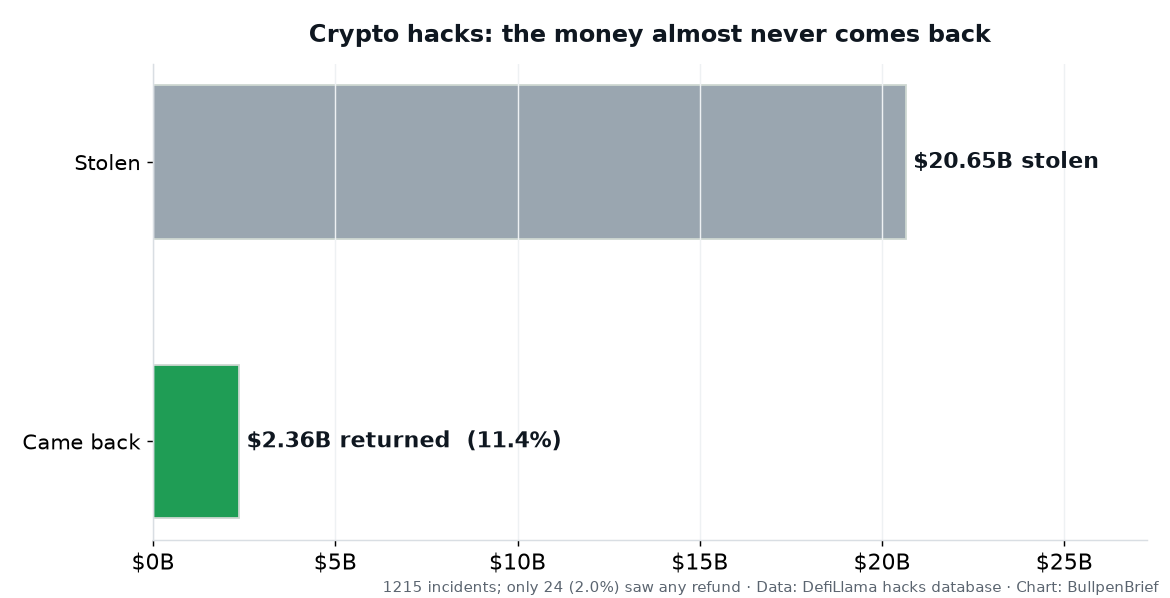
BitMart, meanwhile, has always played in the shadows, a smaller player that got hit by a $196 million hack in 2021 and never fully recovered customer trust. With volumes now scraping the floor, its ability to cover operating costs (staff, security audits, compliance) is in serious doubt.
Why These Two Exchanges Are Most Exposed
This isn’t random. The vulnerability here is structural. BitMEX and BitMart share three dangerous traits:
1. Revenue concentration in trading fees. Unlike Coinbase, which generates income from custody, staking, and subscription services, these platforms are almost entirely fee-dependent. When volumes drop 40%, their revenue drops 40%, no hedge, no buffer.
2. Regulatory overhang. BitMEX still carries the stench of its 2020 DOJ settlement. Institutions won’t touch it. BitMart operates in a gray zone, it’s licensed in some jurisdictions but banned in others, including New York. The CFTC and SEC are circling, and a new enforcement action could be the knockout punch.
3. Weak liquidity pools. In a downturn, traders flee to the deepest books, Binance, OKX, Kraken. BitMEX and BitMart simply can’t compete on spreads or order depth. As slippage increases, their power users migrate elsewhere. It’s a death spiral.
Compare this to the ongoing battle between the CME and CFTC over onchain perpetual futures. That fight is about the future of derivatives, BitMEX and BitMart are stuck fighting for scraps in the present.
What This Means for Traders, And Your Funds
Here’s the part that matters if you’ve got coins sitting on either platform. When an exchange starts bleeding users and liquidity, the risk of withdrawal freezes or sudden insolvency spikes. Remember FTX? It didn’t collapse because of bad trades, it collapsed because liquidity evaporated faster than anyone thought possible.
If you’re on BitMEX or BitMart, the smart move is not to wait for a headline. Pull your assets to a cold wallet or a Tier-1 exchange like Kraken or Coinbase. The cost of a transaction is trivial compared to the risk of a lockup.
And let’s not ignore the broader signal. A $1.05 trillion volume month means market makers are pulling back. Hedge funds are sidelining capital. The retail frenzy is dead. For exchanges that thrived on volatility, this environment is toxic.
Second-Order Implications: Who Gains, Who Loses
The winners in this shakeout are the platforms with diversified revenue and institutional credibility. Coinbase, with its $5.9 billion cash pile and public listing, can weather a long winter. Binance, despite its own regulatory headaches, has such a massive scale that it can operate on razor-thin margins indefinitely.
The losers are the second-tier exchanges that never built a moat. BitMEX and BitMart are just the most obvious. Expect to see more consolidation, maybe a fire sale acquisition, maybe a quiet shutdown. The crypto exchange space is about to have its own version of the 2008 banking crisis: the weak get eaten, the strong get stronger.
And what about the CME? The push for onchain perpetual futures, as covered in our piece on the CME vs CFTC battle, shows that traditional finance is eager to capture the derivatives market that BitMEX pioneered. If the CME gets regulatory approval, it could siphon off the remaining institutional flow, a death sentence for legacy crypto-native platforms.
Look, the crypto trading slump isn’t a mystery. It’s the natural consequence of a speculative mania that ran too hot and now needs to cool. But the casualties won’t be random. They’ll be the exchanges that forgot the first rule of trading: never be the weakest player at the table.
Frequently Asked Questions
Should I withdraw my funds from BitMEX or BitMart immediately?
Yes, it’s prudent to move assets to a cold wallet or a more established exchange. Both platforms have significant liquidity and regulatory risks that could escalate without warning. The cost of a withdrawal is minimal compared to the potential loss of access to your funds.
What caused the $1.05 trillion trading volume slump?
The slump stems from a combination of factors: reduced retail participation, institutional traders sidelined by regulatory uncertainty, and a lack of major price catalysts. The market is in a low-volatility environment that discourages active trading, especially in derivatives where most volume historically came from.
Could other exchanges besides BitMEX and BitMart fail?
Absolutely. Any exchange with high fee reliance, low regulatory compliance, and thin liquidity is at risk. Watch platforms like KuCoin, Gate.io, or smaller regional exchanges. The consolidation trend will likely accelerate if volumes stay below $1.5 trillion for another quarter.