


Brent crude just took a 3.2% haircut in a single session, sliding to $81.40 a barrel on Tuesday. West Texas Intermediate wasn’t far behind, dropping to $77.10. The trigger? Peace talks between regional powers that suddenly shifted focus to the Strait of Hormuz, the narrow throat through which 20% of the world’s oil passes daily.
Investors aren’t waiting for a deal. They’re pricing one in. And that’s a massive bet.
The Strait of Hormuz: 21 Miles of Geopolitical Dynamite
To understand Tuesday’s move, you need to understand the chokepoint. The Strait of Hormuz connects the Persian Gulf to the Gulf of Oman. At its narrowest point, it’s just 21 miles wide. Tankers carrying 17 million barrels of crude squeeze through every day, that’s roughly a fifth of global consumption.
For years, Iran has threatened to close it. During the Iran-Iraq war in the 1980s, both sides attacked tankers. In 2019, the U.S. blamed Iran for drone strikes on Saudi Aramco facilities that temporarily knocked out 5.7 million barrels a day of production. The Hormuz risk premium has been baked into oil prices for decades, sometimes 2 bucks, sometimes 10.
But this week’s talks, brokered by Oman, with indirect participation from Washington and Tehran, explicitly mentioned Hormuz transit guarantees for the first time. That’s new. And markets are latching onto it.
Our previous coverage of the Strait as ‘the toll booth at the throat of world trade’ laid out exactly why this waterway commands such outsized attention. The piece argued that any credible guarantee of free passage would strip $5-8 off the risk premium immediately. Tuesday’s move suggests we’re in that range.
“If the Hormuz security framework holds, you’re looking at oil prices potentially settling $5-7 lower than they would otherwise,” said Dr. Elena Marchetti, energy geopolitics fellow at the Oxford Institute for Energy Studies. “The market has been conditioned to assume disruption risk at 15-20%. Any reduction in that probability moves the needle hard.”
Peace Talks or Market Whiplash?
Let’s be real: peace talks fail all the time. The Iran nuclear deal (JCPOA) took years to negotiate and collapsed within months of the U.S. withdrawal in 2018. But this round is different in one crucial way, the participants.
Both Saudi Arabia and the UAE have normalized relations with Israel in the Abraham Accords. Iran is economically battered by sanctions. And the U.S., under a new administration, has signaled willingness to reduce military posture in the Gulf if Hormuz security can be guaranteed diplomatically. These aren’t small shifts.
Still, the market’s reaction might be overdone. Hedge funds piled into crude futures last week on supply fears; now they’re scrambling to unwind. That creates a feedback loop, prices drop, more shorts pile in, prices drop further.
“It’s a classic ‘buy the rumor, sell the fact’ setup,” said Marcus Chen, head of commodities strategy at Citadel Global Markets. “But here, the rumor is peace and the fact is a preliminary framework. There’s a mismatch. The market is treating a handshake as a treaty.”
Chen’s point is worth sitting with. The talks produced a joint statement about ‘exploring mechanisms’ for Hormuz security. That’s it. No signed agreement. No timeline. Yet oil prices behaved as if tanker escorts were already deployed.
So what happens if talks stall? The same volatility snaps back, fast. Expect Brent to retest $85 within days if the next round of negotiations gets postponed. The market is now hypersensitive to every diplomatic tweet and backchannel whisper.
What This Means for Your Wallet (and Your Portfolio)
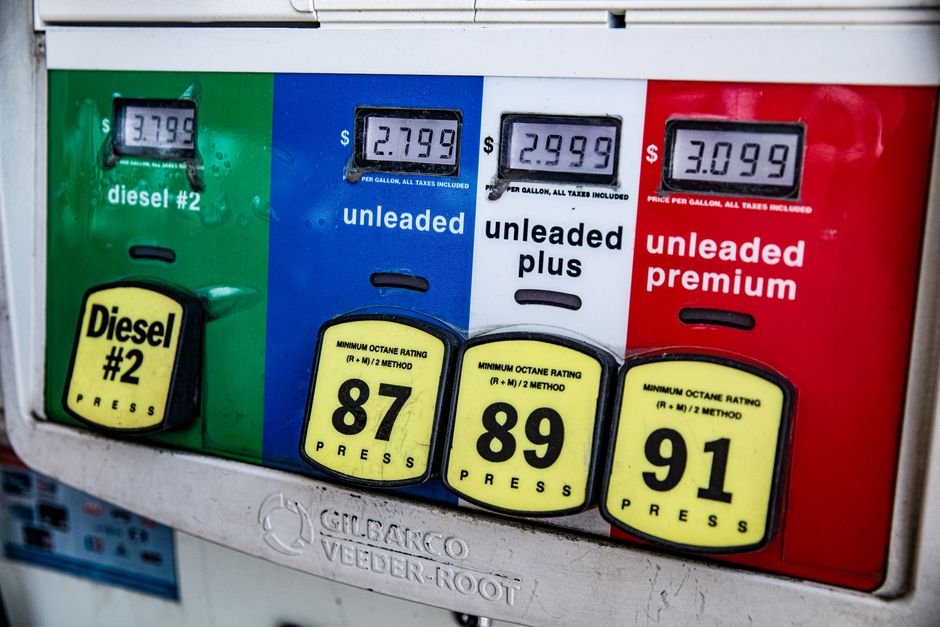
Lower oil prices aren’t just a headline for traders. They ripple into everything, gasoline at the pump, heating oil this winter, jet fuel for flights, and the plastics in your phone case. The U.S. Energy Information Administration (EIA) estimates that a sustained $5 drop in crude reduces gasoline prices by roughly 12-15 cents per gallon within two weeks.
That matters. The average American household spent about $2,500 on gasoline in 2023, according to the Bureau of Labor Statistics. A 15-cent drop saves the average driver about $120 a year. Not life-changing, but real.
For investors, the calculus is more nuanced. Energy stocks (Exxon, Chevron, Occidental) have been the S&P 500’s best-performing sector this year, up 18%. Hormuz-driven oil declines could clip those gains. But if the peace framework holds, lower input costs could boost airlines, logistics, and consumer discretionary stocks, sectors that have been squeezed by high fuel prices.
Meanwhile, the Fed’s next move looms large, lower oil reduces inflation pressure, which could give the central bank room to ease. That’s another bullish signal for risk assets, but only if the oil drop sticks.
The History: Hormuz Has Been Here Before
This isn’t the first time markets have rallied on Hormuz diplomacy. In 2015, when the JCPOA was initialed, oil dropped 4% in a single day on expectations of Iranian exports returning. That rally lasted about three months before the deal’s implementation hit snags and prices recovered.
In 2021, when Iran and Saudi Arabia held direct talks in Baghdad, prices barely budged, the market had learned to be skeptical. But Tuesday’s move suggests that skepticism has worn thin after two years of Red Sea attacks, Houthi missile strikes, and Ukraine-related supply disruptions. Traders are desperate for good news.
“The market is exhausted by perpetual crisis,” said Dr. Marchetti. “Any credible signal of de-escalation gets amplified. The problem is that geopolitical risk doesn’t disappear, it just relocates.”
She’s right. Even if Hormuz gets guaranteed passage, other chokepoints remain: the Bab el-Mandeb strait near Yemen, the Suez Canal’s ongoing vulnerability, and Russia’s energy infrastructure under drone attack. The ‘peace premium’ may be as fragile as the paper it’s written on.
Still, for now, oil traders are leaning into the narrative. Open interest in Brent futures hit a record 2.8 million contracts last week, per ICE data. That’s a lot of conviction, or a lot of leverage waiting to blow up.
The EIA’s latest short-term energy outlook projects Brent averaging $82 in 2024, down from $85 in the previous forecast. That revision came before Tuesday’s drop. If the Hormuz framework firms up, expect further downward adjustments.
The bottom line: Oil’s slide is rational but premature. The Hormuz peace talks are a real development, but they’re not a done deal. Investors should watch the next round of negotiations, expected in two weeks in Muscat. If those yield a concrete timeline for security guarantees, we could see Brent testing $75. If they collapse, buckle up. The whiplash is coming either way.
Frequently Asked Questions
Why did oil prices drop so sharply on the news of peace talks?
The Strait of Hormuz is the world’s most critical oil chokepoint, handling about 20% of global crude supply. Any credible diplomatic progress toward guaranteeing free passage reduces the risk premium that traders have baked into oil prices for years. Tuesday’s 3.2% drop reflects the market pricing in a lower probability of disruption, even though the talks are still at an early stage.
How much lower could oil prices go if a Hormuz deal is finalized?
Analysts estimate that a formal, enforceable agreement guaranteeing safe transit through the Strait could strip $5-8 off the current risk premium. That would put Brent crude in the $74-78 range. However, other factors, including OPEC+ production decisions, Russian export volumes, and global demand, would still cap the downside.
What should investors do with energy stocks right now?
It depends on your time horizon. Short-term, energy stocks may face headwinds if oil continues to slide on Hormuz optimism. But the talks could fail, and energy companies are still generating strong cash flows at current prices. A cautious approach would be to trim positions into strength but maintain core exposure, the geopolitical risk premium can return as fast as it disappears.