


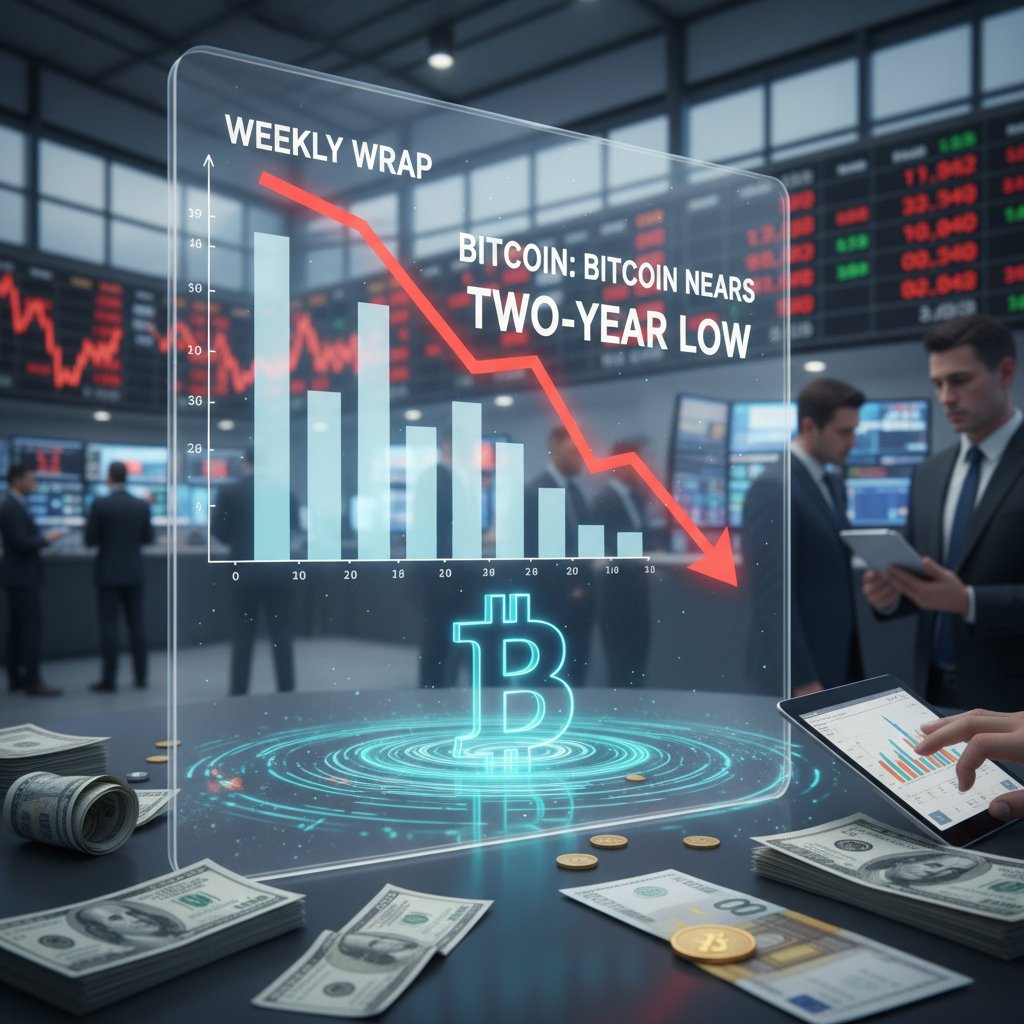
It’s been a brutal week for Bitcoin. On Wednesday morning, the world’s largest cryptocurrency dipped to $15,480-a level not seen since November 2020. That’s a two-year low, and it’s got everyone from retail traders to institutional investors asking the same question: how much lower can this go?
The sell-off accelerated after the collapse of FTX, one of the biggest crypto exchanges, which filed for bankruptcy on November 11. The contagion spread fast. Within days, Bitcoin lost nearly 25% of its value, dragging the entire market down with it. The total crypto market cap has now shrunk below $800 billion, down from a peak of $3 trillion in November 2021.
But this isn’t just another crypto crash. It’s a crisis of confidence. And it’s happening at a time when the broader economy is already under pressure from high inflation, rising interest rates, and fears of a recession. So what’s really going on? Let’s break it down.
The FTX Fallout: A Lehman Moment for Crypto?
When FTX-once valued at $32 billion-suddenly collapsed, the shockwaves were immediate. The exchange’s founder, Sam Bankman-Fried, had been a golden boy of crypto. His downfall was swift and devastating. Within a week, FTX was bankrupt, and investors who had millions in assets on the platform found themselves locked out.
“This is the Lehman Brothers moment for crypto,” says Dr. Sarah Chen, a crypto economist at Blockchain Analytics. “The level of fraud and mismanagement that came to light is staggering. Trust has been shattered, and it will take years to rebuild.”
The parallels with traditional finance are striking. Just as Lehman’s collapse in 2008 triggered a global credit crisis, FTX’s failure has exposed deep vulnerabilities in the crypto ecosystem. Many other firms-including BlockFi, Genesis, and even Grayscale-have faced liquidity issues. The result? A cascade of margin calls, forced liquidations, and panic selling.
In fact, the situation is eerily reminiscent of what’s happening in other markets. For instance, the Asia Pacific private markets have seen liquidity return only for select deals, while many investors remain cautious. Similarly, in the agricultural sector, corn prices tumbled into the weekend as a rally fizzled out. The message is clear: risk appetite is evaporating across the board.
Macro Headwinds: The Fed’s Role
Bitcoin’s troubles aren’t just about FTX. The broader macroeconomic environment has been hostile to risky assets for months. The Federal Reserve has raised interest rates six times this year-totaling 375 basis points-with more hikes expected. Higher rates make borrowing more expensive and reduce the appeal of speculative investments like crypto.
“Bitcoin was marketed as a hedge against inflation, but it’s behaving like a high-beta tech stock,” says Michael Torres, managing director at Digital Asset Capital. “When the Fed tightens, crypto gets crushed just like growth equities.”
And the data backs that up. The correlation between Bitcoin and the Nasdaq 100 has risen to over 0.8, meaning the two move almost in lockstep. So when the Nasdaq falls 2%, Bitcoin often drops 4% or more. It’s a leveraged bet on risk, and right now, risk is out of fashion.
But there’s a nuance. Unlike stocks, crypto doesn’t have earnings reports or fundamental valuations to anchor it. That makes it even more vulnerable to sentiment swings. When fear grips the market, there’s no floor-only panic.
“The speed of the sell-off has been breathtaking. We’ve never seen such a rapid loss of confidence across all major coins.”, Dr. Sarah Chen
Where Do We Go From Here?
The technical picture is ugly. Bitcoin has broken below its previous support level of $18,000, which had held since June. The next major support is around $12,000-a level not seen since December 2020. If that breaks, the psychological $10,000 mark could be next. Some analysts are even calling for a retest of $6,000, the 2018 lows.
But it’s not all doom and gloom. On-chain data shows that long-term holders are accumulating. The share of Bitcoin held for more than a year has actually increased during this crash. Smart money may be buying the dip, even if retail investors are panicking.
There’s also the possibility of regulatory clarity. The FTX disaster has prompted lawmakers in the US and Europe to accelerate efforts to regulate crypto. While regulation might sound like a bad thing to libertarian crypto purists, it could actually bring in institutional capital that has stayed on the sidelines due to legal risks.
Of course, that’s a long way off. In the short term, the market remains fragile. Another major exchange could collapse. A whale could sell. The Fed could surprise with a 75-basis-point hike. Any one of these could send Bitcoin to new lows.
For everyday investors, the lesson is sobering. Crypto is not a “get rich quick” scheme. It’s a high-risk asset class that can lose 50% of its value in a week-and it has. If you’re thinking about buying the dip, ask yourself: can you afford to lose it all? If not, maybe it’s better to watch from the sidelines.
And if you’re planning for retirement, you might want to stick with more traditional investments. Retiring in Boca Raton at 62 on $1.3M might be a stretch, but it’s still less risky than betting your nest egg on Bitcoin.
What This Means for the Broader Market
Bitcoin’s slide is not occurring in isolation. It’s part of a broader de-risking that’s affecting everything from stocks to commodities. The S&P 500 is down about 20% this year. Gold, often seen as a safe haven, has barely budged. Even bonds have been volatile.
If Bitcoin continues to fall, it could pressure other assets. Some crypto miners, who borrowed heavily to buy equipment, are already selling their Bitcoin holdings to stay afloat. That adds further selling pressure. And if those miners go bankrupt, they could take down lenders who financed them-a chain reaction similar to what happened in the subprime mortgage crisis.
But there’s a silver lining. Every crash shakes out the weak players. The crypto projects that survive will be ones with real utility, not just hype. And for investors who can stomach the volatility, the next bull run could be even bigger than the last one-whenever it comes.
For now, though, the mood is grim. As Michael Torres puts it: “We’re not at the bottom yet. The pain is still being felt across the ecosystem. But bear markets don’t last forever. The question is how much lower we go before the turn.”
Frequently Asked Questions
Why is Bitcoin falling to a two-year low?
Bitcoin is falling due to a combination of factors: the collapse of the FTX exchange, which shattered investor confidence; aggressive interest rate hikes by the Federal Reserve that reduce appetite for risky assets; and a broader sell-off in tech stocks and commodities. The lack of regulation and transparent accounting in crypto has also made investors nervous.
Is it a good time to buy Bitcoin?
That depends on your risk tolerance and time horizon. While prices are low compared to 2021 highs, the market could fall further. Technical support levels are broken, and sentiment is deeply negative. If you believe in the long-term future of crypto, dollar-cost averaging might be a strategy, but only with money you can afford to lose. Most experts advise waiting for signs of stabilization before jumping in.
What should I do with my crypto holdings right now?
First, don’t panic sell in the middle of a crash. That locks in losses. Assess your portfolio: are you holding coins on exchanges that could be at risk of insolvency? If so, move them to a hardware wallet. Consider how much exposure you have relative to your overall net worth. If it’s more than 5-10%, you might want to rebalance. For long-term holders, the best move is often to do nothing and wait for the market to recover.