


“The gold mining sector is dancing to a tune, and right now, it’s not a waltz, it’s a frantic tango,” says Dr. Amelia Hartfield, senior commodities strategist at GlobalMarkets Advisory. “Harmony’s drop isn’t a solo act; it’s part of a chorus that includes rising costs, a shifting dollar, and investor jitters.”
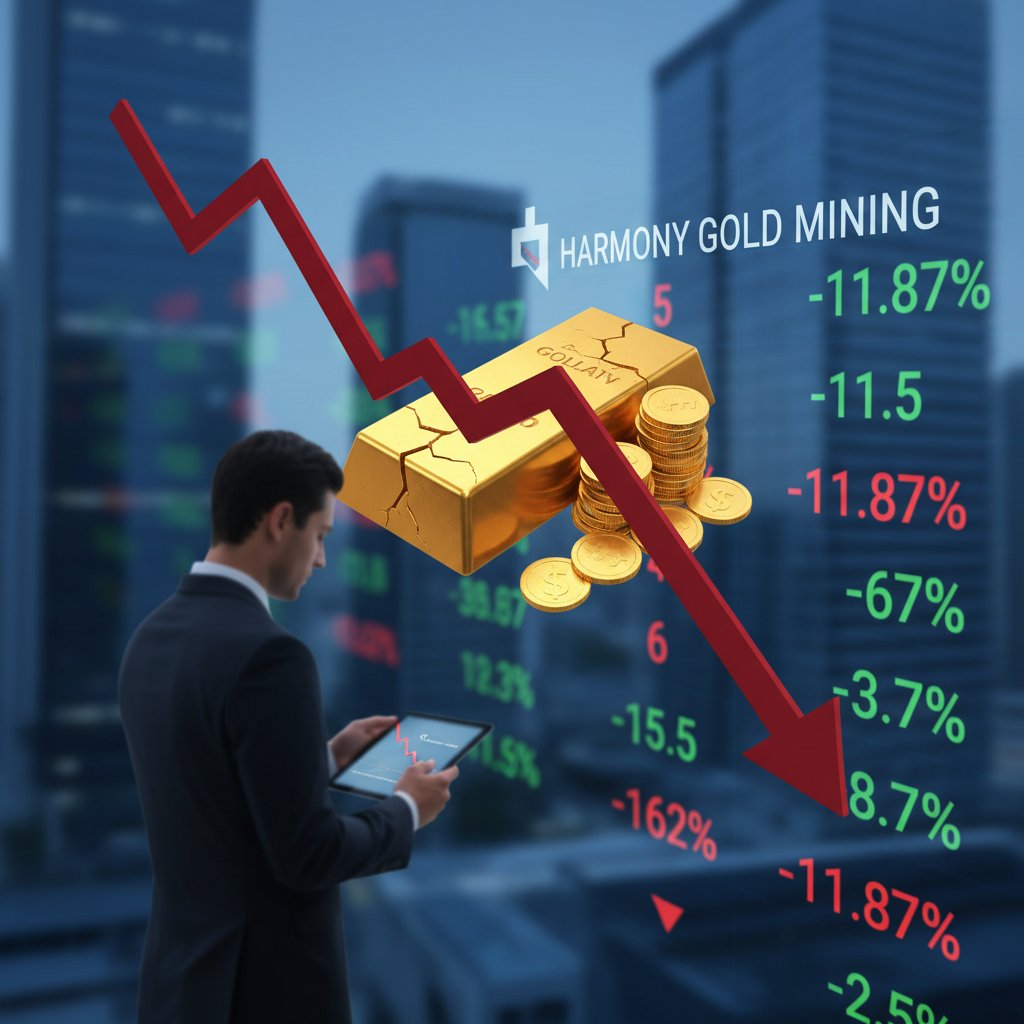
And boy, did they jitter. Harmony Gold Mining Company Ltd. (NYSE: HMY) saw its stock tumble nearly 12% this week, wiping out weeks of gains and leaving investors scrambling for answers. The Johannesburg-based miner, one of the world’s largest gold producers, closed Friday at $12.34, down from $14.00 just seven days earlier. That’s a $1.66 haircut, and it stings.
So what happened? Let’s break it down, because this isn’t just about Harmony. It’s about the entire gold mining ecosystem, and it’s got implications for your portfolio, your retirement plans, and maybe even that gold necklace you’ve been eyeing.
The Dollar’s Iron Grip
The biggest trigger? The U.S. dollar. It’s been flexing its muscles all week, hitting a three-month high against a basket of major currencies. On Wednesday, the DXY index, that’s the dollar index, punched above 106.5 for the first time since late January. And when the dollar strengthens, gold, priced in dollars, becomes more expensive for foreign buyers. Simple supply and demand, but with a global twist.
Gold futures for June delivery slid 2.3% on the week, settling at $2,310 per ounce by Friday’s close. That’s down from $2,365 the week prior. And Harmony Gold, being a pure-play miner without a hedging book to cushion the blow, felt it directly. “When gold drops $50, Harmony’s stock can fall double that percentage,” notes Hartfield. “It’s leverage, and leverage cuts both ways.”
But it’s not just the dollar. The Federal Reserve‘s latest minutes, released on Wednesday, revealed that policymakers are in no rush to cut interest rates. Inflation is still sticky at 3.4% annualized, and the job market remains tight. That means higher rates for longer, and higher rates make non-yielding assets like gold less attractive compared to bonds or savings accounts. For Harmony, whose production costs are already inflated by energy and labor expenses in South Africa, this is a double whammy.
Costs Are Biting, Hard
Speaking of costs: Harmony’s all-in sustaining costs (AISC) have been creeping up. In their latest quarterly report, released in early May, AISC hit $1,450 per ounce, up 8% year-over-year. That’s dangerously close to the current gold price, leaving slim margins. And when gold drops, those margins evaporate fast. It’s like running a bakery where flour prices keep rising, but you can’t raise your bread prices because customers are fickle.
The culprit? South Africa’s energy crisis. Eskom, the state-owned power utility, has been implementing rolling blackouts, up to 10 hours a day in some regions. Harmony spent $45 million on diesel generators and backup power in the last quarter alone, a 30% increase from the prior year. “That’s money that could have gone into exploration or dividends,” says James K. Morrison, mining analyst at Cape Town Capital. “Instead, it’s going to keep the lights on. Literally.”
And there’s more. Labor costs in South Africa rose 6% this year after union negotiations, while logistics bottlenecks at the country’s ports, especially Durban, have delayed equipment shipments. Harmony’s CEO, Peter Steenkamp, admitted on the last earnings call that “the operating environment is more challenging than we anticipated.”
Market Sentiment: From Frenzy to Fear
Look, it’s not all doom and gloom, but you wouldn’t know it from this week’s trading. Gold has been on a tear since October 2023, rallying from $1,810 to nearly $2,400 in April. A correction was overdue. The question is whether this is a healthy pullback or the start of something uglier.
Investor positioning tells a story. Open interest in gold futures fell by 15% this week, according to the CME Group, while short positions increased 8%. That’s a classic sign of profit-taking and bearish bets. Harmony, which had rallied 40% year-to-date before this week, was an obvious target for sellers. “When a stock that’s been outperforming suddenly hits a speed bump, the exits get crowded fast,” explains Morrison.
And it’s not just Harmony. Across the broader commodities space, liquidity is returning but selectively. That means investors are picky, they’re dumping miners with high costs and weak balance sheets while holding onto those with strong cash flows. Harmony, with its $1.2 billion debt load (net debt-to-EBITDA of 2.1x), isn’t in the latter camp.
The broader market mood isn’t helping either. U.S. equities are wobbling, with the S&P 500 down 1.1% for the week, and commodities from oil to copper have slumped. It’s a risk-off moment. And when fear takes over, gold miners, despite being tied to a safe-haven metal, get sold just like tech stocks. Go figure.
What It Means for Your Money
If you own Harmony stock, this week was a gut punch. But is it time to panic? Probably not, at least not yet. The company has solid assets, including the massive Mponeng mine, the deepest gold mine in the world. It produced 1.4 million ounces last year and has reserves that could last another 20 years. The dividend yield, at 2.5%, isn’t spectacular, but it’s not nothing.
However, the risks are real. South Africa’s political uncertainty, elections are scheduled for May 29, and the ruling ANC might lose its majority for the first time since apartheid, could spook foreign investors further. Plus, gold prices are notoriously volatile. If the Fed holds rates steady through September, as futures markets now price in, gold could drift lower toward $2,200. That would hurt Harmony even more.
For comparison, corn prices also tumbled into the weekend as a rally fizzled, showing that the commodity sell-off is broad-based. It’s not just gold, everything with a ticker is under pressure. So if you’re diversified, breathe. If you’re not, well, this is your wake-up call.
“Harmony isn’t a broken company, but it’s facing headwinds that won’t disappear overnight,” says Hartfield. “Patience is key. But patience doesn’t mean ignoring the warning signs.”
Looking ahead, keep an eye on the Fed’s next meeting in June, the South African election results, and Harmony’s next production report due in July. Any of these could swing the stock 10% in either direction. That’s the nature of mining stocks, high risk, high reward, and plenty of heartburn along the way.
Frequently Asked Questions
Why did Harmony Gold stock drop so much this week?
The drop was mainly driven by a stronger U.S. dollar, which pushed gold prices lower, and rising operational costs in South Africa, including energy and labor expenses. The Federal Reserve’s signal that interest rates would stay higher for longer also reduced gold’s appeal, leading to a broad sell-off in mining stocks.
Is Harmony Gold a good long-term investment despite this decline?
It depends on your risk tolerance. Harmony has strong long-term assets, including the Mponeng mine, and a 20-year production runway. However, it faces significant near-term risks from South Africa’s political instability, high debt, and slim profit margins. Investors should weigh these factors carefully and consider diversification.
How does the South African energy crisis affect Harmony Gold’s stock?
The energy crisis, with rolling blackouts lasting up to 10 hours a day, forces Harmony to spend millions on diesel generators and backup power. These costs, $45 million last quarter, eat into profits and make the company more vulnerable when gold prices fall. It’s a major competitive disadvantage compared to miners in countries with stable power grids.