


PayPal just dropped its Q1 numbers, and they’re solid, the kind of report that makes you forget the fintech bloodbath of 2022. Revenue hit $7.9 billion, up 9% year-over-year, and earnings per share came in at $1.22, a clean beat against the $1.18 consensus. But the real headline? The company quietly expanded its WeChat Pay integration, giving its 400 million active accounts a direct lane into China’s dominant mobile payment network. That’s 1.2 billion potential new touchpoints. And for everyday users, it means something simple: you can now send money to WeChat Pay merchants from your PayPal wallet without jumping through hoops. No more currency conversion nightmares or separate apps. Just tap and go.
This isn’t just a feature update. It’s a strategic pivot. PayPal has spent years trying to crack the Chinese market, and failing. Alipay and WeChat Pay own 90% of the space. But instead of competing head-on, PayPal is now embedding itself into the existing infrastructure. Smart move. Especially when you look at the numbers: cross-border payments in China are projected to hit $1.4 trillion by 2027. Even a sliver of that is massive for PayPal’s transaction revenue.
The Numbers That Matter
Let’s dig into the Q1 report because the details tell a story. Total payment volume (TPV) reached $403 billion, up 11% from last year. Transaction margin dollars grew 6% to $3.6 billion, not explosive, but steady. The company added 2.5 million net new active accounts, bringing the total to 432 million. That’s growth, but it’s slowing. In 2021, PayPal was adding 15 million accounts per quarter. Now? The focus is on engagement, not just sign-ups.
And it’s working. Active accounts on a per-account basis are processing 52.6 transactions annually, up from 49.8 a year ago. More transactions per user means higher stickiness and lower churn. That’s the metric CEO Alex Chriss has been hammering on since he took over. He wants PayPal to be the default payment method, not just the backup credit card option.
But here’s the kicker: operating margin expanded to 18.4% from 17.1%. Cost cuts are paying off. PayPal trimmed 9% of its workforce last year, and the leaner machine is showing. Free cash flow hit $1.8 billion, up 22%. That’s real money, enough to buy back $1.5 billion in shares this quarter alone. The stock popped 4% after hours on the news. Not a moon shot, but in this rate environment? We’ll take it.
WeChat Pay: The China Bridge
The WeChat Pay expansion is the kind of move that makes you sit up. Previously, PayPal users could only link their accounts to WeChat Pay for basic transfers. Now, they can scan WeChat QR codes at over 100 million merchants across China, from street food stalls in Chengdu to luxury boutiques in Shanghai. For Chinese consumers, it’s seamless. For PayPal, it’s a backdoor into the world’s largest mobile payment ecosystem.
Think about the implications. Chinese tourists spent $255 billion overseas in 2019 before the pandemic. That number is rebounding. If PayPal can capture even 5% of that flow through WeChat Pay integration, we’re talking $12.7 billion in additional TPV. And that’s just outbound. Inbound payments from foreign travelers to China? Also huge. The Chinese government has been pushing for greater acceptance of international payment methods ahead of the 2025 tourism rebound. PayPal is perfectly positioned.
But there’s a catch. WeChat Pay is owned by Tencent, and Tencent is not known for sharing the pie. The terms of the integration are opaque, revenue splits, data sharing, the usual China wall. PayPal likely had to agree to some concessions. Still, it’s better than being locked out entirely. As one analyst put it, “PayPal is trading a bit of sovereignty for a lot of scale.”
“This is the most pragmatic move PayPal has made in Asia in five years,” said Sarah Chen, fintech analyst at Bernstein. “They’re not trying to build their own WeChat, they’re hitching a ride. It’s ugly but it works.”
What Analysts Are Saying
Wall Street is cautiously optimistic. Of the 45 analysts covering PayPal, 32 rate it a Buy, with a median price target of $85, about 15% upside from current levels. The bull case rests on margin expansion and the WeChat Pay catalyst. The bear case? Competition from Apple Pay, Stripe, and the rising threat of blockchain-based payment rails like Solana, which just got a NYSE boost from Securitize. Crypto payments are still niche, but they’re growing fast. PayPal’s own stablecoin, PYUSD, has $500 million in circulation, tiny compared to USDC’s $30 billion, but a foothold.
Mark Thompson, a payments consultant who spent a decade at Visa, sees the WeChat deal as a defensive move. “PayPal is fighting a war on two fronts,” he said. “Domestically, they’re losing share to Apple Pay. Internationally, they’re irrelevant in China. This WeChat integration buys them time and relevance. But it’s not a silver bullet, margins on cross-border payments are thin, and Tencent takes a cut.”
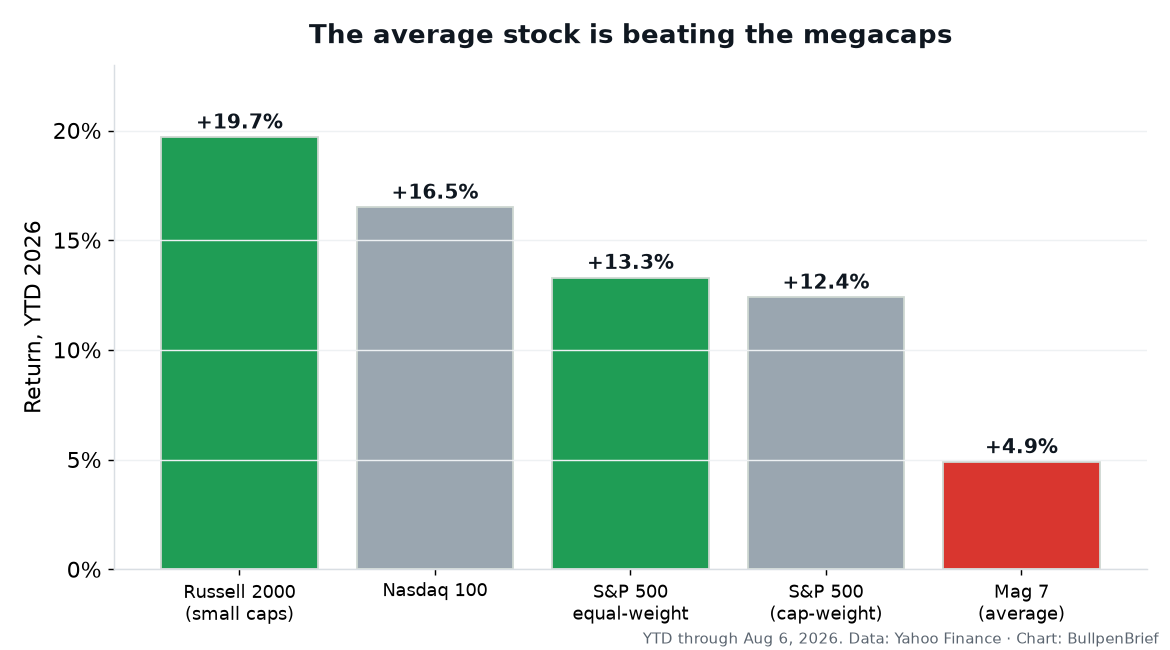
Still, the market is rewarding the narrative. PayPal shares are up 18% year-to-date, outperforming the S&P 500’s 9% gain. Compare that to the broader tech selloff that’s hit some of the MANGOS stocks, Microsoft, Apple, Nvidia, Google, Meta, and others have seen their momentum stall in Q2. PayPal, by contrast, is finding its footing. It’s not a high-growth story anymore, it’s a value-plus-turnaround story. And sometimes, that’s exactly what the market needs.
The Bigger Picture for Investors
PayPal’s Q1 results confirm something important: the company is no longer in freefall. The narrative has shifted from “dying dinosaur” to “boring but profitable.” And boring is fine when you generate $8 billion in free cash flow annually. The WeChat Pay integration adds a growth vector that could surprise to the upside. But let’s be real, this is a marathon, not a sprint. Chinese regulators could tighten the screws at any moment. Tencent could renegotiate terms. Consumer behavior might not shift as fast as expected.
For retail investors, the takeaway is simple: PayPal is a hold with upside potential. The stock isn’t cheap at 18x forward earnings, but it’s not expensive either. If the WeChat Pay play drives even a 2% increase in TPV growth, that’s an extra $8 billion in volume, and probably a 5-10% boost to the stock price. Keep an eye on the next quarter’s transaction margin. If that number ticks up again, the turnaround is real.
One more thing: don’t sleep on PYUSD. PayPal’s stablecoin is quietly being integrated into the WeChat Pay ecosystem for settlement. That could reduce transaction costs and speed up cross-border payments. It’s early, but the pieces are there. If PayPal can become the bridge between fiat and crypto for Chinese commerce, the upside is massive. That’s a story for 2026, though. For now, enjoy the beat, watch the margins, and don’t panic if the stock dips on macro noise. The foundation is solid.
Frequently Asked Questions
How does the WeChat Pay integration work for PayPal users?
PayPal users can now link their accounts to WeChat Pay and scan QR codes at over 100 million merchants in China to make payments directly from their PayPal balance or linked cards. The transaction is converted automatically, with PayPal handling the currency exchange at competitive rates. No separate WeChat Pay wallet top-up is needed.
Is PayPal stock a buy after Q1 earnings?
Analysts are broadly positive, with 32 out of 45 rating it a Buy. The stock trades at 18x forward earnings with improving margins and a new growth catalyst in China. However, risks include competition from Apple Pay and crypto payment rails, as well as regulatory uncertainty in China. It’s a solid hold for long-term investors, but not a high-growth moonshot.
What is PYUSD and how does it fit into PayPal’s strategy?
PYUSD is PayPal’s own U.S. dollar-pegged stablecoin, launched in 2023. It has a market cap of about $500 million and is used for payments, transfers, and now potentially for settlement within the WeChat Pay ecosystem. If adopted widely, PYUSD could reduce transaction costs and speed up cross-border payments, giving PayPal a competitive edge in the digital payments space.