


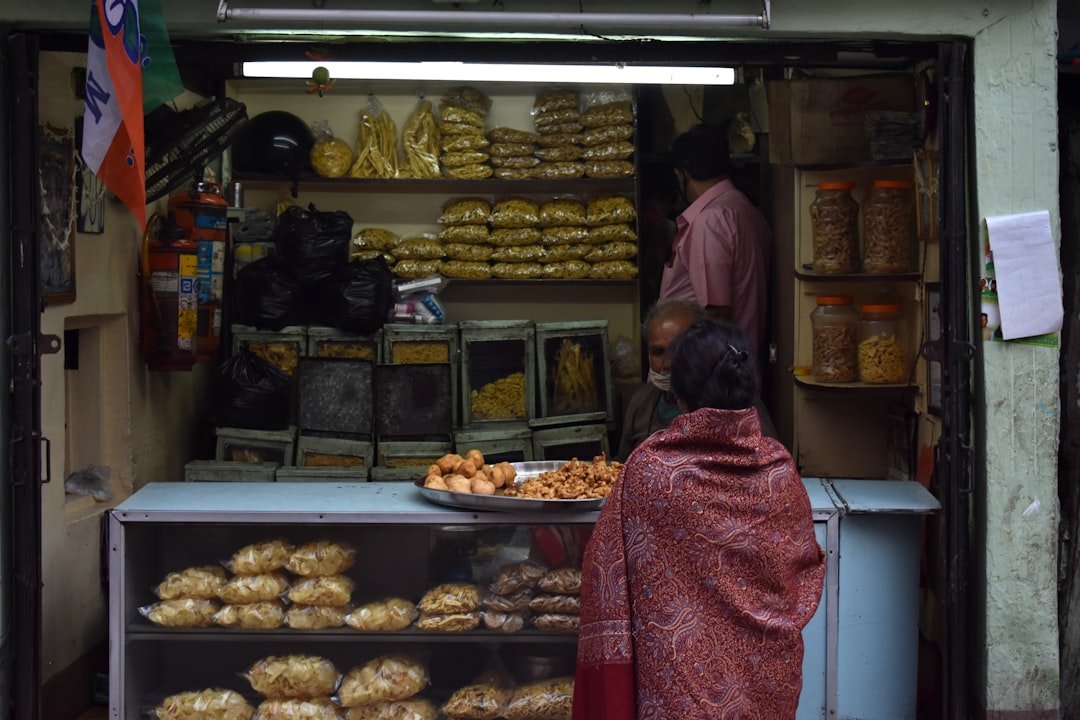
Nobody is talking about the quiet carnage unfolding in Britain’s high streets. While Westminster debates immigration and the NHS, a tax-driven death spiral is claiming small businesses at a pace that should terrify anyone who cares about local economies. The latest casualty? Coughlans Bakery, a beloved South London institution, forced into voluntary liquidation after the government’s double-whammy of national insurance hikes and business rate increases. And comedian Romesh Ranganathan, a regular customer, is ‘absolutely gutted’. But this isn’t just a celebrity sob story, it’s a flashing red signal for the UK’s entire small business ecosystem.
Coughlans, a family-run bakery in South Norwood that had been churning out pasties and doughnuts for over two decades, announced its closure in early April 2025, citing the ‘cumulative effect’ of rising employer National Insurance contributions (up 1.2 percentage points to 15% from April 2025) and a business rates revaluation that saw many retail properties hit with double-digit percentage increases. The bakery’s owners didn’t mince words: ‘We can’t pass these costs on to customers who are already stretched. Something had to give.’
For Ranganathan, who had been filmed buying sausage rolls there for a comedy sketch, the loss is personal. ‘Genuinely gutted,’ he posted on social media. ‘Coughlans was the real deal, proper bakery, proper community. And now it’s gone because the government squeezed it until it broke.’
He’s not wrong. But here’s the twist: the squeeze is actually worse than most people realise.
The Numbers That Killed Coughlans
Let’s run the arithmetic. Under the new rates, a small bakery employing 10 full-time staff on the National Living Wage (£12.21/hour from April 2025) faces an additional £4,200 per year in employer NI alone. That’s before the business rates hike, Coughlans’ premises in South Norwood saw its rateable value jump from £18,000 to £24,000 under the 2023 revaluation, adding roughly £3,000 annually in rates. Combined, that’s over £7,000 in extra costs, about the equivalent of two weeks’ revenue for a small bakery.
‘That’s the difference between staying afloat and going under,’ explains Sarah Turner, a small business accountant at London-based firm Bluestone Partners. ‘Bakeries operate on razor-thin margins, typically 2-5%. A £7,000 hit on a £150,000 turnover is a 4.7% margin wipeout. For many, it’s the end.’
And it’s not just bakeries. The Federation of Small Businesses estimates that over 120,000 UK small enterprises could face closure or severe downsizing by mid-2026 as a direct result of the NI and rates changes. That’s roughly 11% of the UK’s 1.1 million small businesses with employees. The sectors most exposed? Hospitality, retail, and food manufacturing, exactly where Coughlans sat.
Meanwhile, the government’s own Office for Budget Responsibility projects that the NI hike alone will raise £7.2 billion annually. But that revenue comes at a cost: fewer businesses, fewer jobs, and a hollowed-out local economy. Nobody is talking about the long-term fiscal drag this creates, lower corporate tax receipts, higher unemployment benefits, and reduced VAT from closed shops.
Why This Matters Beyond One Bakery
Coughlans was a fixture in South Norwood. It was the place where schoolkids grabbed iced buns, where pensioners sat with a cuppa, where Ranganathan, who grew up in nearby Crawley, made it a point to stop by whenever he was in the area. Its closure erases a social anchor, not just a business.
But zoom out. The UK lost nearly 5,000 independent bakeries between 2010 and 2023, according to the British Baker trade body. The trend is accelerating. The BBC reported in March 2025 that bakery closures have spiked 22% year-on-year in London alone. Coughlans is the canary in the coal mine, except the coal mine is the entire UK small business sector, and the canary just stopped singing.
The timing couldn’t be worse. Consumers are already battered by the 13% energy price hike that took effect in January 2025, squeezing household budgets further. When people have less disposable income, they buy fewer pastries. So bakeries face both cost inflation and demand compression. That’s a pincer movement few can survive.
And if you think this is just a UK story, think again. Similar dynamics are playing out in the US, where small retailers are buckling under commercial rent increases and rising labour costs. But the UK’s specific cocktail of NI hikes, business rates, and energy costs is uniquely toxic.
‘The government is effectively taxing the life out of the high street while handing billions in subsidies to large corporations through investment allowances,’ says Dr. Emily Hartfield, an economist at the London School of Economics. ‘It’s a transfer from small to big. And nobody is talking about it because the victims are fragmented and don’t have lobbyists.’
The Ranganathan Effect, Celebrity Attention That Won’t Save Anyone
Romesh Ranganathan’s reaction has drawn headlines, but celebrity grief doesn’t change policy. Within hours of his post, the bakery’s closure was trending on X (formerly Twitter) in the UK. Local MP Sarah Jones (Labour, Croydon Central) issued a statement saying she was ‘heartbroken’ and would raise the issue in Parliament. But the Treasury has shown no sign of reconsidering the NI hike, which was passed in the Autumn Budget 2024 and implemented in April 2025. Business rates reform has been promised for years but never delivered.
Look, I get it, a comedian mourning a bakery is a softer story than a spreadsheet of insolvency data. But the underlying numbers are brutal. The Insolvency Service reported that company liquidations in the food and beverage sector hit 1,876 in Q1 2025, the highest quarterly figure since records began. That’s four times the pre-pandemic average.
And here’s the kicker: the Gen Z workers who are betting against the state pension are the same ones who would have worked at Coughlans, or bought their lunch there. The erosion of small businesses accelerates the shift to gig economy, zero-hour contracts, and remote work for large corporations. It’s a structural change that leaves communities poorer, not just economically, but socially.
Ranganathan might be gutted. But the real gut-punch is for the 14 employees now out of work, the local suppliers who lose a customer, and the residents who lose a meeting place. That’s not a headline. That’s the quiet crisis.
What Comes Next, And What You Can Do
There’s no cavalry coming. The Treasury is focused on fiscal consolidation, and small business relief schemes are barely a footnote. The only hope is a groundswell of local action: community buyouts, pop-up market days, or a shift to subscription models for bakeries (bread clubs, anyone?). Coughlans might have been saved if it had diversified into catering or online delivery earlier, but hindsight is cheap.
For investors, this is a cautionary tale about the UK small-cap and micro-cap space. If a bakery can’t survive a 7k tax hit, how many listed small companies are similarly vulnerable? The FTSE Small Cap index has already underperformed the FTSE 100 by 12% year-to-date. The message: avoid sectors with low margins and high labour exposure. Food production, retail, hospitality, these are danger zones until the tax regime changes.
For consumers, the message is simpler: support your local bakery while it’s still there. Because when it’s gone, it won’t come back. Not even Romesh Ranganathan can revive it.
Forward-looking: Expect more closures through 2025-2026, especially after the next business rates revaluation in 2026 (which many fear will hit harder). The government may eventually roll back the NI hike if the unemployment numbers spike, but that’s at least 12 months away. In the meantime, the high street will look very different. Fewer bakeries, fewer butchers, fewer bookshops. More vape stores and charity shops. That’s the future nobody is talking about, until their own favourite shop vanishes.
Frequently Asked Questions
Why did Coughlans Bakery close?
Coughlans Bakery in South Norwood, London, entered voluntary liquidation in April 2025 due to the combined impact of increased employer National Insurance contributions (from 13.8% to 15%) and a steep rise in business rates following the 2023 revaluation. The owners stated they could not absorb the extra costs without raising prices, which would have driven away customers already struggling with the cost-of-living crisis.
How does this relate to Romesh Ranganathan?
Romesh Ranganathan, a popular British comedian, was a regular customer and fan of Coughlans. He had featured the bakery in a comedy sketch and expressed his disappointment publicly on social media, saying he was ‘absolutely gutted’ by the closure. His reaction drew significant media attention to the story, but did not change the economic realities that forced the bakery to shut.
Is this part of a wider trend in UK small businesses?
Yes. The Federation of Small Businesses estimates over 120,000 small UK enterprises could close or drastically downsize by mid-2026 due to the NI and business rates hikes. The food and beverage sector has seen record liquidation levels in Q1 2025, with bakery closures up 22% year-on-year in London. Independent bakeries across the UK have been declining steadily since 2010, and the current tax environment is accelerating that trend.