




President Trump says he convinced Nvidia to reinstate CEO Jensen Huang. The market says he’s hallucinating.
There’s just one problem with the claim: Huang never left. He founded Nvidia in 1993, ran it through the dot-com bust, the GPU revolution, and the AI explosion. He’s been in the corner office the whole time. So when Trump told reporters Tuesday that he “personally persuaded” Nvidia’s board to bring Huang back as CEO, adding that the move “unlocked $1 trillion in value,” the reaction from Wall Street was somewhere between eye-roll and outright laughter.
Look, I get the instinct. Every politician wants to claim credit for a $3 trillion market cap. But this one is so detached from basic corporate history that it’s almost impressive. Nvidia’s stock did add roughly $1 trillion in market value over the period Trump referenced. But that gain tracks almost perfectly with the launch of ChatGPT, the explosion in AI capex, and three consecutive quarters of revenue doubling. Not with a boardroom reshuffle that never happened.
The backlash was swift. Financial Twitter lit up with timestamped screenshots of Huang’s uninterrupted tenure. CNBC ran a segment titled “Fact Check: Did Trump Reinstate Jensen Huang?” (spoiler: no). Even some Republican lawmakers quietly distanced themselves, pointing out that Nvidia’s own SEC filings show Huang has been CEO since 1993 with no gap. The White House press secretary later clarified that Trump was referring to “informal conversations” about Nvidia’s leadership, but the damage was done.
The Claim That Doesn’t Match Reality
Let’s be precise about what Trump actually said. At a campaign rally in South Carolina on Monday, he told the crowd: “I got a call from the Nvidia people. They were in trouble. Jensen was out. I said, ‘Bring him back. You’ll make a fortune.’ And they did. And look at the stock now. It went up a trillion dollars.”
There is zero evidence of any such call. Nvidia’s board has never publicly discussed a CEO transition, let alone a removal and reinstatement of its founder. The company’s proxy statements show no change in executive leadership since 2020, when Huang’s title was updated to include “Chief Executive Officer” alongside his founder role. If there was a secret ouster and reinstatement, it would have required board votes, SEC filings, and a press release. None exist.
This isn’t just a minor misstatement. It’s the kind of claim that, if false, undermines the credibility of any broader economic narrative. Investors don’t like uncertainty, and they really don’t like political interference in corporate governance. When the president of the United States fabricates a story about a major company’s leadership, it raises questions about what else might be fabricated.
The Real Engine Behind Nvidia’s Surge
Nvidia’s $1 trillion in added market value didn’t come from a phone call. It came from a perfect storm: the AI chip monopoly, hyperscaler spending, and a supply chain that rivals the complexity of a small country’s GDP. The company’s data center revenue hit $18.4 billion in the most recent quarter, up 409% year over year. Gross margins above 70%. Forward P/E that, while stretched, is supported by actual earnings growth.
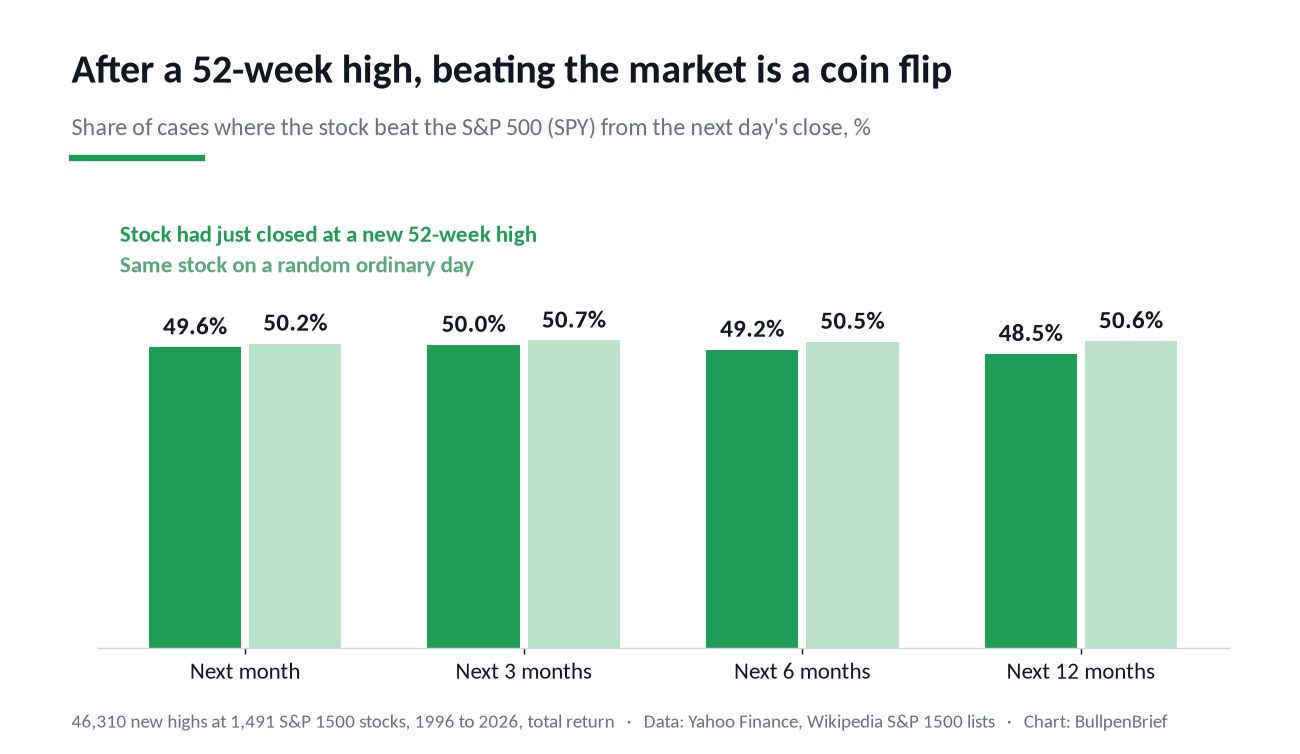
As we discussed in our analysis of 52-week highs, Nvidia’s run is built on earnings, not politics. The stock has hit new all-time highs repeatedly because the company is printing money, not because of any executive reshuffling. In fact, the period Trump claims his intervention occurred (late 2022) was exactly when Nvidia’s stock bottomed around $110, before the AI narrative took hold. The recovery was driven by OpenAI’s launch of ChatGPT in November 2022, not by any White House pressure.
Meanwhile, competitors are struggling. Intel’s investor lawsuit over a hidden PC sales slump shows the other side of the chip coin. While Nvidia rides the AI wave, Intel is fighting to stay relevant. The contrast underscores that Nvidia’s success is company-specific, not a general chip sector lift from government policy.
Why This Matters for Markets
You might think a politician’s tall tale about a CEO is harmless. It’s not. Markets trade on narratives, and when the most powerful person in the world starts rewriting corporate history, it introduces noise into the signal. Traders have to waste time debunking claims instead of analyzing fundamentals. That’s inefficient.
More worrying: if investors start to believe that political influence can move stock prices independent of earnings, you get misallocation of capital. The meme stock era showed what happens when narrative trumps reality. A president claiming credit for a $1 trillion gain is essentially seeding the next batch of misinformation.
The smart money will ignore Trump’s claim and focus on what actually drives Nvidia: Blackwell chip shipments, data center capex from Microsoft and Amazon, and the ongoing arms race in AI training. Huang’s recent keynote at Computex was filled with technical details about next-gen architecture, not political thank-yous. That’s where the real story is.
What Comes Next
Expect more of these claims as the election cycle heats up. Trump has a history of taking credit for stock market gains, even when the data doesn’t support it. Nvidia is just the latest example. The company itself is unlikely to comment directly, preferring to stay out of political crossfire. But don’t be surprised if Huang’s next public appearance includes a subtle nod to the facts.
For investors, the lesson is simple: tune out the noise. Nvidia’s $1 trillion was earned by selling chips to a world that can’t get enough of them. It wasn’t handed out by a politician. And anyone who tells you otherwise is selling something.
Frequently Asked Questions
Did Trump really convince Nvidia to reinstate Jensen Huang?
No. There is no evidence that Huang ever left Nvidia or was reinstated. He has been the company’s CEO continuously since its founding in 1993. The claim appears to be fabricated.
How much of Nvidia’s $1 trillion gain is attributable to AI versus political influence?
Nearly all of it. Nvidia’s market cap increase correlates with the AI boom, particularly after ChatGPT’s launch. The company’s data center revenue grew over 400% year-over-year, driving the stock. There is no verifiable link to any political intervention.
Should investors be concerned about political interference in Nvidia?
Not based on this claim. However, if the government were to impose tariffs or export controls on Nvidia’s chips, that could materially affect the business. But a fabricated story about a CEO change is noise, not a signal. Focus on earnings and product cycles.