





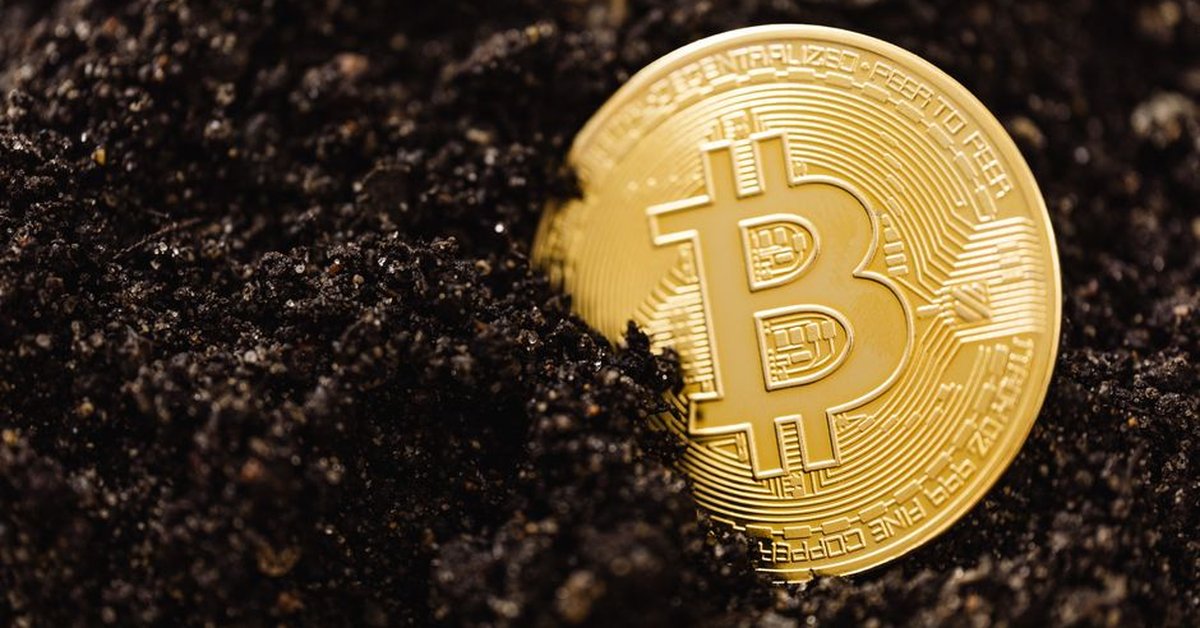
Nobody is talking about the Bitcoin fork that lasted about as long as a match in a hurricane. On Tuesday, a breakaway chain called BIP-110 mined exactly two blocks, then flatlined. The whole episode took under two hours. And it’s not just a quirky footnote, it’s a live demonstration of why most Bitcoin forks are doomed before they even start.
Here’s the part that should make every Bitcoin holder pay attention: this fork didn’t just fail because nobody cared. It failed because of a math problem that no amount of enthusiasm can fix. The breakaway chain inherited Bitcoin’s full mining difficulty, the same cryptographic puzzle that takes the entire Bitcoin network’s hashpower about ten minutes to solve, but with only a tiny fraction of that hashpower behind it. The result? Blocks that would have taken hours, maybe days, to find. They found two, then the miners apparently looked at the math, shrugged, and walked away.
This suggests something deeper than a failed project. It suggests that the economics of forking Bitcoin have shifted. In 2017, Bitcoin Cash launched with enough industrial support to survive. In 2025, a solo fork without serious hashpower backing is a suicide mission. The network’s difficulty adjustment mechanism, one of Satoshi’s most elegant and brutal designs, simply won’t bend to willpower alone.
What Actually Happened With BIP-110
The fork was proposed by a pseudonymous developer going by ‘Hodl_or_Die’ (yes, really) who argued that Bitcoin’s block size should be increased to 110 MB, hence the name. The idea was to scale transaction throughput without Lightning or sidechains. The team deployed a code change, convinced a small mining pool to point some gear at it, and launched.
Block one came at 14:32 UTC. Block two at 15:48 UTC. Then nothing. The blockchain explorer shows a gap of roughly 76 minutes between those two blocks. For context, Bitcoin’s main chain finds a block every 10 minutes on average. At the current difficulty level, BIP-110’s hashpower, estimated at less than 0.5% of Bitcoin’s total, would have needed roughly 33 hours to find a third block. The miners didn’t wait.
This isn’t just a technical failure. It’s a financial one. Miners on the fork were spending electricity at a rate that assumed they’d find blocks regularly. When the reality of a 33-hour block interval set in, the math turned negative fast. Running an S19 Pro at current power prices for two days to find one block with a tiny reward? No serious miner signs up for that.
And here’s the kicker that most coverage misses: both chains still accept the same transactions. If you sent Bitcoin during that window, your transaction could have confirmed on either chain, or neither. The replay protection was incomplete. That’s a security risk that the BIP-110 team never fully addressed. Any exchange or wallet software that didn’t explicitly separate the two chains could have seen funds ‘double-spent’ in a messy, ambiguous state.
This Is Not 2017, The Fork Physics Have Changed
Let me take you back to August 2017. Bitcoin Cash forked at block 478,558 with something like 5-10% of Bitcoin’s hashpower. They had Coinbase backing, ViaBTC mining, and a coordinated difficulty adjustment hard-coded into the client. They survived. BIP-110 had none of that.
The gap between 2017 and 2025 is the gap between a startup with venture funding and a kid selling lemonade from a card table. Bitcoin’s difficulty today is roughly 100 trillion times higher than it was in 2017. The hashpower securing the network is measured in exahashes per second, and it’s all ASIC hardware that costs thousands of dollars per unit. You can’t just fire up a few GPUs and call it a fork anymore.
What the BIP-110 episode really shows is that the barrier to a viable Bitcoin fork has become prohibitive. You need either a huge pool of hashpower (which means buying or renting expensive ASICs) or a pre-arranged difficulty adjustment that kicks in quickly. Neither is easy. And even if you get the second, the market’s memory is long, Bitcoin Cash, Bitcoin SV, and Bitcoin Gold all trade at fractions of Bitcoin’s price. Investors have been burned before.
This is also a reminder that the ‘store of value’ narrative isn’t just marketing. Bitcoin’s security budget, roughly $15 billion per year in mining rewards and fees, creates a moat that smaller chains cannot cross. As Russians double down on hardware wallets as crypto rules tighten, they’re betting on a network that has demonstrated it can resist both state-level attacks and code-level splits. BIP-110 proves that bet is still sound.
What This Means For You, The Practical Angle
If you held Bitcoin during this fork, you likely don’t need to do anything. Most wallets and exchanges handle chain splits automatically, or they simply ignore the minority chain. But there’s a lesson here for the next time someone announces a ‘Bitcoin killer’ fork.
First, check the difficulty adjustment schedule. If the fork doesn’t have a built-in mechanism to reduce difficulty quickly, within 2016 blocks or so, the math is against it. Second, look at the hashpower commitments. Real forks have mining pools publicly stating their support. Third, watch the exchanges. If no major exchange lists the fork token before launch, the liquidity won’t be there.
The BIP-110 team claimed they had a deal with a small European exchange. They didn’t. The exchange denied it after the fork failed. Classic overpromise.
Second-order winners here? The Bitcoin maximalists, obviously. Every failed fork reinforces the idea that Bitcoin’s network effects are unassailable. But also the Lightning Network, which BIP-110 was explicitly designed to bypass, gets a free endorsement. If scaling via on-chain blocks is too hard, the layer-2 solution looks more attractive by comparison.
Meanwhile, the Senate starts Clarity Act vote process, September showdown looms, which will define how US regulators treat forks and airdrops. If the Clarity Act passes, forks that don’t have clear replay protection could face legal liability. BIP-110’s sloppy implementation just became exhibit A for why regulation might be necessary.
Losers? The developers who wasted months coding a fork that lasted 76 minutes. The miners who burned electricity for a two-block chain that won’t even cover their power bill. And anyone who bought BIP-110 tokens on a DEX before the fork, though mercifully, that number seems to be near zero.
The Bottom Line: Forks Are Dead, Long Live Bitcoin
The BIP-110 episode will fade into crypto trivia. It won’t be in the history books. But it should be in the back of your mind the next time someone claims they’ve ‘improved’ Bitcoin with a code change.
The network’s difficulty adjustment isn’t a bug. It’s a defense mechanism. And it just crushed a would-be competitor in less time than it takes to watch a movie. That’s not a failure of BIP-110, it’s a feature of Bitcoin’s design that most people don’t think about until it’s too late.
Looking ahead, the next fork attempt will likely come with a pre-mined difficulty adjustment, or with backing from a major mining pool. But even then, the market’s attention is finite. Bitcoin’s dominance in market cap is around 55% as of this week. Every failed fork shaves a few more points off the altcoin share. The gravitational pull of the largest network is real.
So keep your coins on the main chain. Ignore the fork hype. And remember: in crypto, the most dangerous thing you can do is underestimate the math.
Frequently Asked Questions
What is BIP-110 and why did it fork from Bitcoin?
BIP-110 was a proposed Bitcoin improvement that aimed to increase the block size to 110 MB for faster on-chain transactions. It forked from Bitcoin’s main chain on Tuesday, managed to mine only two blocks in under 76 minutes, then stopped. The fork inherited Bitcoin’s full mining difficulty but had less than 0.5% of the network’s hashpower, making block production economically unsustainable.
Could BIP-110 have stolen my Bitcoin or caused a replay attack?
Risk was present but low. BIP-110 had incomplete replay protection, meaning a transaction broadcast on the main chain could potentially be replayed on the fork chain. However, because the fork lasted only two blocks and no major exchange supported it, the practical risk of loss was minimal. Always check if a fork has implemented full replay protection before transacting near a split event.
Will there be more Bitcoin forks in the future, and should I care?
Yes, there will be more attempts, but they face increasingly steep odds. Bitcoin’s difficulty level is now astronomically high, requiring massive hashpower investment to remain viable. Forks that succeed economically need both strong mining support and rapid difficulty adjustments. For most holders, the best strategy is to ignore speculative forks and keep Bitcoin on the main chain. Regulation like the Clarity Act may also make forks harder to execute legally.