



North Korea’s crypto theft operation just crossed a grim milestone. Chainalysis, the blockchain forensics firm that governments hire when they need answers fast, says the Sept. 24 Bitget hack pushed Pyongyang’s total 2026 crypto haul past $1 billion. That’s not a typo. One billion dollars, lifted from exchanges, bridges, and DeFi protocols this year alone. And the really interesting part? Chainalysis used its own in-house AI to follow the money across four different blockchains, often staying just hours ahead of the attackers’ laundering moves. My read is that this is a turning point, not just for North Korea tracking but for how the entire industry thinks about on-chain surveillance.
The Bitget theft itself was a $387 million monster, one of the biggest exchange hacks in history. But the story isn’t just the number. It’s how Chainalysis figured out where the money went and who took it, and what that means for every exchange holding user funds right now.
The September Heist That Pushed North Korea Over $1 Billion
Bitget, a Seychelles-based derivatives exchange, got hit on Sept. 24. The attackers drained hot wallets across multiple chains. Within hours, the funds started moving. Chainalysis, which had been monitoring North Korean-linked wallet clusters since earlier attacks this year, flagged the movement pattern almost immediately. Their AI models, trained on years of Lazarus Group transaction behavior, spotted the signature: the same multi-hop, chain-hopping structure seen in the Bybit and WazirX hacks earlier in 2026.
According to Chainalysis’ report, the AI tool analyzed over 80,000 transactions across Ethereum, BNB Chain, Polygon, and Tron in the first 48 hours. The system flagged clusters of addresses that matched North Korea’s known operational security patterns, specifically the use of mixing services and instant exchangers that don’t require KYC. By day three, Chainalysis had enough evidence to publicly attribute the hack to the Lazarus Group, the same unit the U.S. Treasury has sanctioned for funding North Korea’s weapons programs.
This single hack pushed North Korea’s 2026 crypto theft total past $1 billion, according to Chainalysis’ tracking. That’s more than double the roughly $400 million they stole in all of 2025. The ramp-up is staggering. And it’s happening despite, or maybe because of, increased sanctions enforcement.
How Chainalysis’ AI Tracked the Money Across Four Chains
The tech behind this is worth unpacking. Chainalysis didn’t just use off-the-shelf blockchain analytics. They deployed a proprietary AI model trained specifically on North Korean cyber operations. The model ingests transaction graphs, wallet creation timestamps, and even the timing of transactions relative to North Korean holidays and work hours.
Here’s the part that made me sit up. The AI was able to predict where the funds would move next, often before the attackers executed the transaction. Chainalysis says their system would flag a likely next-hop address, and within hours, the funds would arrive. That predictive capability is what allowed them to trace $387 million across four chains in a matter of days. In previous high-profile hacks, like the NEAR Intents $3.8M hack, the response was measured in hours, not weeks. Here, the scale was a hundred times larger, and the tracing was just as fast.
The attackers used a standard playbook: swap stolen tokens for stablecoins, bridge to another chain, then run through a series of small transactions to break the trail. But Chainalysis’ AI had seen this exact pattern before. It didn’t just follow the money; it anticipated the next bridge, the next mixer, the next exit ramp. By the time the hackers had moved the funds to Tron, Chainalysis had already alerted Tether and TRM Labs, leading to the freezing of over $40 million in USDT on Tron alone.
That’s the part that matters for the broader crypto ecosystem. Freezes like this don’t happen without fast attribution. And fast attribution now requires AI, not just human analysts staring at spreadsheets.
Why This Matters for Crypto Exchanges and Users
If you hold funds on any centralized exchange, this story should make you think. The Bitget hack wasn’t a DeFi exploit or a smart contract bug. It was a targeted attack on a hot wallet system. The attackers got in through what appears to be a compromised private key, though Bitget hasn’t released full details. That’s the same entry vector used in the $1.5 billion Bybit hack earlier this year. Exchanges are still the weak link.
Chainalysis’ AI tracing capability is a double-edged sword. On one hand, it increases the chance that stolen funds get frozen before they exit the ecosystem. On the other hand, it means exchanges are now under more pressure to cooperate with law enforcement and blockchain forensics firms. If an exchange drags its feet on freezing flagged addresses, it becomes an accessory after the fact.
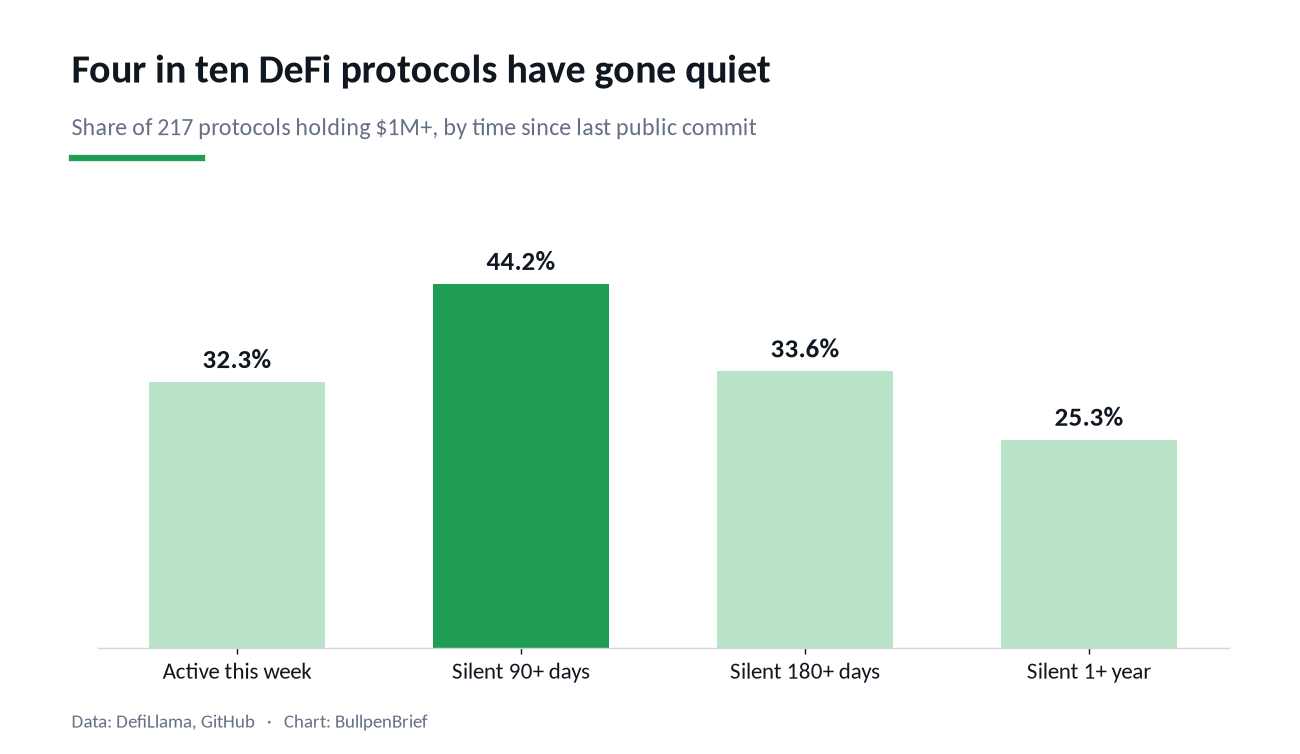
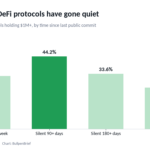
For users, the takeaway is simple: check how your exchange handles hot wallet security. Bitget has since said it will cover all user losses, but that’s not always the case. History shows that exchanges that get hacked often take months to make users whole, if they ever do. The 44% of DeFi protocols that haven’t shipped code in 90 days is a separate but related risk. If protocols aren’t even updating their smart contracts, how confident are you that their hot wallets are secure?
North Korea’s cyber unit, the Lazarus Group, has become the most prolific crypto thief in history. They’re not going to stop because one hack got traced. They’ll adapt. They’ll use new mixers, new chains, new techniques. But Chainalysis’ AI is also adaptive. It learns from each new attack. That arms race is now the defining feature of crypto security in 2026.
The Bigger Picture: North Korea’s Crypto Empire in 2026
Let’s put the $1 billion figure in context. North Korea’s entire reported GDP is around $30 billion, though that number is notoriously unreliable. A billion dollars in crypto is a massive injection of hard currency for a country under crippling sanctions. It funds missile tests, cyber operations, and the luxury goods that keep the elite loyal. The U.S. Treasury has sanctioned multiple crypto addresses linked to Lazarus, but the group keeps finding new ways to cash out, often through over-the-counter brokers in China and Russia.
Chainalysis’ report notes that North Korea has stolen over $4 billion in crypto since 2017. That’s more than many small countries’ annual budgets. The pace is accelerating. In 2025, they stole roughly $400 million. In 2026, with three months still to go, they’ve already passed $1 billion. If the current trend holds, 2026 could see $1.5 billion or more in North Korean crypto theft.
The implications for the broader crypto market are real. Every major hack erodes trust. Every frozen wallet creates friction for legitimate users. And every time North Korea successfully launders stolen funds, it proves that crypto is still the preferred tool for state-sponsored theft. Regulators are watching. The European Union’s MiCA framework already includes provisions for mandatory blockchain analytics. The U.S. is likely to follow with stricter rules for exchanges.
Chainalysis’ AI tracing is a powerful tool, but it’s a reactive one. The real question is whether the industry can get ahead of these attacks. Better key management, multi-party computation wallets, and insurance pools are part of the answer. But as long as exchanges hold billions in hot wallets, they’ll remain targets.
One thing is certain: the days of anonymous crypto theft are numbered. AI can now follow the money across chains, predict the next move, and freeze funds before the hackers cash out. North Korea will adapt, but so will the tools. This is the new normal. And if you’re holding crypto anywhere, you need to know how your exchange plans to survive it.
Frequently Asked Questions
How did Chainalysis use AI to trace the Bitget hack?
Chainalysis deployed a proprietary AI model trained on historical North Korean cyber attack patterns. The AI analyzed over 80,000 transactions across Ethereum, BNB Chain, Polygon, and Tron within 48 hours. It predicted likely next-hop addresses based on timing, wallet creation, and transaction graph analysis, allowing investigators to stay ahead of the attackers’ laundering moves and freeze over $40 million in USDT.
What does the Bitget hack mean for North Korea’s crypto theft total in 2026?
The $387 million theft pushed North Korea’s total crypto haul for 2026 past $1 billion, according to Chainalysis. That’s more than double the roughly $400 million stolen in all of 2025, and the highest annual total on record. The Lazarus Group is now responsible for over $4 billion in crypto theft since 2017.
Should I be worried about my funds on centralized exchanges?
Yes, but the level of risk depends on the exchange’s security practices. The Bitget hack was a hot wallet compromise, similar to the Bybit hack. Look for exchanges that use multi-signature wallets, cold storage for the majority of funds, and have a clear insurance policy. Also check whether the exchange cooperates with blockchain forensics firms like Chainalysis to freeze stolen funds quickly.