



The smart money just got a cheaper ticket into the world’s largest bitcoin ETF. BlackRock has cut the minimum size for in-kind bitcoin transfers into its iShares Bitcoin Trust (IBIT) from roughly $1 billion down to $1 million, according to a report. That’s not a rounding error. That’s a market plumbing shift.
For anyone who’s spent time around the creation and redemption machinery of ETFs, this is the kind of detail that matters more than the daily price tick. The in-kind mechanism lets holders swap actual bitcoin for ETF shares without touching cash. Until now, the bar was so high that only the largest OTC desks and miners could realistically use it. Dropping it to $1 million opens the door to an entire tier of mid-sized bitcoin holders who have been sitting on self-custody coins, watching the ETF premium, and wondering how to get in.
My read: this is BlackRock deliberately building a funnel for whale supply. And the likely effect is tighter spreads, more creation activity, and a slow bleed of bitcoin out of cold storage into the regulated ETF wrapper.
The Creation Basket Gets Smaller
For the uninitiated, here’s how the sausage gets made. When an ETF issuer wants to create new shares, it works with an authorized participant (AP), typically a big bank or market maker. The AP delivers a basket of assets, the issuer delivers ETF shares, and the AP sells those shares on the exchange. For a physically-backed bitcoin fund, that basket used to be cash, which the issuer then used to buy bitcoin. But in-kind means the AP delivers the bitcoin itself.
That distinction sounds like back-office trivia. It isn’t. In-kind transfers are the most tax-efficient way for large holders to move into an ETF because there’s no sale event, no capital gains realization, and no taxable exchange. The previous minimum, reported at around $1 billion, effectively restricted this privilege to the top of the bitcoin food chain: sovereign wealth funds, the biggest OTC desks, and miners with massive treasury positions. The $1 million cut changes the calculus for a much broader cohort.
Consider who holds $1 million or more in bitcoin. That’s not a hedge fund whale. That’s a family office, a tech founder who mined early, a high-net-worth individual who bought in 2017 and never touched it. These are exactly the people who’ve been reluctant to sell because of the tax hit, but who also don’t want to deal with custody risk, private keys, or the threat of losing access to a wallet. The ETF wrapper solves that. And BlackRock is now handing them an on-ramp that doesn’t trigger a taxable event.
This is also a direct challenge to the OTC desks that have historically served as the bridge between large holders and the market. If a whale can swap their bitcoin for IBIT shares in-kind, why pay a spread to an OTC desk? The desks won’t disappear, but they’ll lose a chunk of flow. That’s a second-order effect most coverage will miss.
Whales, Miners, and the OTC Handoff
The timing matters. We’ve seen bitcoin mining treasuries get hammered over the past year as hashprice fell and margins compressed. Public miners have been selling coins to fund operations, and that selling pressure has weighed on spot prices. An in-kind swap into IBIT gives miners a way to monetize their inventory without dumping on the open market. They can hand the coins to BlackRock, get shares, and use those shares as collateral or sell them on the exchange. Same economic result, but the market impact is smoothed out.
There’s history here. Look at Grayscale’s GBTC, which traded at a massive discount to net asset value for years because shares were locked up and redemptions were impossible. When the discount finally closed and the trust converted to an ETF, the flood of redemptions temporarily hammered bitcoin. The lesson the industry learned: flows matter more than sentiment. BlackRock’s move is a bid to control the flow of supply into the ETF ecosystem before that kind of dislocation happens again.
And this isn’t happening in a vacuum. The broader crypto market has been grappling with infrastructure questions across the board, from trading rails to yield generation. For instance, LayerZero’s trading infrastructure recently sparked a surge in ZRO, a reminder that plumbing improvements can move prices. The same logic applies here: make the mechanism easier, and more capital flows through it.
So who wins? BlackRock, obviously. IBIT is already the largest spot bitcoin ETF by assets, and this move consolidates its dominance. Each in-kind transfer adds assets under management without requiring the fund to buy coins on the open market, which keeps tracking clean and costs low. The APs win too, because they earn fees on every creation unit. And the whale wins, because they get ETF exposure, institutional custody, and tax deferral in one move.
Who loses? The OTC desks, as mentioned. Also, arguably, the broader decentralized ethos of bitcoin. Every coin that moves into an ETF is a coin that’s now custodied by a bank, tracked on a ledger, and subject to regulatory oversight. The “not your keys, not your coins” crowd will hate this. But the market has already voted, and it voted for ETFs.
What This Means for the Rest of Us
For the retail investor, the practical takeaway is subtle but real. Lower in-kind minimums mean more efficient creation and redemption, which means tighter bid-ask spreads on the ETF. That’s a cost reduction for everyone trading IBIT, even if you never touch the in-kind mechanism yourself. It also signals that BlackRock expects significant demand from large holders, which is a bullish tell on institutional adoption.
There’s also a competitive dynamic to watch. Other bitcoin ETF issuers, like Fidelity and ARK, will feel pressure to match BlackRock’s terms. If they don’t, they risk losing the whale flows that matter most for asset growth. The likely effect is a race to the bottom on minimums, which benefits the entire complex.
But here’s the catch. This is a move that works in a rising or sideways market. If bitcoin drops sharply, in-kind creations become less attractive because holders won’t want to lock in losses. The mechanism is a fair-weather friend. Still, the direction of travel is clear: the ETF wrapper is becoming the default home for institutional bitcoin, and BlackRock is making it easier by the quarter.
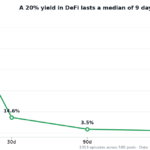
One more angle worth flagging: the intersection with broader capital markets. The same week this report drops, we’re seeing yields in DeFi collapse to a median of 1.9%, a reminder that the crypto ecosystem is maturing and the easy yield days are over. Bitcoin ETFs are part of that maturation. They’re the regulated, boring, institutional-grade version of what DeFi promised but couldn’t deliver at scale.
The bottom line: BlackRock just lowered the drawbridge. The whales who’ve been waiting on the sidelines, holding self-custody bitcoin and watching the tax bill pile up, now have a clear path in. The question is how many of them take it, and how fast. Watch the weekly creation numbers on IBIT over the next few months. If they spike, you’ll know the swap minimum cut did its job.
Next up will be the other issuers’ responses, and whether the SEC’s stance on in-kind transfers for future products evolves. But for now, the message from BlackRock is unambiguous: bring your bitcoin, we’ll handle the rest.
Frequently Asked Questions
What does the $1 million minimum mean for retail investors?
Retail investors don’t directly use the in-kind swap mechanism, but they benefit indirectly. Lower minimums attract more institutional flow, which improves liquidity and tightens spreads on IBIT. That means retail traders get a more efficient market with lower transaction costs when buying or selling the ETF.
How does an in-kind bitcoin swap work?
An authorized participant delivers actual bitcoin to the ETF issuer in exchange for newly created ETF shares. This avoids a cash transaction, meaning the holder doesn’t sell their bitcoin and doesn’t trigger a taxable event. It’s the most tax-efficient way for large holders to gain ETF exposure.
Could other bitcoin ETF issuers follow BlackRock’s lead?
Likely yes. Competitive pressure will push Fidelity, ARK, and others to match BlackRock’s $1 million minimum to retain and attract whale flows. If they don’t, they risk losing the large institutional holders who prefer the in-kind mechanism for tax reasons.